index●comunicación
Revista científica de comunicación aplicada
nº 15(2) 2025 | Pages 165-187
e-ISSN: 2174-1859 | ISSN: 2444-3239
The New Normal for Health Journalists
in Mainstream Media
La nueva normalidad de los periodistas de salud
en medios generalistas de gran audiencia
Received on 20/06/2024 | Accepted on 09/06/2025 | Published on 15/07/2025
https://doi.org/10.62008/ixc/15/02Lanuev
Aitor Ugarte Iturrizaga | Universidad Carlos III de Madrid
augarte@hum.uc3m.es | https://orcid.org/0000-0002-6666-5780
Daniel Catalán-Matamoros | Universidad Carlos III de Madrid
dacatala@hum.uc3m.es | https://orcid.org/0000-0001-7783-4984
Abstract: This study examines the current professional situation of health journalists working in mainstream media, who emerged as key editorial figures during the COVID-19 pandemic. The aim is to assess whether the pandemic led to lasting changes in the news prioritization of health topics and whether the role of health reporting within newsrooms has shifted. Using a qualitative methodology, the study analyzes the perspectives of 16 Spanish health journalists employed across newspapers, radio, and television outlets. The journalists report that their media organizations now cover health care system issues more frequently, while topics related to the social determinants of health receive comparatively less attention. However, the gatekeeping transformations observed during the pandemic have not persisted. The findings suggest that, for health journalists in mainstream media, the ‘new normal’ closely resembles the pre-pandemic professional environment.
Keywords: Journalism; Mass media; Gatekeeping; Social determinants of health; Health communication; Qualitative research
Resumen: Esta investigación aborda la actual situación profesional de los periodistas especializados en salud de medios generalistas, que se convirtieron durante la pandemia en referentes para sus editores. El objetivo es conocer si han subsistido los cambios en la jerarquización informativa de los temas de salud y si ha variado la consideración de la salud en las redacciones. Mediante metodología cualitativa, se ha analizado la percepción de 16 periodistas que trabajan en periódicos, radios y televisiones de gran audiencia. Los periodistas perciben que sus medios tratan más frecuentemente los temas relacionados con el sistema de atención sanitaria y menos los asuntos vinculados a los determinantes sociales de la salud. Respecto a las transformaciones del gatekeeping, no han perdurado los cambios. Se concluye que, para los periodistas de salud de medios generalistas, la nueva normalidad se parece mucho a la situación profesional anterior a la pandemia.
Palabras clave: periodismo; medios de comunicación; selección de noticias; determinantes sociales de la salud; comunicación y salud; investigación cualitativa
To quote this work: Ugarte Iturrizaga, A. & Catalán-Matamoros, D. (2025). The new normal for health journalists in mainstream media. index.comunicación, 15(2), 165–187. https://doi.org/10.33732/ixc/15/02Lanuev
1. Introduction
The subject matter of this study is the «new normal» for health journalists in mainstream media. The reason for this choice is the significant prominence gained by this group of professionals during the COVID-19 pandemic (Catalán-Matamoros and Langbecker, 2023; García-Avilés et al., 2022; Quandt & Walh-Jorgensen, 2021), and the journalistic, social, and human interest in observing their return to post-crisis normality. The aim of the study is to discover their work routines when selecting information, their most-covered topics and the reasons why some health issues are covered less frequently. These questions will be addressed from the perspective of the gatekeeping and agenda-setting theories.
Shoemaker and Vos (2009: 1) understand gatekeeping as «the process of culling and crafting countless bits of information into the limited number of messages that reach people every day», whereas the pioneering study by Manning White (1950: 386) concluded that decisions on news selection were «highly subjective», Shoemaker and Vos (2009) note that media gatekeeping is a well-defined process that affects social reality and how we interpret the world.
The agenda-setting theory (McCombs & Shaw, 1972) argues that the news selected by the media and the relevance assigned to each of them co-forms the repertoire of topics that get the most attention from audiences. In his revision of the theory, McCombs (2006) introduced a second agenda-setting level, which he referred to as «attribute agenda setting», defined as the characteristics and properties that the media highlight on each topic.
From this theoretical approach, the first objective of this study is to compile the opinions of health journalists in Spanish mainstream media outlets on the news selection process after the news cycle returned to normal following the pandemic. The second objective is to uncover their perception on how frequently the media covers the three major non-genetic factors on which the health-disease process depends: the healthcare system, preventive lifestyles and environmental determinants.
The definition of these three factors was outlined in the World Health Organization’s Constitution (WHO, 1948) and specified in the Lalonde Report (1974), where they were referred to as healthcare organization, lifestyle and environment. The transfer of these factors to studies on health content in the media began with the sociological approaches of Clarke (1991), who pointed out that any disease could be portrayed in the media through three models (medical, lifestyle and political economy); the anthropological-communicative research of Briggs and Hallin (2016), who proposed interpreting health news coverage from three cultural frameworks (medical authority, consumer and public sphere); and the journalistic research of Ugarte Iturrizaga et al. (2025), who identified three possible notions of health in media reporting (biomedical, lifestyles and social determinants of health).
Our hypotheses are proposed, taking into account the factors influencing health and the two objectives of our study, and must be understood as preliminary and exploratory statements, and flexible guidelines to study the state of health reporting in mainstream media following the pandemic:
1. H1.- After returning to the post-pandemic normal, health topics have greater relevance in the mainstream media gatekeeping.
2. H2.- Regarding the factors that affect health, the most frequent reports are those dealing with the healthcare system, rather than those on preventive lifestyles and social determinants of health (hereafter SDOH).
3. H3.- Following the pandemic, topics related to SDOH and preventive lifestyles are covered more frequently than before the pandemic.
4. H4.- The decrease in coverage on SDOH and preventive lifestyles is due to a reduction in the information available (press conferences and releases, reports, etc.).
These initial hypotheses will be compared with the perception of health journalists working in Spanish mainstream media outlets. The relevance of this study is justified by the lack of qualitative post-pandemic research on the perception of journalists with this profile. The literature confirms the relevance of using the qualitative methodology to observe agenda-setting (Castillo Salina et al., 2023). The gatekeeping qualitative tradition dates back to Manning White (1950).
1.1. Health Journalists; Gatekeeping and Agenda Setting During the Pandemic
Health journalists working in mainstream media lived through the rare, and for some unprecedented, experience of being given more reporting space than they could fill (ANIS, 2021). They became the main suppliers of editorial judgement for those responsible for gatekeeping in the mainstream media, who were forced to make decisions on headlines and news coverage on a subject that was unknown to them, or, at least, less familiar than the political, international or economic matters usually filling their front pages. The pandemic turned the health knowledge of these journalists into the most sought-after in the newsrooms, during a time qualified by Quandt and Wahl-Jorgensen (2021) as «critical» for journalism. Lopes et al. (2021) argue that the pandemic altered the news selection processes.
The circumstances were exceptional because the reality that had to be covered was exceptional, with more than 7 million deaths recorded globally according to the WHO. The pandemic made it clear that many aspects affecting health go beyond the care provided by healthcare systems, overwhelmed during the first wave (De Montalvo Jaaskelainen et al., 2022). This led to an increase in reporting on lifestyles and SDOH.
Having been professionally involved in a crisis with such an impact may suggest that journalists, editors and the media outlets could have introduced changes in their vision of health, lasting changes that would remain after the pandemic, and that would have an impact on both the news selection process and the media agenda, hypothetically now less focused on the operation of the healthcare system. This reasoning underpins the hypotheses of our study.
1.2. The Healthcare System
Martinón-Torres (2022) explains that human empathy is reflected in the care we provide to the vulnerable. Paleoanthropology has found evidence of care for the sick in hunter-gatherer tribes. Throughout history, care for the sick has been organized according to the cultural and religious values of each society, until the scientific revolution turned health professionals, mainly doctors, into the guarantors of knowledge gained through experimental methodology. Although there were precedents in the social protection system implemented in Prussia by Otto von Bismarck in the late 19th century, Smith and Tudor (2018) explain that the benchmark national healthcare system after World War II was the National Health Service (NHS), established in Great Britain in 1948 with the aim of providing quality healthcare regardless of wealth or social status. Many other countries followed suit. Spain, however, did not have a National Health System (SNS, in Spanish) until the General Health Law was passed in 1986.
The healthcare system is the most frequently covered health factor in the media, according to all the literature consulted, which includes studies in different countries and periods over three decades (Briggs & Hallin, 2010 and 2016; Clarke, 1991 and 2006; Hallin et al., 2021). In Spain, news about the healthcare system tripled those related to lifestyles and SDOH, both before and after the pandemic (Ugarte Iturrizaga et al., 2025).
1.3. Preventive Lifestyles
This factor recognizes the individual as ultimately responsible for their health and argues that many illnesses and deaths could be prevented if people made better decisions. Each person's well-being, therefore, depends on adopting habits such as physical exercise; limiting the consumption of tobacco, alcohol, and other drugs; eating a healthy diet and controlling weight; getting enough rest; avoiding stress; only taking medication prescribed by a doctor; and maintaining good personal and oral hygiene, etc. These habits constitute lifestyles that will be preventive if healthy behaviors are chosen and will cause disease if harmful ones are chosen. Lifestyles are at the heart of the literature on health nudges (Thaler & Sunstein, 2008), which can be understood as «prompts» that steer behavior toward healthy decisions.
Current research on how lifestyles are treated in the media is focusing, on the one hand, on what is known as Lifestyle Journalism (Hanusch, 2014 and 2019) and, on the other hand, on the presence of recommendations about healthy behaviors in social media (Maares & Hanusch, 2020) and their possible contribution to health misinformation shared by some of the influencers who convey these messages (Kirkpatrick & Lawrie, 2024; Vasconcelos et al., 2021).
1.4. Social Determinants of Health
The WHO defines SDOH as non-medical factors that have an influence on health outcomes. This refers to the everyday conditions in which people are born, grow up, work, live, and age. The WHO (2008) attributes a significant part of health inequalities between and within countries to SDOH. Access to and quality of healthcare systems and the decision to adopt healthy lifestyles are included within SDOH, but so are governance and regulatory policies, socioeconomic status, educational level, race/ethnicity/origin, housing and neighborhood, employment conditions, and the opportunity to draw on social capital (family, community, friends, partner) that provide support in everyday situations (Dahlgren & Whitehead, 2021; Marmot, 2008; Solar & Irwin, 2010).
Studies on SDOH in the media conclude that it is a topic with less presence than medical issues, and various authors explain this partly due to journalists' routines when selecting information (Baker et al., 2018; Raphael, 2011) and partly due to the reciprocal lack of attention paid by public health professionals to the health effects of the media (Ugarte Iturrizaga, 2023). In this regard, Viswanath and Emmons (2006) argue that the media should be considered as another SDOH, given its effects on the health beliefs, attitudes, and behaviors of its audiences. Viswanath et al. (2021) demonstrated these effects on pro- and anti-COVID-19 vaccination attitudes in the United States.
2. Methodology
This research used qualitative methodology (Berg, 2001; Denzin and Lincoln, 2011) to examine the perceptions of Spanish journalists specializing in health who work in mainstream media and news agencies. Their work routines for selecting information, the topics they covered more frequently, and the reasons why some topics receive less coverage were analyzed. An open-ended question was also asked so that they could raise issues related to health journalism in Spain that they considered to be of interest.
2.1. Sample
The sample was determined in a targeted, non-probabilistic manner (Berganza Conde and Ruiz San Román, 2005), based on press, radio, and television audience figures measured by the General Media Survey (EGM, in Spanish), Kantar Media, and GfK. Health journalists from the media outlets with the highest audience ratings in each period studied (2023 and 2015) were contacted. Given the limited availability of these professionals, bringing them together in focus groups was ruled out. Additionally, an attempt was made to avoid any personal or professional discomfort that our presence as non-participating observers might cause them or their sources. Finally, it was decided to send a semi-structured questionnaire (Lopezosa et al., 2022) by email to 20 journalists who met the inclusion criteria. The 16 journalists listed in Table 1 responded to the questionnaire between March and June 2023 and signed an express consent form, the wording of which was supervised by an expert in personal data protection, so that their responses could be disseminated identifying their name, surname, and the media outlet for which they worked.
Table 1. Journalists who participated in the study
|
Name and Surname |
Media Outlet |
|
Pablo Linde |
El País |
|
Nuria Ramírez de Castro |
ABC |
|
Pilar Pérez |
El Mundo |
|
Sergio Alonso |
La Razón |
|
Esther Samper |
eldiario.es |
|
Marina Espinosa |
TVE |
|
Coral Larrosa |
Tele 5 |
|
Marta Chavero |
Antena 3 TV |
|
Alipio Gutiérrez |
Telemadrid |
|
Carmen Labayen |
Cadena COPE |
|
Begoña Sanz |
RNE |
|
Teresa Rubio |
Cadena SER |
|
Belén Gómez del Pino |
Onda Cero |
|
Javier Tovar |
Agencia EFE |
|
Eva Concha |
Europa Press |
|
Mayte Antona |
Servimedia |
Source: prepared by the authors
The 2023 responses were compared with those given to the same questionnaire in 2015 by 14 journalists who also specialize in health and who were also included in the study because they worked for mainstream media outlets and major news agencies. Although the presentation of the results will be based mainly on the 2023 questionnaires, it was decided to include the unpublished 2015 sample in the study to compare the responses from a pre-pandemic period with those from a post-pandemic one. The 2015 responses will be anonymized, as consent was requested during the data collection process to publish the opinions but not to identify the respondents or their media outlets. The 2015 verbatim quotes will only be accompanied by the type of media outlet the journalists worked for (press, radio, television, or agency).
2.2. Questionnaire
The questionnaire was designed to avoid dichotomous (yes/no) answers, allowing journalists to express themselves in their own words. Sending it by email and allowing self-response helped to avoid potential interviewer bias when asking questions or showing verbal or nonverbal expressions that could influence the answers. In exchange, it was accepted that the answers could be more concise than those given in a personal interview. The questionnaire included a headline announcing the main purpose of the questions that followed: «The treatment of health-related issues in the news». This was followed by these 10 questions:
1. Could you summarize how you decide which topics you report on in your daily work?
2. Is there any topic that, due to its importance for health, you feel is missing from your media outlet’s coverage? In your opinion, what could be the reason why this topic is not addressed or is addressed only minimally?
3. Have you worked on any reports related to the healthcare system in the last month? Can you think of any?
4. What about preventive lifestyles? Can you think of any?
5. What about social determinants of health? Can you think of any?
6. Even if you were not the author, can you remember if your media outlet has published any news in the last month on questions 3, 4, and 5 that you answered «no»? Can you think of any specific examples?
7. Of the three main topics referred to in questions 3, 4, and 5 (healthcare system, preventive lifestyles, and social determinants of health), which do you think is the least covered by your media outlet?
8. Why do you think the topic you chose in question 7 is covered less than the others?
9. Would more press conferences, press releases, interview requests, etc. help to increase coverage of this issue, or do you think interest would remain just as low?
10. Would you like to comment on any other issue related to health journalism in Spain?
Guided by the objectives and hypotheses, the analysis was first carried out manually and then with the support of the NVivo14 software. The responses underwent a triple coding cycle. In the first cycle of the analysis, open coding was used to assign labels to the text fragments. The response to each question was arranged as a basic unit of analysis. In the second cycle, relationships between tags were established, categories were formed, and connections, similarities, differences, and nuances in the responses of different respondents were identified. This stage enabled the triangulation of responses and the ranking of verbatim quotes in terms of relevance. In the third cycle, the results were interpreted in order to connect them with the hypotheses.
3. Results
3.1. News Selection Process: Gatekeeping
According to health journalists themselves, the criteria that guide them in selecting news stories are importance, interest and impact, topicality and novelty, press conferences or topics available, review of other media or social media, allegations, exploration of their own topics, and taking advantage of world days dedicated to a disease in order to generate news stories on that topic. The responses did not reveal any substantial changes between before and after the pandemic.
Contrary to what was expected, references to COVID-19 had limited weight in the responses in 2023. Automated analysis using the NVivo 14 software indicated that the keywords COVID, pandemic, and virus accounted for less than 1% of the total text volume.
Regarding the changes introduced in the selection of topics and news items as life returned to normal, only one journalist perceived greater interest in very specific topics (viruses, bacteria, SNS), and three explicitly stated that health was losing prominence and returning to its pre-2020 status in the mainstream media news hierarchy.
Espinosa (2023): «I perceive that there is interest in very specific topics related to viruses and bacteria, or to the state of the SNS, which I believe would not have generated the same excitement before COVID».
Alonso (2023): «Health journalists are once again losing influence in newsrooms, even though these issues are probably the ones that generate the most interest».
Tovar (2023): «Despite the importance and impact of the pandemic, now that its most relevant moments are over, health has returned to the back burner in the information and communication media».
Concha (2023): «There has been a lot of (reasonable) weariness after these three years of pandemic, but health journalism, despite being one of the topics that citizens are most interested in according to the polls, has always been the ugly duckling of the media».
3.2. Healthcare System, Lifestyles and SDOH
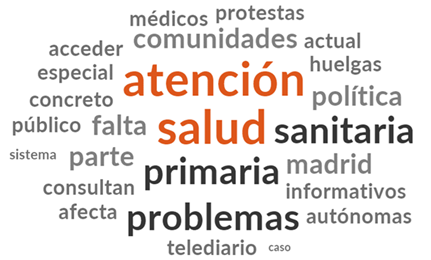
Health journalists agreed in 2015 and 2023 that the operation of the healthcare system was a topic that was covered quite a lot or a lot by their media outlet. The 16 journalists who participated in the 2023 study added a sense of great concern about the situation of the Spanish National Health System, which was expressed in terms such as «crisis», «difficulties», «precariousness», «problems», «strikes», and «widespread collapse». Below are two of the verbatim quotes, the first one chosen for its descriptive value and the second for its expressive force:
Chavero (2023): «We have reported on healthcare strikes in several autonomous communities, especially in Madrid. But there have been protests by healthcare workers in Catalonia, Valencia, Andalusia, Asturias, etc. There is widespread discontent in the sector over staff shortages».
Alonso (2023): «All the strikes, protests, and measures that are coming to light in Spain's autonomous communities in response to the widespread collapse of the healthcare system».
Figure 1. Word cloud generated by NVivo 14 on the healthcare system (2023)
Source: prepared by the authors.
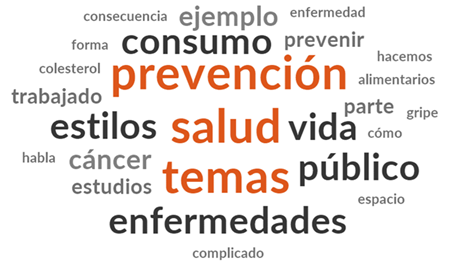
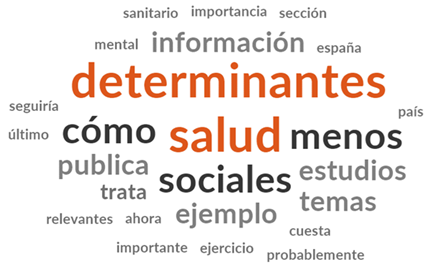
In the word cloud in Figure 1 (and in the two subsequent Figures), the size of each term represents its frequency: the larger a word appears, the more times it has been mentioned by journalists in their responses. This visualization allows us to identify the most recurring topics or concepts in the discourse analyzed.
With regard to preventive lifestyles, in 2023 and 2015, a large majority of journalists (12 in 2023) stated that their media outlets provided sufficient or extensive coverage of this issue, at a level similar to that of the healthcare system. Three of them specifically referred to the «extensive» amount and «great» importance of this type of information.
Ramírez de Castro (2023): «[We publish] many news of this type: cancer prevention, cardiovascular diseases, obesity, addiction, Alzheimer's, etc.».
Chavero (2023): «I think Spain is at the forefront of breast cancer prevention. Smoking prevention is also very important. A lot of work has also been done on cardiovascular health. COVID has helped us understand the importance of prevention».
Gutiérrez (2023): «It is very important to disseminate information about disease prevention and healthy lifestyles».
Although only Rubio (2023) and a radio journalist (2015) identified lifestyles as the least frequent topic in their media outlets' news programs, both before and after the pandemic, other minority voices expressed difficulties in finding space for these topics (one radio journalist and one TV journalist in each period). In the 2015 verbatim quotes, the reasons given were that «it always sounds the same to editors» and that «lifestyles are part of habits, and habits are not generally newsworthy». The 2023 verbatim quotes pointed out that «they are difficult to get published» and that «you have to fight for every minute and they get left out.» Below is an example of verbatim quotes from each period:
Gómez del Pino (2023): «Prevention is only occasionally mentioned. Health issues do not usually get much coverage in the news. You have to fight for every minute and optimize a lot. Prevention and research are left out».
Radio journalist (2015): «No, in general we do not usually talk about prevention in the news, unless it is from a statistical perspective».
Figure 2. Word cloud generated by NVivo 14 on preventive lifestyles (2023)
Source: prepared by the authors.
With regard to SDOH, in 2015, two of the journalists consulted reported difficulties understanding the concept, two others replied that their media outlets had not published anything on this topic in the last month, and a fifth one did not answer this question. Those who did respond provided very few examples of this type of news. The responses in 2023 indicated greater awareness of what SDOH are, and three of them repeated an expression that seems to have caught on: «Your zip code determines your health more than your genetic code».
However, when asked explicitly in 2023 which of the three major health topics proposed in the study was least covered by their media outlets, there was a high level of agreement (10 out of 16 journalists) that it was SDOH. The reasons given by these 10 respondents are shown below:
Pérez (2023): «Perhaps it is more difficult with social determinants. We do not insist unless there are significant developments. They go hand in hand with scientific studies that demonstrate their impact».
Samper (2023): «Probably because they play a less important role in the news agenda than the current situation of the healthcare system. Additionally, because it is a topic whose significance is not easy to perceive for journalists who are not familiar with this concept».
Labayen (2023): «The most frequently covered topics are those related to the healthcare system, which are more complex, followed by lifestyle issues, which are usually easier to consume».
Linde (2023): «Social determinants, which are crucial, are often overlooked. Probably because they are less obvious. When we talk about cholesterol, for example, we talk about diet, exercise... but we do not go into the causes of this diet... which very often have to do with social determinants».
Ramírez de Castro (2023): «Because there is less knowledge and less information available».
Alonso (2023): «Because there are hardly any studies and not all those that are published are credible».
Gómez de Pino (2023): «Because fewer studies or surveys are conducted on these topics, and they are complex to research without a statistical or survey basis».
Gutiérrez (2023): «Because these topics are less well known and not usually considered attractive enough. That does not mean that they are not very relevant issues».
Espinosa (2023): «It is hard to come up with a “hook”. It was unleashed in the pandemic because it made it particularly evident, and perhaps some studies can be published on the subject. (...) The reality is that these are issues that are perceived as “distant” and it is difficult for them to make it onto the agenda».
Antona (2023): «Because there are not many studies on the subject. More serious studies would help».
Figure 3. Word cloud generated by NVivo 14 on social determinants of health (2023)
Source: prepared by the authors.
3.3 More Information on Less Covered Topics
This section analyzes the responses of the 13 specialized journalists from media outlets, but not those of the three journalists from news agencies, as these are, by their nature, providers of large amounts of information and a fundamental part of their work is to provide as much information as possible. This is not the case of the media outlets, where the selection effort is much greater and their coverage of topics much more restricted.
Alonso, Espinosa, Gómez del Pino, Gutiérrez, Labayen, Linde, Pérez, Ramírez de Castro, and Samper were the journalists from media outlets who identified SDOH as the least covered topic in 2023. Seven of them believed that more information availability would not lead to more coverage because they are overwhelmed with press releases and conferences. The two who expressed the opposite view were not categorical either. «It could increase», said Samper (2023). «Probably», suggested Ramírez de Castro (2023).
For his part, Sanz (2023) stated that the least covered topic in his media outlet was health policy and that «it would remain the same» if more information was available. According to Rubio (2023), the topic with the least coverage was lifestyles, which would be covered more if «data-based studies» were proposed. Larrosa (2023) replied that all topics «have a place and are covered» and that «there are never sufficient sources if there are news and good information». The remaining respondent gave an off-topic response to these questions.
3.4. Open-Ended Responses: Specialization, Misinformation, and Precariousness
In the responses to the open-ended question about health journalism in Spain, the need for specialization arises:
Labayen (2023): «It is a type of journalism that requires a lot of training, which is neither easy nor accessible».
Pérez (2023): «Journalists need to be highly specialized, which is essential because we are dealing with sensitive, high-impact information».
Sanz (2023): «The important thing is that health journalism in Spain is carried out or directed by specialized professionals».
Linked to the importance of specialization is the only reference to fake news, misinformation, and clickbait headlines.
Gomez de Pino (2023): «[Specialization] is the only way to avoid repeating clichés, to tell different stories, and to get the most out of information. It also acts as an enormous barrier against misinformation, clickbait, and hoaxes».
Also, in the context of specialization, there is a clear lack of health knowledge among audiovisual media editors (most frequently cited) and newspaper editors (less frequently cited), who act as a second filter in newsroom routines. Journalistic jargon refers to this cascading selection process as pitching or selling information: journalists pitch their stories to editors, who buy some and reject others in a market where, according to health journalists, the stories they promote do not usually win.
A final aspect that stands out in the responses to the open-ended question in the questionnaire is the precarious nature of newsroom work, which appears more in 2023 than in 2015, and does so in relation to specialization, the quality of information, and public service.
Larrosa (2023): «I think that there are more good health journalists than bad ones, but what we see most is professional precariousness and a lack of specialization, because there are not enough professionals in newsrooms».
Espinosa (2023): «On a personal level, I think it is an area that is sometimes difficult to cover because it brings you face to face with very complicated realities. However, you forge a very special relationship with the patients. Every week, I reflect on how incredible the work is and I feel very fortunate to be there to report on it as a public service».
4. Discussion and Conclusions
Health journalists working for mainstream media outlets in Spain perceive that the pandemic has not brought about lasting changes in gatekeeping or in the relative importance given to the topics analyzed (healthcare, lifestyles, and SDOH). The results are discussed below based on each hypothesis.
4.1. Hypothesis 1
The perception of specialized journalists refutes hypothesis H1 that the pandemic could have led to greater prominence of health news in the Spanish mainstream media. On the contrary, three respondents explicitly state that health is once again losing ground, returning to the «back burner» or resuming its role as the «ugly duckling», an issue that is clearly viewed with displeasure. Why health is declining in the media agenda while polls place it among the top issues on the public agenda is a question that cannot be answered with the data from this study, but it does put the focus on the selection of topics made by editors in mainstream media. The initial selection made by health journalists is «pitched» to editors, who «buy» it or not based on a range of factors, among which the following stand out: 1) time/space constraints and 2) the fact that health competes in terms of relevance, interest, and topicality with many other topics.
Notwithstanding the above, it could be that the «weariness», «exhaustion» or «fatigue» relating to health issues caused by the pandemic, in the words of three of the journalists, is a sentiment shared by most editors, even if society at large does not feel the same way. If this were the case, we would be looking at what Shoemaker and Vos (2009) refer to as the individual influence factor in gatekeeping, related to the personal characteristics of editors: ways of thinking, values, and level of knowledge about the topics.
4.2. Hypothesis 2
The discussion on H2 must start from the premise that there is consolidated evidence that issues related to the healthcare system clearly dominate the media (Briggs & Hallin, 2016; Stroobant et al., 2016; Hallin et al., 2021). In Spain, Ugarte Iturrizaga et al. (2025) have observed that 57% of health news in the mainstream media deals with the healthcare system, compared to 17% that addresses SDOH and 14% that addresses lifestyles. However, the journalists who participated in our study spontaneously maintain that their media outlets cover the three major health issues raised (the healthcare system, preventive lifestyles, and SDOH) in a similar manner. Only when asked directly about which of the three is the least covered do 10 of them point to SDOH, but only two to lifestyles. Therefore, H2 is only partially confirmed: journalists do perceive that topics related to the healthcare system are more frequent and those related to SDOH are less frequent, but they do not notice the low presence of topics related to lifestyles.
One possible explanation is that journalists are influenced by the high amount of lifestyle content in non-news programs, social media, and digital platforms. Particularly in the case of audiovisual journalists, it could be argued that they work for networks where news programs account for only a small part of the overall programming, and it is true that lifestyle is covered by other programs on these networks, which include lifestyle journalism as one of the «light» topics that affect private life in the context of entertainment (Hanusch, 2014 and 2019; Perreault et al., 2024). Another possible explanation would be that journalists, like the rest of the general public and even to a greater extent and with better defined strategies than the average citizen (López-Meri & Casero-Ripollés, 2017), are present on social media, where lifestyle issues occupy a privileged place, often promoted by influencers (Kirkpatrick & Lawrie, 2024).
4.3. Hypothesis 3
It cannot be concluded that issues related to SDOH and preventive lifestyles are being addressed more frequently than before the pandemic. There were responses that indicated that coverage of both topics increased during the pandemic, but there is no evidence to suggest that this trend has continued in the new normal. It is particularly interesting that 10 out of the 16 journalists agreed that SDOH was the least covered of the three topics proposed in the study, as this opened up the possibility of asking them why they thought this was the case.
Three fundamental reasons emerge from their responses that would explain why SDOH are less frequently covered:
11. Lack of knowledge. These are issues that are «perceived as distant», «less well known», and «not usually attractive enough».
12. Complexity. These are issues where it is «difficult to come up with a hook», whose «importance is not easy to perceive», and which are «less obvious».
13. Lack of information. «There are hardly any studies, and not all of them are credible», «there is less information available», «we do not insist on them unless there are significant developments».
In line with what was noted in the discussion of H1, the lack of knowledge and complexity in understanding SDOH can be interpreted as a reference to their own colleagues/editors. This interpretation would be supported by verbatim quotes such as «it is not easy for journalists who are not familiar with this concept» or «these are topics that are less known to colleagues in the news services» or «the reality is that these are topics that are perceived as “distant” and are difficult to include in the agenda», Delving deeper into this possible knowledge gap between specialized journalists and editors, it should be noted that three of the journalists pointed out that, personally, they considered these issues to be «crucial», «very relevant», and «very interesting».
We wonder whether the three reasons given by journalists for overlooking the SDOH might, conversely, explain the extensive coverage of the healthcare system. The three questions we consider relevant for this analogy would be posed in the following terms: 1) Do journalists and editors have a good understanding of the healthcare system and the role of doctors? 2) Are the issues perceived as close to them and understandable? 3) Is there sufficient information available and new developments? We believe that the answer is yes, yes, and yes. The situation of the SNS, perceived very negatively by journalists, would add another news criterion of pressing relevance, whose informative interest is easy to understand when reading verbatim quotes such as «general collapse», «strikes», «lack of healthcare workers», «crisis», «waiting lists», etc.
4.4. Hypothesis 4
Most journalists deny that a greater supply of press releases and press conferences on SDOH would lead to more coverage of the topic, while they do not comment on whether this increase would mean more space for preventive lifestyles because, as shown in H2, they do not perceive this to be an underreported issue.
It is paradoxical that lack of information is cited as one of the reasons for the low coverage of SDOH while, at the same time, seven journalists claim that interest would not increase if there were more press releases, press conferences, and interview requests on this topic. This type of reaction supports the conclusions of those authors who point to journalists themselves as a barrier to the presence of SDOH in the media (Gasher et al., 2007; Raphael, 2011).
4.5. Limitations and Prospects
This research has limitations. Firstly, the results cannot be generalized due to the nature of qualitative research. Secondly, there are no comparisons between countries, as the sample was selected exclusively in Spain. Thirdly, the results are limited to the perceptions of health journalists working in a specific type of media, namely mainstream media. However, this study provides a very difficult-to-obtain sample of professional perceptions from journalists who agree to be identified, enabling a novel understanding of the evolution and challenges they face in their media outlets when treating health information in times of crisis and non-crisis.
Further research is needed to shed light on why the lack of coverage of lifestyle issues goes unnoticed by health journalists. Similarly, our study suggests that it would be interesting to investigate the perceptions of newspaper editors-in-chief and news editors in mainstream radio and television networks in order to ascertain their level of knowledge and awareness of health issues.
4.6. Conclusions
The conclusion is that, according to the perception of specialized journalists in the Spanish mainstream media, the pandemic has not brought about lasting changes in the news selection process or in the comparative weight given to the three major health topics proposed in this study: healthcare system, lifestyles, and SDOH. In the case of SDOH, it was found that its lower presence is not due to a lack of information available from potential journalistic sources, but rather to factors related to a lack of knowledge and complexity. The new normal for health journalists is very similar to their professional situation before the pandemic, after they managed to become gatekeepers for their newsrooms during the initial and most deadly moments of COVID-19.
Ethics and Transparency
Acknowledgements
We thank María del Mar Brotons Sanjuán for her English translation of the manuscript originally written in Spanish.
Conflict of Interest
The authors declare no conflict of interest.
Funding
This study has been funded by the UC3MMediaLab research group with funds from the COMSALUD project «Pseudoscience, conspiracy theories, fake news, and media literacy in health communication», ID: PID2022-142755OB-I00, 2023–2027 period, funded by the Spanish Ministry of Science and Innovation.
Author Contributions
|
Contribution |
Author 1 |
Author 2 |
Author 3 |
Author 4 |
|
Conceptualization |
X |
X |
|
|
|
Data curation |
X |
|
|
|
|
Formal Analysis |
X |
|
|
|
|
Funding acquisition |
|
X |
|
|
|
Investigation |
X |
X |
|
|
|
Methodology |
X |
X |
|
|
|
Project administration |
X |
X |
|
|
|
Resources |
X |
X |
|
|
|
Software |
X |
|
|
|
|
Supervision |
X |
X |
|
|
|
Validation |
X |
X |
|
|
|
Visualization |
X |
X |
|
|
|
Writing – original draft |
X |
|
|
|
|
Writing – review & editing |
X |
|
|
|
References
Asociación Nacional de Informadores de la Salud (ANIS). (3 de agosto de 2021). Pandemia y periodismo sanitario: Cómo la COVID-19 ha cambiado nuestra forma de trabajar [Página web de ANIS].
https://bit.ly/3Tlrl08
Baker, P., Friel, S., Kay, A., Baum, F., Strazdins, L. & Mackean, T. (2018). What Enables and Constrains the Inclusion of the Social Determinants of Health Inequities in Government Policy Agendas? A Narrative Review. International Journal of Health Policy and Management, 7(2), 101-111.
https://doi.org/10.15171/ijhpm.2017.130
Berg, B. L. (2001, 4ª ed.). Qualitative Research Methods for the Social Sciences. Pearson.
Berganza Conde, R. & Ruiz San Román, J. A. (2005). Investigar la Comunicación. Mc Graw Hill.
Briggs, C. L. & Hallin, D. C. (2010). Health reporting as political reporting: Biocommunicability and the public sphere. Journalism, 11(2), 149-165. https://doi.org/10.1177/1464884909355732
Briggs, CH. L. & Hallin, D. C. (2016). Making Health Public: How News Coverage Is Remaking Media, Medicine, and Contemporary Life. Routledge.
Castillo Salina, Y., Muñiz Zúñiga, V. y Legrá Tisertt, D. E. (2023). Agenda Setting y etnometodología. Su complementación en un estudio de la agenda pública local. index.Comunicación, 13(2), 173–199. https://doi.org/10.33732/ixc/13/02Agenda
Catalan-Matamoros, D. & Langbecker, A. (2023). Cómo ha cambiado la comunicación durante la pandemia COVID-19: La prensa española ante las vacunas. Estudios sobre el Mensaje Periodístico,29(3), 555-566. https://dx.doi.org/10.5209/esmp.84698
Clarke, J. N. (1991). Media Portrayal of Disease from the Medical, Political Economy, and Life-Style Perspectives. Qualitative Health Research, 1(3), 287-308.
https://doi.org/10.1177/104973239100100302
Clarke, J. N., & Everest, M. M. (2006). Cancer in the mass print media: Fear, uncertainty and the medical model. Social Science & Medicine, 62(10), 2591-2600.
https://doi.org/10.1016/j.socscimed.2005.11.021
Dahlgren, G. & Whitehead, M. (2021). The Dahlgren-Whitehead model of health determinants: 30 years on and still chasing rainbows. Public Health, 199, 20-24.
https://doi.org/10.1016/j.puhe.2021.08.009
De Montalvo Jaaskelainen, F., Gullón Tosio, P., Lumbreras Lacarra, B. y Sánchez-Mártinez, F. I. (2022). Informe SESPAS 2022: La respuesta a la pandemia de COVID-19. Lecciones aprendidas. Gaceta Sanitaria, 36(Supl. 1), 1-118.
https://bit.ly/3RrgtxV
Denzin, N. K. & Yvonna D. Lincoln, Y. S. (2011). The SAGE Handbook of Qualitative Research. Sage.
García-Avilés, J. A., Arias-Robles, F., Lara-González, A., Carvajal, M., Valero-PAstor, J. M. & Mondéjar. D. (2022). How COVID-19 is Revamping Journalism: Newsroom Practices and Innovations in a Crisis Context. Journalism Practice, 1-19.
https://doi.org/10.1080/17512786.2022.2139744
Gasher, M., Hayes, M., Hackett, R., Gutstein, D., Ross, I. & Dunn, J. (2007). Spreading the News: Social Determinants of Health Reportage in Canadian Daily Newspapers. Canadian Journal of Communication, 32(3), 557-574.
https://doi.org/10.22230/cjc.2007v32n3a1724
Hallin, D. C., Figenschou, T. U. & Thorbjørnsrud, K. (2021). Biomedicalization and Media in Comparative Perspective: Audiences, Frames, and Actors in Norwegian, Spanish, U.K. and U.S. Health News. The International Journal of Press/Politics, 26(3), 699–718. https://doi.org/10.1177/1940161220960415
Hanusch, F. (Ed.). (2014). Lifestyle journalism. Routledge.
Hanusch, F. (2019). Journalistic roles and everyday life: An empirical account of lifestyle journalists’ professional views. Journalism Studies, 20(2), 193-211.
https://doi.org/10.1080/1461670X.2017.1370977
Kirkpatrick, C. & Lawrie, L. (2024). TikTok as a Source of Health Information and Misinformation for Young Women in the United States: Survey Study. JMIR Infodemiology, 4, e54663.
https://doi.org/10.2196/54663
Lalonde, M. (1974). A New Perspective on the Health of Canadians. Minister of Supply and Services Canada.
Lopes, F., Santos, C. A., Peixinho, A. T., Magalhaes, O. E. & Araújo, R. (2021). Covid-19: Uma pandemia que reconfigura o jornalismo? Media & Jornalismo, 21(39), 57-75.
https://doi.org/10.14195/2183-5462_39_3
López-Meri, A. y Casero-Ripollés, A. (2017). Las estrategias de los periodistas para la construcción de marca personal en Twitter: posicionamiento, curación de contenidos, personalización y especialización. Revista Mediterránea De Comunicación, 8(1), 59–73. https://doi.org/10.14198/MEDCOM2017.8.1.5
Lopezosa, C., Codina, LL. y Freixa, P. (2022). ATLAS.ti para entrevistas semiestructuradas: guía de uso para un análisis cualitativo eficaz. DigiDoc Research Group (Pompeu Fabra University), RTI11/2022. https://bit.ly/3KKr3MM
Maares, P. & Hanusch, F. (2020). Exploring the boundaries of journalism: Instagram micro-bloggers in the twilight zone of lifestyle journalism. Journalism, 21(2), 262-278.
https://doi.org/10.1177/1464884918801400
Manning White, D. (1950). The Gatekeeper? A Case Study in the Selection of News, Journalism Quarterly, 27(74), pp. 383-390. https://doi.org/10.1177%2F107769905002700403
Marmot, M., Friel, S., Bell, R., Houweling, T. & Taylor, S. on Behalf of the Commission on Social Determinants of Health. (2008). Closing the Gap in a Generation: Health Equity through Action on the Social Determinants of Health. The Lancet, 372(9650), 1.661-1.669.
https://doi.org/10.1016/S0140-6736(08)61690-6
Martinón-Torres, M. (2022). Homo imperfectus. ¿Por qué seguimos enfermando a pesar de la evolución? Destino.
Mccombs, M. & Shaw, D. L. (1972). The Agenda-Setting Function of Mass Media. The Public Opinion Quarterly, 36(2), pp. 176-187. http://www.jstor.org/stable/2747787
McCombs, M. (2006). Setting the Agenda. The Impact of the Media on Public Opinion and Knowledge.
Mccombs, M. (2006). Setting the Agenda. The Impact of the Media on Public Opinion and Knowledge. Paidós.
Organización Mundial de la Salud (1948). Constitution of WHO. https://bit.ly/3yZPT8x
Organización Mundial de la Salud. (2008). Closing de Gap in a Generation. Health Equity through Action on the Social Determinants of Health. World Health Organization.
https://bit.ly/45npE82
Perreault, G. P., Ferrucci, P. & Ficara, G. (2024). No More Market-Driven Than Hard News: Lifestyle Journalists' Market Drive and Perceived Audience Obligations. Journalism Studies, 1-15. https://doi.org/10.1080/1461670X.2024.2333819
Quandt, T. & Wahl-Jorgensen, K. (2021). The coronavirus pandemic as a critical moment for digital journalism: Introduction to special issue: Covering Covid-19: The coronavirus pandemic as a critical moment for digital journalism. Digital Journalism, 9(9), 1.199-1.207. https://doi.org/10.1080/21670811.2021.1996253
Raphael, D. (2011). Mainstream media and the social determinants of health in Canada: is it time to call it a day? Health Promotion International, 26(2), 220-229.
https://doi.org/10.1093/heapro/dar008
Shoemaker, P. & Vos, T. (2009). Gatekeeping Theory. Routledge.
Smith, CH. & Tudor, S. (2018). National Health Service: 70th Anniversary. House of Lords Library Briefing.
https://bit.ly/4cjYBNh
Solar, O. & Irwin, A. (2010). A conceptual framework for action on the social determinants of health. Social Determinants of Health Discussion Paper 2 (Policy and Practice). WHO Document Production Services. https://doi.org/10.13016/17cr-aqb9
Stroobant, J., De Dobbelaer, R. & Raeymaeckers, K. (2016). Research Report: Health News Media Monitoring: Quantitative Study of Belgian Health News in Newspapers, Magazines, on Television, Radio and Online. https://biblio.ugent.be/publication/8539542
Thaler, R. H. & Sunstein, C. R. (2008). Nudge: improving decisions about health, wealth, and happiness. Yale University Press.
Ugarte Iturrizaga, A. (2023). ¿La comunicación no determina? Análisis de la investigación sobre comunicación en los determinantes sociales de la salud. Revista Española de Comunicación en Salud, 14(1), 87-94. https://doi.org/10.20318/recs.2023.7432
Ugarte Iturrizaga, A., Catalán-Matamoros, D. y Gutiérrez Ibañes, L. (2025). Gatopardismo mediático: representaciones de la salud en prensa, radio y televisión pre y pospandemia. Revista Latina De Comunicación Social, (83), 1–20.
https://doi.org/10.4185/rlcs-2025-2337
Vasconcelos, C., Lopes da Costa, R., Lopez Dias, A., Pereira, L. & Santos, J. P. (2021). Online influencers: healthy food or fake news. International Journal of Internet Marketing and Advertising, 15(2), 149-175.
https://doi.org/10.1504/IJIMA.2021.114334
Viswanath, K. & Emmons, K. M. (2006). Message Effects and Social Determinants of Health: Its Application to Cancer Disparities. Journal of Communication, 56(S1), S238–S264.
https://doi.org/10.1111/j.1460-2466.2006.00292.x
Viswanath, K., Bekalu, M., Dhawan, D., Pinnamaneni, R., Lang, J. & McLoud, R. (2021). Individual and social determinants of COVID-19 vaccine uptake. BMC Public Health, 21, 818. https://doi.org/10.1186/s12889-021-10862-1