index●comunicación
Revista científica de comunicación aplicada
nº 15(2) 2025 | Pages 109-128
e-ISSN: 2174-1859 | ISSN: 2444-3239
Online Information and Health Literacy in Rare Childhood Diseases
Información Online y Alfabetización en Salud en Enfermedades Raras Infantiles
Received on 23/07/2025 | Accepted on 28/05/2025 | Published on 15/07/2025
https://doi.org/10.62008/ixc/15/02Inform
Marta Lupón Bas | Universitat Oberta de Catalunya – Universitat Politècnica de Catalunya
mluponb@uoc.edu | https://orcid.org/0000-0001-8405-875X
Genís Cardona Torradeflot | Universitat Politècnica de Catalunya
genis.cardona@upc.edu | https://orcid.org/0000-0002-4770-8992
Abstract: The Internet is an important source of information for individuals with rare diseases and/or their families. The aim of the study was to develop and validate an index to easily assess the quality of Spanish-language websites providing health information, the Synthetic Quality Index (SQI). The validation of this tool was conducted by analysing a sample of web pages containing information on rare childhood ocular diseases (RCOD) that lead to visual impairment. The SQI has proven to be less complex to use and interpret than other instruments. The results suggest that the quality of analysed websites is not satisfactory, which may negatively impact the health literacy of the affected individuals and their families.
Keywords: Online Communication; Rare Diseases; Health Literacy; Website Quality; Readability; Childhood.
Resumen: Internet es una fuente importante de información para las personas con enfermedades raras y/o sus familiares. El propósito del estudio fue formular y validar un índice para valorar de forma sencilla la calidad de los sitios web en español con información sanitaria, el Índice Sintético de Calidad (ISC). La validación se llevó a cabo analizando una muestra de páginas web con información sobre enfermedades raras oculares infantiles (EROI) que conllevan discapacidad visual. El ISC ha demostrado ser más fácil de utilizar e interpretar que otros instrumentos. Los resultados sugieren que la calidad de los sitios web analizados no es buena. Ello puede repercutir en el nivel de alfabetización en salud de las personas afectadas y sus familiares.
Palabras clave: comunicación online; enfermedades raras; alfabetización en salud; calidad web; legibilidad; infancia.
To quote this work: Lupón-Bas, M. & Cardona-Torradeflot, G. (2025). Online Information and Health Literacy in Rare Childhood Diseases. index.comunicación, 15(2), 109-128. https://doi.org/10.62008/ixc/15/02Inform
1. Introduction
The internet and the use of information and communication technology (ICT) have brought about a paradigm shift in communication in all essential areas of life, including health. The latest data from the European Union’s office of statistics (Eurostat) indicate that 52% of European Union citizens searched for health information online in the last three months, a figure that rose to almost 65% in Spain (Eurostat, 2023). People with chronic diseases and those who care for them search for information on health topics much more intensively than people who do not have this profile (Álvarez-Gálvez et al., 2020; Torrent-Sellens et al., 2016).
The so-called rare diseases have a prevalence of 1 case in every 2,000 people or less (Orphanet, 2012). As a result, the internet has become a medium used by both people who suffer from them and their families, seeking information on the diagnosis, prognosis, or treatment options (Morgan et al., 2014). Despite this, both people affected by rare diseases and their families report having unmet informational needs and very limited access to information (Babac et al., 2018; Crowe et al., 2019). Parents of children with these diseases are unaware of both the particularities of the medical condition and the consequences it may have on their children’s development, both currently and in the future. Thus, searching for information online is part of their usual routines, both through web portals and social networks (Crowe et al., 2019; Lupón et al., 2023).
The rare nature of these diseases creates obstacles to establishing the appropriate conditions for conducting clinical trials leading to evidence-based scientific knowledge. Obtaining a diagnosis can take years, and funding for the development of treatment is insufficient (Benito-Lozano et al., 2022). Consequently, a general lack of knowledge about the topic is a common factor in these conditions and greatly affects how families manage the situation. It represents a significant physical and psychological burden and negatively impacts quality of life.
This lack of awareness is not limited to parents but to society at large. Parents feel alone and underserved by healthcare workers and the Health Authority, as well as misunderstood by teachers, family, friends, and others (Atkins & Padgett, 2024; Lupón et al., 2023).
1.1. Health literacy
The term ‘health literacy’ refers to the ability of individuals to access, understand, and use information in actions that promote and maintain health (WHO, 1998). In the definition by Sørensen et al. (2012), the ability to generate value judgments on the retrieved information is explicitly added to this repertoire of skills, that is, the ability to assess whether the information is reliable, truthful, up-to-date, useful, etc. The combined use of ICT in the health sector has led to a broadening of the focus and the coining of the terms ‘eHealth’ (European Commission, 2012; Eysenbach, 2001) and ‘eHealth literacy’ (Norman & Skinner, 2006).
In all its forms, health literacy is now considered a critical determinant of health, as it influences the empowerment and fosters the independence of citizens in health-related matters (Nutbeam et al., 2018). For such empowerment to come about, however, the capabilities and motivation of the individual seeking information are not enough; rather, health authorities, institutions, and stakeholders must take an active role in facilitating access to information, providing and communicating it in the most understandable way possible (Nutbeam, 2015; Rudd, 2015).
In the case of rare diseases, access to information is the first obstacle to overcome. Limited sources of information (including healthcare personnel) hinder decision-making. This negatively impacts the empowerment of patients and caregivers through health literacy, as well as their health and quality of life (Boettcher, 2021; Bogart et al., 2022; Páramo-Rodríguez et al., 2023).
1.2. Assessing the Quality of Online Information
While the advantages of easy access to health information online are significant, there are also drawbacks stemming from the vast amount of information available and the limited control over published content. The possibility that the retrieved information may be unverified, biased, misleading, false, confusing, or difficult to understand is unquestionable (Morley et al., 2020).
At the end of the 20th century, several initiatives emerged, such as the HONcode, the JAMA criteria (Silberg et al., 1997), and the DISCERN questionnaire (Discern, n.d.), aimed at facilitating the objective evaluation of the quality of online health information. In Spain, in the first decade of the 21st century, the validated Bermúdez questionnaire was created to evaluate the quality of websites containing health information, based on 18 multidimensional criteria (Bermúdez-Tamayo et al., 2006). The purpose of all these initiatives was to create instruments that were easy to use and interpret for both content developers and consumers. However, the multiplicity of criteria to be evaluated and the extension of the measurement scales hinder the practical use of these instruments, and the scientific community and the general public rate quality indicators differently (Gesser-Edelsburg et al., 2019; Sun et al., 2019).
The literature on the subject shows a general lack of unanimity regarding the quality criteria to be considered (Bernstam et al., 2005; Kloosterboer et al., 2019; Oloidi et al., 2020; Pauer et al., 2017; Williams et al., 2016), although indicators related to transparency, authorship, and content updating are frequently used. Others, such as usability or readability, are taken into account less frequently (Lara-Reyna et al., 2021; Worrall et al., 2020). Specifically, in research related to the readability of texts in Spanish, the free software INFLESZ (Ballesteros-Peña & Fernández-Aedo, 2013; Barrio, 2007; Barrio-Cantalejo et al., 2008; Vicente-Neira et al., 2022) has been used, which provides a standardised score of the Flesch-Szigriszt index (IFSZ) of readability, in a range from 0 to 100 points, and a descriptive level of readability on a Likert scale with 5 levels, from very easy to very difficult to understand.
Therefore, the current research had the following objectives: 1) to formulate a quality index that allows for an easy assessment of the quality of health websites, 2) to validate said quality index by evaluating the quality of Spanish-language websites that host information related to rare childhood ocular diseases leading to visual impairment, and thus assess their suitability to foster the health literacy of patients and/or their families.
2. Methodology
To objectively document the quality of the websites and assess their suitability as health literacy tools, the Bermúdez questionnaire was used as the gold standard (Bermúdez-Tamayo et al., 2006) and, in parallel, a new website quality index was formulated based on objective and easily identifiable reliability and readability criteria.
The recommendation of Bernstam et al. (2005) regarding the convenience of using a maximum of 10 simple criteria was intentionally followed, with a double purpose: to overcome the drawbacks arising from the multiplicity of criteria to be assessed and the extension of the measurement scales discussed above, and to facilitate the assessment from the perspective of a common user.
It is hypothesised that it is possible to develop a tool that eases an objective evaluation of the quality of websites containing health information and that, with this tool, the quality of the sites analysed in this study will be low.
2.1. Quality Dimensions and Indicators
After conducting a comprehensive review of the topic, it was deemed appropriate to develop a new index to rank and compare healthcare websites based on their quality scores, taking into account two dimensions: reliability and readability. Reliability was assessed using seven binary indicators (presence/absence), while readability was assessed using three indicators: one of them derived from the descriptive levels of the IFSZ (Barrio, 2007), and the other two binary.
All the indicators are defined in Table 1. The variables were operationalised by assigning a discrete score to each indicator, thus transforming the quality dimensions into quantitative variables.
Table 1. Dimensions and indicators of website quality
|
Dimension |
Indicator |
Score |
|
Reliability |
Ownership: details of the agents responsible for the site are specified. |
0 No 1 Yes |
|
Authorship: the author(s) of the information are identified. |
||
|
Update: specifies the date the content was published or last updated. |
||
|
Citing sources: sources of information and/or references are provided. |
||
|
Privacy Policy: explicitly stated. |
||
|
Contact person: the option of contacting (by phone, e-mail, etc.) is offered. |
||
|
Absence of conflict of interest: no commercial relationship, advertising, etc. is explicitly stated, identified or implied. |
||
|
Readability |
Linguistic readability: based on the Flesch-Szigriszt Index (IFSZ). This descriptive scale is transformed into discrete scores according to difficulty level. |
0 Very difficult 1 Quite difficult 2 Normal 3 Quite easy 4 Very easy |
|
Accessibility options: font size, background, etc. may be adjusted. |
0 No 1 Yes |
|
|
Illustrative elements: contains drawings, graphics, images, etc., that clarify or complement aspects of the text. |
Source: Own elaboration.
2.2. Synthetic Quality Index (SQI)
The parameter used to assess website quality is called the Synthetic Quality Index (SQI). It is an interval scale derived from the arithmetic sum of the scores for total reliability (CONF) and total readability (LET) (Table 2). Thus, possible SQI scores range from 0 to 13 (SQI=CONF+LET).
Table 2. Description of the SQI quality dimensions
|
Dimension |
Description |
|
Total reliability CONF |
Interval scale obtained from the arithmetic sum of the scores for each reliability indicator (presence, 1 point; absence, 0 points). Range: 0 to 7 points. |
|
Total readability LET |
Interval scale obtained from the arithmetic sum of the IFSZ readability scores (from 0 to 4 points depending on the descriptive level) and the presence (1 point) or absence (0 points) of the other readability indicators. Range: 0 to 6 points. |
Source: Own elaboration.
To facilitate the interpretation of the SQI, websites may be classified into three descriptive quality levels (DQLs): low, moderate, and high. The thresholds for distinguishing between levels were set at half of the achievable score both for the quality dimensions, and the SQI, and rounded up for non-integer numbers (i.e., 4 points for CONF, 3 points for LET, and 7 points for SQI). Thus, the SQI cut-off score to distinguish a low DQL from the rest was set at SQI<7, with SQI ³7 reserved for high and moderate DQLs. To distinguish between high and moderate DQLs, the reliability and readability thresholds mentioned above were considered: websites were classified as having a high DQL when, in addition to obtaining an SQI score of ³7, they simultaneously achieved CONF scores ³of 4 and LET scores ³of 3; when SQI ³7 but CONF<4 or LET<3, the website was classified as having a moderate DQL.
2.3. SQI Validation
To validate the SQI, a cross-sectional, observational study was conducted using Spanish-language websites with information on rare childhood ocular diseases associated with visual impairment. The search was carried out in March 2019 and narrowed down to nine diseases. The keywords used were: ocular albinism, aniridia, congenital cataract, cerebral visual impairment (or cortical visual impairment, or cortical blindness), congenital glaucoma, optic nerve hypoplasia (or septo-optic dysplasia), retinopathy of prematurity, retinitis pigmentosa, and Stargardt disease.
The Google Spain search engine was used, configuring the search with 10 results per page, Spanish language, and time interval from 2008 to 2018. The purpose was to emulate the typical behaviour of a lay person. Therefore, in all cases, data were collected from the first 30 records for each disease; in similarly orientated research, a maximum of 10 to 50 entries is commonly considered sufficient (Bea-Muñoz et al., 2016; Pauer et al., 2017). The sample for analysis included freely accessible websites with information in Spanish on the nine diseases mentioned. Search results were excluded if the website required registration to access it, or contained PDF documents, images, videos, PowerPoint presentations, duplicate entries, sites with exclusively commercial content or with unrelated information, as well as broken links.
Additionally, data were collected and categorised regarding the website’s country of origin, target population (general public, children/adolescents, patients/family members, healthcare professionals), the type of information provider (personal website; patient/family member organisation; medical institutions; other institutions or governmental or college bodies; optical, optometry, or low vision service providers; online health encyclopaedias), the type of information provided (description and/or symptoms, diagnosis, treatment, research, general advice, psychosocial advice), whether the site was endorsed by a website trust seal, and whether it provided accessibility options.
2.4. Data Analysis
Minitab 18 Ink software (Minitab Ltd., Coventry, UK) was used for the data analysis, with a significance level a = 0.05 (p<a). The Pearson correlation coefficient was used to validate the SQI, comparing scores obtained with the Bermúdez questionnaire and the SQI.
To analyse the quality of the selected web pages, frequency counting was performed for categorical variables, and the Ryan-Joiner normality test and measures of central tendency and dispersion were used for the numerical quality variables, CONF, LET, and SQI. A bivariate analysis was performed using the Student’s t-test and ANOVA, and Fisher’s exact test was employed to analyse the relationships between categorical variables.
3. Results
Considering that the search strategy targeted the first 30 results for each keyword, up to 270 records could potentially be obtained, which, considering the application of the inclusion and exclusion criteria, resulted in a final sample of 133 websites (Figure 1).
Figure 1. Selection process of the websites included in the analysis
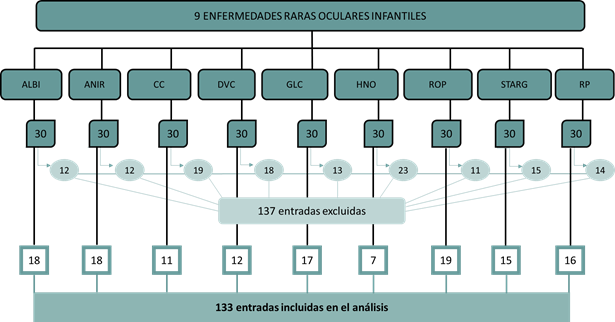
Source: Own elaboration (ALBI, albinism; ANIR, aniridia; CC, congenital cataract; DVC, cerebral visual impairment; GLC, congenital glaucoma; HNO, optic nerve hypoplasia; ROP, retinopathy of prematurity; STARG, Stargardt disease, RP, retinitis pigmentosa).
3.1. SQI Validation
To assess the suitability of using the SQI, all web pages in the sample were evaluated using the validated Bermúdez questionnaire, obtaining an average score of 36.2 ±5.9 (out of 54 points), which denotes moderate quality according to the questionnaire interpretation rules.
When calculating the Pearson correlation coefficient between the SQI and the Bermúdez score, a positive and relatively strong relationship was found between the two assessment instruments (r=0.676; p<0.001), with the SQI offering the advantage of simplicity. Thus, the results support the SQI as a valid tool for easily assessing the quality of healthcare websites.
3.2. Quality Variables in the Analysed Web Pages
The distribution of data for the CONF, LET and SQI variables among the selected web pages was normal (p>0.100). Table 3 shows the measures of central tendency and dispersion for these variables. The average SQI score denotes a low DQL (SQI<7 points), with an average value for CONF close to the threshold (4 points), and an average value for LET under the threshold (3 points).
Table 3. Description of the quality variables
|
Variable |
Mean (SD) |
Minimum score |
Maximum score |
|
SQI |
6.73 (1.68) |
3 |
11 |
|
CONF |
4.30 (1.45) |
0 |
7 |
|
LET |
2.43 (0.84) |
1 |
5 |
Source: Own elaboration (SD, standard deviation)
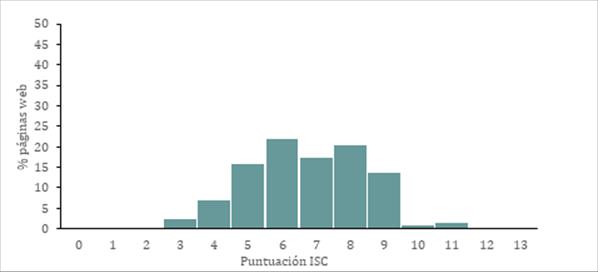
Figure 2 illustrates the distribution of SQI scores: almost half of the web pages analysed had a classification of a low DQL (47%, n=62; SQI<7), and only a third of them were classified as having a high DQL (n=45), i.e., they simultaneously met the SQI ³7, CONF ³4, and LET ³3 criteria.
Figure 2. Distribution of SQI scores in the analysed sample
Source: Own elaboration
Regarding overall reliability, one-third of the evaluated pages obtained a CONF score below 4 points, and only 20% of the sample achieved a score of 6 points or higher. The least frequently used reliability indicators were authorship (40%), citing sources (40%), and the explicit declaration of absence of conflicts of interest, or commercial, advertising or sponsorship relationships (38%). Regarding overall readability, more than half of the web pages in the sample did not achieve a LET score of 3 points (55%). Forty-three per cent of the analysed web pages were classified as having a quite difficult INFLESZ linguistic readability level (n=57), and only 29% of them provided accessibility options for people with visual impairment.
3.3. Categorical Variables and their Relationship with Quality Variables
The majority of the websites were geared towards the general public (78.2%), with 17% specifically for patients and/or their families (n=23). Despite containing information related to visual impairment in children and adolescents, none of the 133 websites in the sample were specifically targeted at this population group.
Regarding the nature of the information provider, 30% of the websites were identified as belonging to medical institutions, 18% to professional associations, colleges or public entities, and 15% to patient and/or family member organisations. Only those belonging to professional associations, colleges, or public entities and those belonging to online health encyclopaedias could be classified as having moderate and high DQLs.
While more than 90% of the records contained a description of the disease and some information on symptoms, causes, and diagnosis, just over a third provided information related to research or psychosocial advice or guidance. This type of information was significantly more common on patient and/or family member websites than on generic websites (p<0.05).
The country of origin of 77 of the 133 websites included in the analysis was Spain (58%), but the selection also included Spanish-language websites from the United States (30%), Latin American countries (6%), and Europe (6%). When comparing the mean SQI values between the set of websites from Spain and those from other countries, it was found that the former obtained a significantly lower SQI score (6.18 ±1.52 vs. 7.48 ±1.61; p<0.001); with the Bermúdez questionnaire, the results were in the same direction (p=0.002). Considering the DQL, the ratios from Spain vs. other countries were 2:1 for the low level (p<0.001), 1:2 for the moderate level (no statistical significance), and 3:5 for the high level (p=0.028). When analysing the possible reasons for these results, significant differences in the CONF score (p<0.001) were found, given a general absence of information related to page updates, authorship, source citation, and declaration of absence of conflict of interest. Paradoxically, linguistic readability scores were found to be significantly lower for the Spanish-language pages (p=0.001). However, when considering total readability (LET), the scores did not reach the 3-point threshold, nor were there significant differences, regardless of the country of origin.
4. Discussion
Examining compliance with quality criteria using tools such as the JAMA criteria or DISCERN questionnaire is a complex task; even the Bermúdez questionnaire is difficult to use and interpret. The presented work proposes an index to objectively assess the quality of websites, the SQI, with only two dimensions (reliability and readability). Therefore, its interpretation is simple, as it proposes a qualitative scale with three descriptive quality levels.
The piece of work was developed from the hypotheses that it would be possible to simplify the evaluation process of websites containing health information, and, on the other hand, that the quality of the analysed websites would be low, as documented with other health conditions. The correlation between the SQI scores and those of the validated Bermúdez questionnaire, when evaluating the web pages in the sample, denotes a moderate-high agreement between both tools. Obtaining and interpreting the SQI can be, comparatively, less complex, faster, and easier. With the SQI, it was found that, overall, the quality of the analysed web pages was low, as reported in similar pieces of research (Bea-Muñoz et al., 2016; Oloidi et al., 2020; Pauer et al., 2017; Tahir et al., 2020). The web search strategy was useful to know the type of information the general population accesses when browsing online for rare childhood ocular diseases in the Spanish language. In addition, the value of these websites as health literacy tools may be debatable.
Some unexpected findings were observed: although the websites in the sample contained information on ocular diseases that occur in childhood and adolescence, none were found to be specifically targeted at this population group. It may be assumed that younger children will not search for information about their vision condition on the internet, but they may do so around the age of 10 or 12. At this age, they become fully immersed in online use and are consolidating the cognitive skills necessary to search for health information and answers to their specific concerns, as well as to understand this information. In the analysis that Franck et al. (2008) conducted on the queries received on a UK National Health Service website containing health information aimed at children and adolescents, it was found that the majority of queries were made by adolescents (64%). Similarly, Park and Kwon (2018), in a systematic review on health-related internet use in children and adolescents, found that in 53% of the studies the participants (children and adolescents) had used the internet for health-related queries.
Besides that, it was found that more than 70% of the websites analysed did not include accessibility options; if the website is accessed by children or adolescents with visual impairments, this may create an additional obstacle. The regulation on accessibility guarantees for websites and mobile applications in Spain is included in Royal Decree 1112/2018 (BOE (Boletín Oficial del Estado [Official Spanish State Gazette]), 2018), which solely applies to websites and apps of public sector organisations and private entities related to the Health Authority that provide public services or are financed with public funds. Therefore, in other areas not related to the Health Authority, internet users are unprotected from discrimination based on disability.
Finally, it was found that websites from Spain obtained a significantly lower SQI score than those from other countries. To explain this, the CONF and LET dimensions and their indicators were explored. On websites from Spain, the presence of some reliability indicators and the linguistic readability score were significantly lower. Comparing the average word-to-sentence ratios, it was found that websites from Spain used more subordinate clauses (17.4 ±11.8 vs. 13.2 ±2.9; p=0.004). A plausible explanation is that the majority of websites from other countries were from the United States, where, due to the large Latin American population, it is common to find material written in both English and Spanish, and there is a particular sensitivity to the cultural adaptation of content using plain language. In any case, the fact that almost half of the pages analysed were categorised as having a somewhat difficult linguistic readability level (corresponding to secondary school textbooks and specialised press) implies that they require an excessive level of reading competence for the general public, calling into question their potential usefulness. Publications assessing online information on health topics commonly reach the same conclusion (Ayoub et al., 2019; Bea-Muñoz et al., 2016; Kloosterboer et al., 2019; Williams, 2016).
The websites of professional associations, colleges and public entities were classified as being high or moderate in quality, but the same was not true for the sample of medical institution websites. Their weakest points in terms of reliability were the lack of explicit conflict of interest declarations (present on only 2% of the websites), the lack of citation of other information sources (present on 22% of the websites), the lack of authorship details (present on 29% of the websites), and the lack of accessibility options (present on 20% of the websites); this trend is in line with previous studies of similar orientation (Kloosterboer et al., 2019; Oloidi et al., 2020).
Regarding the type of information provided, only a third of the pages offered psychosocial advice or guidance. As in Pauer et al. (2017), patient and/or family member organisation websites most frequently provide this type of information, reflecting the very reason for their existence. The need to access this kind of information is a recurring theme in publications exploring the needs of families with children with visual impairments (Correa-Torres & Zebehazy, 2014; Enoch et al., 2021).
The percentage of websites in the sample with trust seals is apparently low (25%), but similar to that reported by Weymann et al. (2015) in their analysis of the quality of websites on type II diabetes (23%), and much higher than reported by Pauer et al. (2017) on websites on rare diseases (6%). Websites with a trust seal have significantly higher SQI values than those without them (7.75 vs. 6.41, p<0.001), a fact that may be explained considering that some of the indicators included in the SQI are required to obtain a trust seal. However, a direct relationship cannot be established between the poor quality of websites and the absence of trust seals, as it must be taken into account that the request for this type of accreditation is voluntary, and it involves a financial cost. Furthermore, website trust accreditation processes do not evaluate the informative content of the pages so, similarly, a relationship cannot be established between the rigour of the information they host and the presence of a seal (Padilla-Garrido et al., 2016).
Finally, this study was not devoid of limitations: the use of the SQI represents an advantage over other tools for assessing the quality of healthcare websites, due to the ease of both verifying indicators and interpreting results. However, although the choice of reliability and readability indicators is based on exhaustive research of the topic, it is not without some arbitrariness, and there is a risk that the desire for synthesis may have led to oversimplification. Nevertheless, the relatively good correlation between the quality score obtained with the SQI and with the validated Bermúdez questionnaire suggests that the SQI fulfils its function. Furthermore, by limiting the evaluation of the quality of websites to reliability and readability, the actual quality of the information they contain is not assessed. While with common diseases this assessment may be performed by contrasting the available information with that published in medical guides or checklists, the very nature of these rare diseases precludes this approach, an aspect that can also be interpreted as a limitation. Finally, considering that renewal and change are constant on the internet, this type of study with the characteristics presented may not be 100% repeatable after the date of its completion. Accordingly, the procedure followed has been meticulously documented, including the precautionary step of examining the first 30 results for each keyword. The resulting sample, comprising over 130 web pages, thus suggests that the conclusions drawn will remain valid in a not-too-distant future. Moreover, should this study, or similar research, contribute to the improved evaluation of web page quality in the coming years by prompting the correction of existing shortcomings, any subsequent reduction in the validity of these conclusions would nonetheless represent a constructive outcome.
5. Conclusion
The SQI has proven to be a valid index that is easy to use and interpret. Using this index to analyse the quality of Spanish-language websites containing information related to rare childhood ocular diseases revealed low quality, either in terms of reliability or readability. The limited presence of accessible websites and the absence of websites specifically targeted at children and adolescents are noted.
For all these reasons, the potential of these websites as literacy tools for affected individuals and/or their families is considered limited. In light of this, it is recommended that health information providers, especially medical institutions, include trust indicators such as authorship, the citation of sources, date of last update, and declaration of absence of conflicts of interest; employ simpler and shorter sentences and more straightforward language; and ensure accessibility.
Ethics and Transparency
Acknowledgements
The authors express their gratitude to Hannah Kate Lennie for her careful review of the English version.
Conflict of Interest
The authors declare that there is no conflict of interest.
Funding
The authors declare that they have not received any funding.
Author Contributions
|
Contribution |
Author 1 |
Author 2 |
Author 3 |
Author 4 |
|
Conceptualization |
X |
|
|
|
|
Data curation |
X |
X |
|
|
|
Formal Analysis |
X |
X |
|
|
|
Funding acquisition |
|
|
|
|
|
Investigation |
X |
X |
|
|
|
Methodology |
X |
X |
|
|
|
Project administration |
|
|
|
|
|
Resources |
|
|
|
|
|
Software |
|
|
|
|
|
Supervision |
X |
X |
|
|
|
Validation |
X |
X |
|
|
|
Visualization |
X |
X |
|
|
|
Writing – original draft |
X |
|
|
|
|
Writing – review & editing |
X |
X |
|
|
Data Availability Statement
Access to the data is possible upon request to the corresponding author.
References
Álvarez-Gálvez, J., Salinas-Pérez, J.A., Montagni, I., & Salvador-Carulla, L. (2020). The persistence of digital divides in the use of health information: a comparative study in 28 European countries. International Journal of Public Health 65(3), 325–333. https://doi.org/10.1007/s00038-020-01363-w
Atkins, J.C., & Padgett, C.R. (2024). Living with a Rare Disease: Psychosocial Impacts for Parents and Family Members – a Systematic Review. Journal of Child and Family Studies, 33, 617–636. https://doi.org/10.1007/s10826-024-02790-6
Ayoub, S., Tsui, E., Mohammed, T., & Tseng, J. (2019). Readability assessment of online uveitis patient education materials. Ocular Immunology and Inflammation, 27(3), 399–403. https://doi.org/10.1080/09273948.2017.1413396
Babac, A., Frank, M., Pauer, F., Litzkendorf, S., Rosenfeldt, D., Lührs, V., Biehl, L., Hartz, T., Storf, H., Schauer, F., Wagner, T. O. F., & Graf Von Der Schulenburg, J. M. (2018). Telephone health services in the field of rare diseases: a qualitative interview study examining the needs of patients, relatives, and health care professionals in Germany. BMC Health Services Research, 18(1), 99. https://doi.org/10.1186/s12913-018-2872-9
Ballesteros-Peña, S., & Fernández-Aedo, I. (2013). Análisis de la legibilidad lingüística de los prospectos de los medicamentos mediante el índice de Flesch-Szigriszt y la escala Inflesz. [Legibility analysis of drug package leaflets using Flesch-Sszigriszt index and Inflesz score]. Anales del sistema sanitario de Navarra, 36(3), 397–406. https://doi.org/10.4321/s1137-66272013000300005
Barrio, I.M. (2007). Legibilidad y salud: los métodos de medición de la legibilidad y su aplicación al diseño de folletos educativos sobre salud - Readability and health: the methods of measuring readability and their application to the design of educational brochures on health. [Doctoral dissertation, Universidad Autónoma de Madrid]. https://tinyurl.com/yckh8my2
Barrio-Cantalejo, I.M., Simón-Lorda, P., Melguizo, M., Escalona, I., Marijuán, M.I., & Hernando, P. (2008). Validación de la escala INFLESZ para evaluar la legibilidad de los textos dirigidos a pacientes. [Validation of the INFLESZ scale to evaluate readability of texts aimed at the patient]. Anales del Sistema Sanitario de Navarra, 31(2), 135-152. https://tinyurl.com/mr34cyye
Bea-Muñoz, M., Medina-Sánchez, M., & Flórez-García, M. T. (2016). Quality of websites with patient information about spinal cord injury in Spanish. Spinal cord, 54(7), 540–545. https://doi.org/10.1038/sc.2015.190
Benito-Lozano, J., López-Villalba, B., Arias-Merino, G., Posada De La Paz, M., & Alonso-Ferreira, V. (2022). Diagnostic delay in rare diseases: data from the Spanish rare diseases patient registry. Orphanet Journal of Rare Diseases, 17(1), 418. https://doi.org/10.1186/s13023-022-02530-3
Bermúdez-Tamayo, C., Jiménez-Pernett, J., García Gutiérrez, J. F., Azpilicueta Cengotitobengoa, I., Milena Silva-Castro, M., Babio, G., Y Plazaola Castaño, J. (2006). Cuestionario para evaluar sitios web sanitarios según criterios europeos. [Questionnaire to Evaluate Health Web Sites According to European Criteria]. Atención Primaria, 38(5), 268–274. https://doi.org/10.1157/13092985
Bernstam, E. V., Shelton, D. M., Walji, M., & Meric-Bernstam, F. (2005). Instruments to assess the quality of health information on the World Wide Web: what can our patients actually use? International Journal of Medical Informatics, 74(1), 13–19. https://doi.org/10.1016/j.ijmedinf.2004.10.001
Boe, Boletín Oficial del Estado. (2018). Real Decreto 1112/2018, de 7 de septiembre, sobre accesibilidad de los sitios web y aplicaciones para dispositivos móviles del sector público https://tinyurl.com/yerpfeyj
Boettcher, J., Boettcher, M., Wiegand-Grefe, S., & Zapf, H. (2021). Being the Pillar for Children with Rare Diseases-A Systematic Review on Parental Quality of Life. International journal of environmental research and public health, 18(9), 4993. https://doi.org/10.3390/ijerph18094993
Bogart, K., Hemmesch, A., Barnes, E., Blissencach, T., Beisang, A., Engel, P., & The Cloe Barnes Advisory Council On Rare Diseases. (2022). Healthcare access, satisfaction, and health-related quality of life among children and adults with rare diseases. Orphanet Journal of Rare Diseases, 17(196), 1-18. https://doi:10.1186/s13023-022-02343-4
Correa-Torres, S.M., & Zebehazy, K.T. (2014). Lessons learned from Hispanic mothers in the United States: Recommendations for personnel preparation and research in visual impairment. British Journal of Visual Impairment, 32(3), 191-199. https://doi.org/10.1177/0264619614539954
Crowe, A. L., Mcknight, A. J., & Mcaneney, H. (2019). Communication needs for individuals with rare diseases within and around the healthcare system of Northern Ireland. Frontiers in Public Health, 7, 236. https://doi.org/10.3389/fpubh.2019.00236
Discern. (n.d.). Quality criteria for consumer health information. https://tinyurl.com/2kzdm69b
Enoch, J., Dickinson, C., & Subramanian, A. (2021). What support is beneficial for caregivers of individuals with vision impairment? Clinical and Experimental Optometry, 104(4), 455-470. https://doi.org/10.1080/08164622.2021.1878814
European Commission. (2012). eHealth Action Plan 2012-2020. https://tinyurl.com/rt59das7
Eurostat, Statistical Office Of The European Union. (2023). Individuals using the internet for seeking health-related information. https://tinyurl.com/57bsbbtw
Eysenbach, G. (2001). What is e-health? Journal of Medical Internet Research, 3(2):e20. https://doi.org/10.2196/jmir.3.2.e20
Franck, L., Noble, G., & Mcevoy, M. (2008). Enquiring minds want to know: topics requested by users of a children's health information website. Patient Education and Counseling, 72(1), 168–171. https://doi.org/10.1016/j.pec.2008.02.014
Gesser-Edelsburg, A., Abed Elhadi Shahbari, N., Cohen, R., Mir Halavi, A., Hijazi, R., Paz-Yaakobovitch, G., & Birman, Y. (2019). Differences in perceptions of health information between the public and health care professionals: Nonprobability sampling questionnaire survey. Journal of Medical Internet Research, 21(7), e14105. https://doi.org/10.2196/14105
Kloosterboer, A., Yannuzzi, N. A., Patel, N. A., Kuriyan, A. E., & Sridhar, J. (2019). Assessment of the quality, content, and readability of freely available online information for patients regarding diabetic retinopathy. JAMA ophthalmology, 137(11), 1240–1245. https://doi.org/10.1001/jamaophthalmol.2019.3116
Lara-Reyna, J., Roa, J. A., Yaeger, K. A., & Margetis, K. (2021). Availability and Readability of Spinal Cord Injury Online Information Materials for Spanish Speaking Population in Neurosurgical Academic Programs: A Nationwide Study. International journal of spine surgery, 15(5), 1039–1045. https://doi.org/10.14444/8132
Lupón, M., Armayones, M., & Cardona, G. (2023). Quality of life of caregivers of children with visual impairment: A qualitative approach. Research in Developmental Disabilities, 138, 104538. https://doi.org/10.1016/j.ridd.2023.104538
Morley, J., Cowls, J., Taddeo, M., & Floridi, L. (2020). Public health in the information age: Recognizing the infosphere as a social determinant of health. Journal of Medical Internet Research, 22(8), e19311. https://doi.org/10.2196/19311
Morgan, T., Schmidt, J., Haakonsen, C., Lewis, J., Della Rocca, M., Morrison, S., Biesecker, B., & Kaphingst, K. A. (2014). Using the Internet to seek information about genetic and rare diseases: a case study comparing data from 2006 and 2011. JMIR Research Protocols, 3(1), e10. https://doi.org/10.2196/resprot.2916
Norman, C.D., & Skinner, H.A. (2006). eHealth literacy: essential skills for consumer health in a networked world. Journal of Medical Internet Research, 8(2): e9. https://doi.org/10.2196/jmir.8.2.e9
Nutbeam, D. (2015) Defining, measuring and improving health literacy. Health, Evaluation and Promotion, 42(4), 450-455. https://doi.org/10.7143/jhep.42.450
Nutbeam, D., Levin-Zamir, D., & Rowlands, G. (2018). Health literacy and Health promotion in context. Global Health Promotion, 25(4), 3-5. https://doi.org/10.1177/1757975918814436
Oloidi, A., Nduaguba, S. O., & Obamiro, K. (2020). Assessment of quality and readability of internet-based health information related to commonly prescribed angiotensin receptor blockers. The Pan African Medical Journal, 35, 70. https://doi.org/10.11604/pamj.2020.35.70.18237
Orphanet (2012). About rare diseases. https://tinyurl.com/5fapuure
Padilla-Garrido, N., Aguado-Correa, F., Huelva-López, L., & Ortega-Moreno, M. (2016). Análisis comparativo de los sellos de calidad de páginas web sanitarias. [Comparative analysis of quality labels of health websites]. Revista de Calidad Asistencial, 31(4), 212-219. https://doi.org/10.1016/j.cali.2015.11.002
Park, E., & Kwon, M. (2018). Health-related Internet use by children and adolescents: Systematic review. Journal of Medical Internet Research, 20(4), e120. https://doi.org/10.2196/jmir.7731
Pauer, F., Litzkendorf, S., Göbel, J., Storf, H., Zeidler, J., & Graf Von Der Schulenburg, J. M. (2017). Rare diseases on the Internet: An assessment of the quality of online information. Journal of Medical Internet Research, 19(1), e23. https://doi.org/10.2196/jmir.7056
Páramo-Rodríguez, L., Cavero-Carbonell, C., Guardiola-Vilarroig, S. López-Maside A., González Sanjuán, M.E., Y Zurriaga, O. (2023). Demora diagnóstica en enfermedades raras: entre el miedo y la resiliencia. [Diagnostic delay in rare diseases: between fear and resilience]. Gaceta Sanitaria, 37(2023), 102272. https://doi.org/10.1016/j.gaceta.2022.102272
Rudd, R.E. (2015). The evolving concept of Health literacy: new directions for Health literacy studies. Journal of Communication in Healthcare, 8(1), 7-9. https://doi.org/10.1179/1753806815Z.000000000105
Silberg, W. M., Lundberg, G. D., & Musacchio, R. A. (1997). Assessing, controlling, and assuring the quality of medical information on the Internet: Caveant lector et viewor-Let the reader and viewer beware. JAMA, 277(15), 1244–1245. https://doi.org/10.1001/jama.1997.03540390074039
Sørensen, K., Van Den Broucke, S., Fullam, J., Doyle, G., Pelikan, J., Slonska, Z., Band, H., & (Hls_Eu) Consortium Health Literacy Project European. (2012). Health literacy and public health: a systematic review and integration of definitions and models. BMC Public Health, 12, 80. https://doi.org/10.1186/1471-2458-12-80
Sun, Y., Zhang, Y., Gwizdka, J., & Trace, C. B. (2019). Consumer evaluation of the quality of online health information: Systematic literature review of relevant criteria and indicators. Journal of Medical Internet Research, 21(5), e12522. https://doi.org/10.2196/12522
Tahir, M., Usman, M., Muhammad, F., Rehman, S., Khan, I., Idrees, M., Irfan, M., & Glowacz, A. (2020). Evaluation of Quality and Readability of Online Health Information on High Blood Pressure Using DISCERN and Flesch-Kincaid Tools. Applied Sciences, 10(9), 3214. https://doi.org/10.3390/app10093214
Torrent-Sellens, J., Díaz-Chao, Á., Soler-Ramos, I., & Saigí-Rubió, F. (2016). Modelling and predicting eHealth usage in Europe: A multidimensional approach from an online survey of 13,000 European Union Internet users. Journal of Medical Internet Research, 18(7):e188. https://doi.org/10.2196/jmir.5605
Vicente-Neira, A., Prieto-Gómez, V., Navarro-Brazález, B., Lirio-Romero, C., Bailón-Cerezo, J., & Torres-Lacomba, M. (2022). Online information on painful sexual dysfunction in women: Quality analysis of websites in Spanish about dyspareunia, vaginismus and vulvodynia. International Journal of Environmental Research and Public Health, 19(3), 1506. https://doi.org/10.3390/ijerph19031506
Weymann, N., Härter, M., & Dirmaier, J. (2015). Quality of online information on type 2 diabetes: a cross-sectional study. Health Promotion International, 30(4), 821–831. https://doi.org/10.1093/heapro/dau019
Who, World Health Organization. (1998). Division of Health Promotion, Education, and Communication. Health promotion glossary. (WHO/HPR/HEP/98.1) https://tinyurl.com/3rs79zzy
Williams, A. M., Muir, K. W., & Rosdahl, J. A. (2016). Readability of patient education materials in ophthalmology: a single-institution study and systematic review. BMC Ophthalmology, 16, 133. https://doi.org/10.1186/s12886-016-0315-0
Worrall, A. P., Connolly, M. J., O'neill, A., O'doherty, M., Thornton, K. P., Mcnally, C., Mcconkey, S. J., & De Barra, E. (2020). Readability of online COVID-19 health information: a comparison between four English speaking countries. BMC Public Health, 20, 1-12. https://doi.org/10.1186/s12889-020-09710-5