[1] (the absence of a real commitment beyond the intentional marketing strategy). For this purpose, the interaction rate per publication (IPR), the engagement generated by the campaigns, and the nature of the users’ feedback are analyzed.
2. Origin and Evolution of Brand Activism: CSR, Social Marketing, Intentional Marketing, and Woke Advertising
Corporate social responsibility (CSR) analysis, as a philosophy of governance, pertains to different approaches that explain how, since the second half of the twentieth century, the interaction between business organizations and their context has been brought about from social, economic, and environmental impacts, stemming from the activities developed by the organizations themselves (UN, 2015; Eding and Scholtens, 2017; Arteaga et al., 2022). Thus, we find numerous contributions focused, among other issues, on the relationships between organizations and stakeholders, as well as the ethical, philanthropic, regulatory[2], economic, social, and environmental dimensions, together with the implementation of CSR models, to create value, improve the positioning of organizations, and achieve an optimal reputation (Kramer and Porter, 2006; Villafañe, 2009; García-Salazar et al., 2021).
As a result, and especially since the first decade of the twenty-first century, there has been a notable increase in the interest of business organizations that generate a high impact on society to show their CSR initiatives through reports, balance sheets, and sustainability reports that are conveniently verified (UN, 2015; Sánchez-Villamil et al., 2019).
Of all the aspects of CSR, it is the social dimension that is most closely linked to corporate philanthropy. Companies dedicate financial, human, or material resources to support social, environmental, or educational causes through charitable actions with a direct impact on society. These initiatives take the form of financial donations to non-profit organizations or associations, volunteer programs, and sponsorship of community events, as well as contributions, collaborations, and sustainable investments.
In this review of concepts, the social marketing of Kotler and Zaltman (1971) is consolidated with Kotler and Roberto (1989), in which they establish that, in marketing oriented toward social products such as ideas, other factors such as attitudes, beliefs, and behaviors are also integrated. A new approach is thus emerging on the basis of the fact that organizations must direct all their efforts toward a group of adopters (or the target market), as the target audience, so that they accept, modify, or abandon certain ideas, attitudes, and behaviors.
Social marketing is a common practice within the different intentional marketing strategies (developed by NGOs and non-profit associations) and commitment to a cause (or corporate social), which aims to convey commitment to certain social values by associating them with the identity and culture of an organization (Almeida-García, 2021). In this sense, social advertising is, in turn, framed within the more traditional parameters of social marketing by contributing to the alleviation or resolution of certain social issues or conflicts on the basis of messages that stem from awareness-raising objectives, advocacy, and civil rights (Orozco and Roca, 2011; Senes and Ricciulli-Duarte, 2019; López-Casares, 2023).
On the contrary, woke advertising represents the review and evolution of corporate intentional marketing (or corporate social) strategies, since its purpose is to reflect relevant social issues from the position of purpose as an integrative approach to generate engagement with a target audience that values the authenticity of brands. Thus, the identity of business organizations reflects the real commitment to these social values in all areas of management and strategic policies, beyond the marketing narrative itself (Cristóbal et al., 2022). This involves the implementation of purpose-driven internal policies such as social engagement, ethical hiring practices, diversity in the workplace, initiatives to support different sectors of the community, and other concrete actions that justify cause-focused marketing campaigns.
In this context, brands design advertising strategies not only to attract their target audience but also to promote meaningful messages about relevant social issues (López-Casares, 2023). Purposeful brand communication is based on clear, transparent, and convincing messages that make the commitment assumed by the brand visible through a narrative consistent with its own identity. Through this, empathy and emotional affinity with the target audience are generated (Barrio-Fraile et al., 2022).
In contrast to these approaches, woke washing practices represent the superficial or opportunistic use of socially sensitive issues and are identified with the way brands proceed when they use speech, images, or symbols related to social issues to connect with consumers and improve their image and reputation, without backing up their communicative narrative (storytelling) with actions or significant changes in the strategic lines of their corporate policy (storydoing) (Vizcaíno-Alcantud, 2017, 2023; Asenjo and Del Pino-Romero, 2023).
Consequently, organizations that link their identity to a purpose – as a true social commitment – develop efficient corporate strategies with actions aimed at consolidating their image and reputation as intangible values in the medium and long term (Villafañe, 2009; Orozco and Roca 2011; Carreras et al., 2013; Senes and Ricciulli-Duarte, 2019; López-Casares, 2023). Such actions include the design of marketing campaigns focused on raising awareness of social causes.
3. Gay-friendly Corporate Strategies: Pink Advertising and Pink Washing
The term “gay-friendly” emerged in the 1990s in the United States and refers to spaces, policies, people, organizations, and institutions committed to establishing and maintaining a tolerant, supportive, and accepting environment for LGBTQI+ people[3] (lesbian, gay, bisexual, transgender, queer, intersex, and other gender diversities and sexual orientations) (Transgender Europe 2020; REDI, 2023; Gay Friendly Spain, 2024).
Gay-friendly companies are those that show their commitment to the collective through different actions and corporate strategic policies (Gay Friendly Spain, 2024). Therefore, the identification of organizations under this categorization is independent of whether they operate in the business context of the pink market, with products and services offered by brands that manage the needs and assume the preferences and ideals of the collective. These organizations integrate the awareness of the principles of equal opportunity and respect for LGBTQI+ diversity in their corporate values, develop an inclusive culture, ensure their essential rights, and manage inclusion and visibility policies in an intersectional manner (Ortiz-Fernández, 2016; REDI, 2023). They are characterized by active support for organizations working to defend the rights and equality of the LGBTQI+ community through strategic alliances, financial donations, collaborations, sponsorship of events (such as Pride Month), or awareness campaigns. They also establish standardized action protocols for cases of discrimination and homophobic behavior, along with the development of annual reports reflecting the results of LGBTQI+ inclusive policies.
In this context of LGBTQI+ intentional marketing activism, marketing and communication strategies are designed to establish strong emotional connections between organizations and their target audiences on the basis of an ongoing commitment to identity and cultural values or the reflection of causes relevant to the community (Olveira-Araujo, 2019, 2022; Castelló-Martínez, 2023; Romero and Checa, 2023).
In marketing communication, the collective has traditionally been represented in a superficial and inexplicit way. However, in recent years, brands have evolved toward much more transparent and risky representations by using sexual orientation and gender identity in the design of creative strategies (Darie, 2017; Valecillos and Martinez, 2022; Eisend et al., 2023). Their representation in marketing communication has contributed to significant advances in the social construction of their own identity as a collective (Darie, 2017; Velasco, 2017; Valecillos and Martínez, 2022; Castelló-Martínez, 2023; Romero and Checa, 2023), and this visibility of the LGBTQI+ community is further reinforced when their different realities are incorporated into the news generation processes of the media as a part of the journalistic routine (Marini et al., 2010; Olveira-Araujo, 2019, 2022).
We are able to identify marketing campaigns whose main objective is to make this social reality visible in a respectful and faithful way, as well as to promote inclusion and acceptance of people’s sexual, gender, and identity diversity (Velasco, 2017; Transgender Europe, 2020; López-Miguel et al., 2021; Valecillos and Martínez, 2022; Castelló-Martínez, 2023).
Developing a brand strategy with LGBTQI+ intentional marketing involves knowing and understanding their needs, concerns, and life experiences to efficiently communicate a purpose aligned with gay-friendly corporate values and culture (pink advertising). However, this commitment to the community can also be perceived as a superficial marketing strategy (or pink washing) if there is no real, authentic, and permanent purpose on the part of business organizations and their brands to explicitly support this group. The fight for inclusion and diversity should not be used as a mere marketing resource; it requires moving away from exploitation toward a sincere commitment that translates into concrete actions within brand activism.
4. Objectives and Methodology
The general objective of this descriptive and exploratory research was to analyze the effectiveness of 20 marketing campaigns of brands with LGBTQI+ intentional marketing as commitment to a cause on X between 2019 and 2023. To this end, three specific objectives are proposed:
1. Establish the Key Performance Indicator (KPI) corresponding to the global interaction rate per publication (Metricool, 2023) of the gay-friendly campaigns developed by the brands.
2. Analyze the positive and negative engagement (Muñoz-Expósito et al., 2017; Metricool, 2023) obtained by the different brands to verify whether social media users identify the marketing campaigns that use the reality of the LGBTQI+ collective as a communication axis as brands with purpose (pink advertising) or, on the contrary, as proposals lacking real commitment to the collective (pink washing).
3. Relate the positive or negative nature of such interaction between brands and users on the basis of the nature of the comments elicited by the campaigns as personal experience, primary emotion, or vindication (Palguna et al., 2015).
The methodological process consists of a case study using the content analysis method (Simons, 2011; Bernete, 2013; González-Teruel, 2015). Different national and international campaigns that were designed on the basis of the LGBTQI+ reality communication axis were selected as a non-probabilistic purposive sample.
For the selection of the sample of marketing campaigns, a search on Google Alerts[1] was carried out (Codina, 2018; Codina et al., 2020) with the following keywords (in Spanish and English): campañas publicitarias y LGTBIQ+, marcas y LGTB, marcas comerciales y transexualidad, publicidad y transexualidad, publicidad trans, comunicación y LGTBIQ+, publicidad y LGTBIQ+; advertising campaigns and LGBTQI+, brands and LGBT, trademarks and transsexuality, advertising and transsexuality, trans advertising, communication and LGBTQI+, advertising and LGBTQI+.
A total of 31 marketing campaigns were identified during the established analysis period, collected during the month of January 2024. On the basis of the specific objectives established, X was chosen because of its recurrent use as a means of showing commitment to a cause, encouraging activism and user interaction in real time (Sandoval et al., 2021; Carrasco et al., 2022; Fernández Gómez et al., 2023; Peña-Fernández et al., 2023; IAB Spain, 2024). This criterion allows us to refine the final selection of cases since, of all the campaigns identified, only 20 used X in their dissemination strategy.
Table 1. Sample LGBTQI+ intentional marketing campaigns (2019–2023)
|
Brand |
Campaign/Hashtag/URL |
Date |
|
|
1 |
Adecco @adecco_es |
Tu propósito (national) #tuproposito |
09/05/2019 |
|
2 |
Starbucks @Starbucks |
Happy Pride (international) #Pride |
25/06/2020 |
|
3 |
Magnum @MagnumGlobal |
Halsey’s true to pleasure performance (international) #TrueToPleasure |
15/07/2020 |
|
4 |
HBO Max @StreamMaxES |
Las historias lo cambian todo (national) #orgullo |
28/06/2020 |
|
5 |
Doritos @Doritos |
Nunca es tarde para ser quién eres (international) #OrgulloTodoElAño #DoritosRainbow |
22/10/2021 |
|
6 |
ELLE @ELLEmagazine |
Dime ELLE (international) #NoGenderIssue #ELLEpride |
26/05/2021 |
|
7 |
TikTok (USA) @tiktok_us |
Free to be pride (international) #ForYourPride |
01/06/2021 |
|
8 |
Atresmedia @a3tresmedia
|
Un gran país lleno de Orgullo (national) #pride2022 |
27/06/2022 |
|
9 |
Burger King @BurgerKing |
Hoy coronemos al amor y la libertad (international) #FlameantxsyOrgullosxs |
25/06/2022 |
|
10 |
H&M @hm
|
Family is the people who love you, no matter who you love (international) #HMPride |
02/06/2022 |
|
11 |
Procter & Gamble @PG_Espana
|
El pelo Pantene no tiene género (national) #ElPeloNoTieneGénero |
18/05/2022 |
|
12 |
Vodafone @vodafone_es |
Nos Movemos con Orgullo (national) #NosMovemosConOrgullo |
28/06/2023 |
|
13 |
Domino’s @DominosPizza_ES |
Diversity Hunger (national) #DiversityHunger |
28/06/2023 |
|
14 |
MACCosmetics @MACcosmetics |
Express your creativity (international) #MACLovesPride |
23/06/2023 |
|
15 |
TikTok (Spain) @TikTok_ES |
King Massalami (national) #OrgulloEnTikTok |
28/06/2023 |
|
16 |
Cabify @cabify_espana |
Tu Viaje Empieza Hoy (national) #TuViajeEmpiezaHoy |
28/06/2023 |
|
17 |
Renfe Renfe |
Renfe con Orgullo (national) #DíadelOrgullo |
28/06/2023 |
|
18 |
Nike @Nike |
No pride, no sport (international) #NoPrideNoSport |
01/07/2023 |
|
19 |
Skittles @Skittles |
Collaboration with Glaad (international) #Pride2023 |
01/05/2023 |
|
20 |
TikTok (Comms) @TikTokComms |
Visionary voices (international) #ForYourPride |
31/05/2023 |
Source: Author creation.
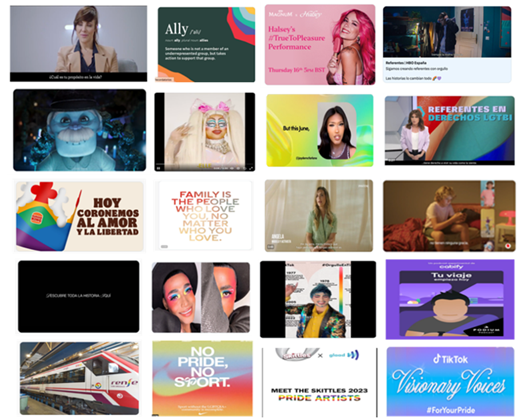
Figure 1. Collage of intentional marketing LGBTQI+ campaigns (2019–2023)
Source: Author creation
Of the 20 campaigns selected, 9 are national and 11 are international: from the perspective of longitudinal analysis, they begin appearing in a bottom-up manner during the period 2019–2023, specifically around the celebration of Pride Day (June 28), with the exception of Doritos. For data collection in X, following Hwalbin et al. (2018), there are two alternative methods: first, massive data mining or downloading of all tweets (and their comments) that employ a hashtag or keyword for subsequent quantitative and qualitative analysis, or second, selective computational analysis that, using the social network’s own algorithms, organizes the relevance of the sampling of tweets and their comments hierarchically.
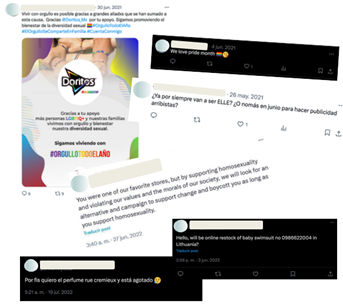
In this research, the selective method was chosen since the purpose of purposive sampling is to perform a quantitative and qualitative analysis of the character (positive, negative, or neutral) of the opinions or comments, as well as of their nature (absence of reference, personal experience, primary emotion, or vindication), interaction, and engagement. Accordingly, 50 comments[4] that the X algorithm considered most relevant on the basis of the hashtags employed were analyzed from the posts of each campaign in the study sample.
Figure 2. User comments on intentional marketing LGBTQI+ campaigns
Source: Author creation.
Table 2. Social network analysis sheet for X
|
Brand: ( ) |
No. of followers |
|
|
Post-campaign marketing (hashtag) (URL) |
No. of likes |
|
|
No. of shares |
|
|
|
No. of comments |
Character of commentary: |
|
|
(1) Positive |
||
|
(2) Neutral |
||
|
(3) Negative |
||
|
Nature of comment: |
||
|
(1) Level 0: no explicit reference, allusion or response to the message. |
||
|
(2) Level 1: personal experience, identifies with the message. |
||
|
(3) Level 2: primary emotion, shows empathy, shares feelings. |
||
|
(4) Level 3: recognition, actively involved. |
||
|
Interaction rate × publication |
|
|
|
Positive engagement |
no. of followers / 1000
|
|
|
Negative engagement (Disengagement) |
no. of followers / 1000 |
|
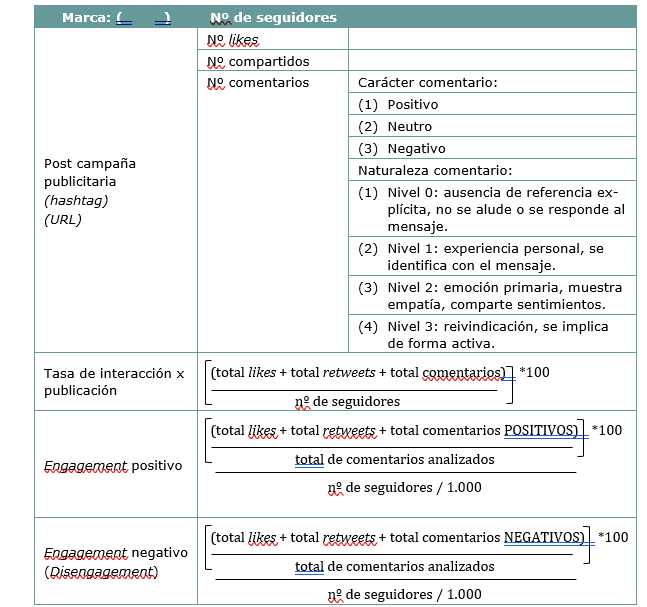


Source: Muñoz-Expósito et al. (2017), Metricool (2023). Author creation.
During the methodological procedure, an analysis sheet was designed (Table 2) and two researchers from the team were trained to code the sample, carrying out a pre-test of the template to detect possible errors and areas for improvement (Neuendorf, 2002). The objectivity of the content analysis was verified using the intercoder reliability process (Piñeiro-Naval, 2020) with the Percent Agreement Observed (PAo) index. Following Palenzuela et al. (2020), each of the coders applied the analysis sheet to the same five randomly selected campaigns (25% of the total number of campaigns) and calculated the PAo [(agreement between observations/total observations) × 100] for the character of the comment and nature of comment variables, obtaining an agreement of 94%. Similarly, to correct for the random effect of agreement, Cohen’s kappa was calculated for this variable (k = 0.8). In both cases the value is above 80%, suggesting a high degree of objectivity and agreement between coders (Lovejoy et al., 2016).
5. Research Results
The results of the study come from the three specific research objectives established. The descriptive indicators of the campaigns were obtained on the basis of the analysis sheet’s application.
Table
3. Descriptive indicators of campaigns with
LGBTQI+ intentional marketing
(2019–2023)
|
character |
* nature of the comment |
|||||||||
|
|
likes |
retweets |
com |
+ |
N |
− |
level 0 |
level 1 |
level 2 |
level 3 |
|
1. ADECCO (no. of followers: 72,500)
|
1,500 |
435 |
50 |
4 |
14 |
32 |
2 |
4 |
44 |
0 |
|
2. STARBUCKS (no. of followers: 10,900,000)
|
548 |
78 |
35 |
6 |
5 |
24 |
6 |
0 |
22 |
7 |
|
3. MAGNUM (no. of followers: 26,200)
|
6,000 |
630 |
50 |
41 |
8 |
1 |
3 |
0 |
47 |
0 |
|
4. HBO MAX (no. of followers: 308,900)
|
6,500,000 |
1,700,000 |
13 |
12 |
1 |
0 |
4 |
0 |
9 |
0 |
|
5. DORITOS (no. of followers: 128,000)
|
13,000 |
1,000 |
50 |
50 |
0 |
0 |
0 |
7 |
7 |
36 |
|
6. ELLE (no. of followers: 596,100)
|
3,900,000 |
1,200,000 |
50 |
1 |
3 |
46 |
0 |
0 |
48 |
2 |
|
7. TIKTOK (USA) (no. of followers: 2,200,000)
|
501 |
32 |
50 |
3 |
7 |
40 |
0 |
17 |
33 |
0 |
|
8. ATRESMEDIA (no. of followers: 58,100)
|
4 |
3 |
3 |
0 |
0 |
3 |
0 |
0 |
3 |
0 |
|
9. BURGER KING (no. of followers: 181,800)
|
21 |
4 |
3 |
0 |
1 |
2 |
2 |
0 |
1 |
0 |
|
10. H&M (no. of followers: 7,700)
|
616 |
214 |
50 |
2 |
1 |
47 |
5 |
23 |
22 |
0 |
|
11. P&G (no. of followers: 1,611)
|
4 |
3 |
3 |
0 |
0 |
3 |
0 |
0 |
3 |
0 |
|
12. VODAFONE (no. of followers: 216,600)
|
53 |
25 |
8 |
0 |
0 |
8 |
7 |
0 |
1 |
0 |
|
13. DOMINO’S PIZZA (no. of followers: 52,900)
|
3 |
1 |
0 |
0 |
0 |
0 |
0 |
0 |
0 |
0 |
|
14. MACCOSMETICS (no. of followers: 1,500,000)
|
45 |
6 |
2 |
1 |
0 |
1 |
1 |
0 |
1 |
0 |
|
15. TIKTOK (SPAIN) (no. of followers: 10,300)
|
5 |
2 |
1 |
0 |
0 |
1 |
0 |
0 |
1 |
0 |
|
16. Cabify (no. of followers: 2,676)
|
2 |
2 |
3 |
0 |
1 |
2 |
0 |
0 |
1 |
2 |
|
17. RENFE (no. of followers: 252,500)
|
57 |
11 |
0 |
0 |
0 |
0 |
0 |
0 |
0 |
0 |
|
18. NIKE (no. of followers: 10,100,000)
|
450 |
96 |
48 |
3 |
11 |
34 |
3 |
0 |
33 |
12 |
|
19. SKITTLES (no. of followers: 648,700)
|
4 |
3 |
50 |
20 |
9 |
21 |
6 |
0 |
31 |
13 |
|
20. TIKTOK (COMMS) (no. of followers: 45,500)
|
53 |
12 |
22 |
0 |
4 |
18 |
0 |
0 |
0 |
22 |
* Level 0: no explicit reference, allusion or response to the message.
Level 1: personal experience, identifies with the message.
Level 2: primary emotion, shows empathy, shares feelings.
Level 3: recognition, actively involved.
Source: Author creation.
Table 3 identifies the number of followers per brand, as well as the number of likes, retweets, and comments of the advertising proposals analyzed, and then specifies their character (positive, neutral, and negative) and nature (level 0, level 1, level 2, or level 3). On the basis of these descriptive indicators, we identify, firstly, through X, the total interactions per publication (TIP) of each of the campaigns in the sample as the main KPI (objective 1); and secondly, the positive and negative engagement produced (objective 2) as well as the nature of the comments generated by the campaigns and their relationship with engagement (objective 3).
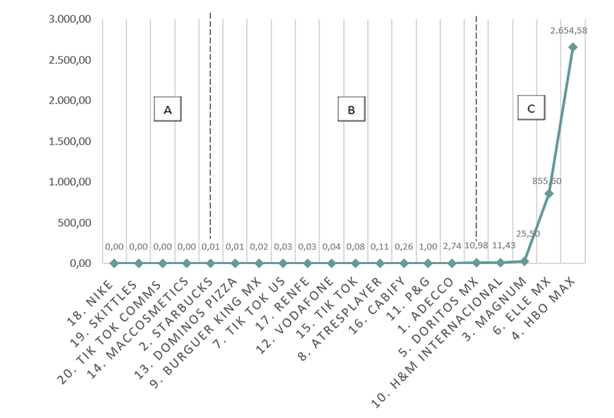
Figure 3. Total interactions per publication (TIP) in campaigns with LGBTQI+ intentional marketing (2019–2023)
Source: Author creation.
Regarding the total number of interactions per publication, Figure 3 shows that 75% of the brands have no interaction (segment A) or residual interaction (segment B). In addition, only five of them, representing 25% of the campaigns analyzed (segment C), show a sufficiently significant value: HBO MAX (2,654.58), ELLE (855.60), Magnum (25.50), H&M (11.43), and Doritos (10.98). Consequently, it was found that most brand campaigns with LGBTQI+ intentional marketing have not elicited a significant interest from users on X, since there is not a high number of likes, retweets, and comments based on the number of followers and the communicative proposals of the brands.
Figure
4. Generating brand engagement with
LGBTQI+ intentional marketing
(2019–2023)

Source: Author creation.
When analyzing the engagement generated by campaigns with LGBTQI+ intentional marketing, Figure 4 shows the ambivalent nature of four of the five brands with a high or very high rate of interaction per publication (IPR) (Figure 3), accounting for 20% of the cases analyzed: HBO MAX (positive value: 204,198.82; negative value: 204,198.52), ELLE (positive value: 17,111.23; negative value: 17,110.38), Magnum (positive value: 509.24; negative value: 506.18), and Doritos (positive value: 219.53; negative value: 218,75).
The communicative proposals of these four brands discriminate between positive and negative engagement (disengagement) in a completely balanced way, given that they have been valued by users dichotomously, although with a modest positive trend compared with the rest of the campaigns. Consequently, in the context of brands with LGBTQI+ intentional marketing, only the marketing campaigns developed by HBO MAX, ELLE, Magnum, and Doritos were identified as pink advertising by more than 50% of X users, and it is clear that even the brands that achieved the greatest visibility and interaction (Figure 3) are not exempt from criticism and negative evaluation of their activism for a cause (Figure 4).
On the contrary, four brands also obtained a disengagement index that can be highlighted as a relative value with respect to positive engagement: campaigns that reflect, in addition, a low number of comments with respect to the rest of the marketing proposals (Table 3): Procter & Gamble (negative value: 206.9; no. of comments: 3), Cabify (negative value: 74.74; no. of comments: 3), TikTok (Comms) (negative value: 8.29; no. of comments: 22), and Atresmedia (negative value: 5.74; no. of comments: 3). Further, Domino’s Pizza and Renfe are also included with these brands given their null value, due to the absence of user comments regarding the campaigns. In this sense, 30% of the communicative proposals analyzed have been highly questioned or ignored by social media users, who have identified them as pink washing practices, lacking authentic purpose or real commitment to the community, its social and cultural identity, and expectations as a collective.
The marketing campaigns developed by 50% of the remaining brands continue to present a clear ambivalence regarding the generation of positive and negative engagement, with no or residual interaction in all cases, except for H&M (Figure 3), which has an impact on the brand’s immediate position regarding the four brands that appear in the top positions in terms of positive engagement (Figure 4).
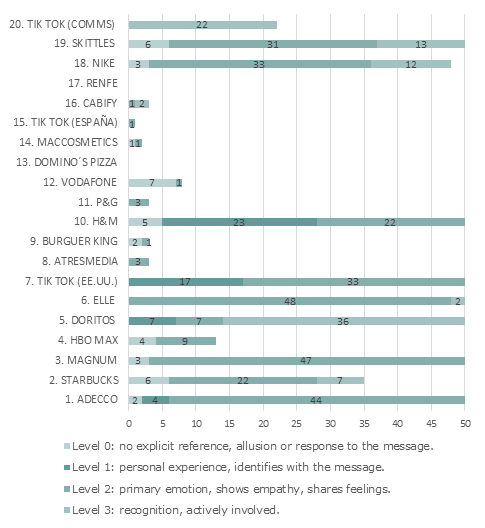
Figure 5 shows the nature of the comments on X reflected to highlight the relationship between the different categories (level 0, level 1, level 2, and level 3) and the engagement (positive or negative) generated by the campaigns analyzed.
Figure 5. User comments on LGBTQI+ intentional marketing campaigns
(2019–2023)
Source: Palguna et al. (2015). Author creation.
The four brands with the highest positive engagement index (HBO MAX, ELLE, Magnum, and Doritos; Figure 4) once and again see the nature of their user comments in their marketing campaigns (Figure 5) associated with the level 2 category: primary emotion, empathy, and feelings, which is also the general trend in the rest of the intentional marketing campaigns focused on here. In the case of Doritos, its pink advertising proposal also emphasizes level 1 comments, which correspond to personal experiences that allow for identification with the advertising message, and level 3, which reflects recognition, demonstrating a solid link between the brand and users, which is materialized in a high level of commitment and involvement with the LGBTQI+ cause on the basis of the communication of brand purpose.
With respect to the rest of the campaigns analyzed, few brands manage to generate level 1 comments, such as personal experiences and identification (H&M, TikTok USA, and Adecco); and those that generate level 3 comments, such as active expression (TikTok COMMS, Skittles, Nike, and Starbucks), show zero interaction per publication (TIP) (Figure 3: segment A) and a low or residual engagement rate, as can be seen in Figure 4.
6. Discussion and Conclusions
Corporate strategies of gay-friendly organizations must be aligned with their purpose to achieve consumer trust and credibility. These strategies must be monitored and evaluated sequentially, in the different stages of their development, to objectively verify compliance with the corporate objectives linked to social commitment, representing, therefore, a recurrent and continuous process, since the purpose of the brand is not static, but dynamic. This forces brands to adapt as social needs, expectations, and values change.
Purposeful brand strategies aimed at the LGBTQI+ group not only seek to attract this group as a target audience with its own identity values, needs, and expectations, but also to promote its inclusion and the normalization of sexual and gender diversity through messaging that makes the group visible in a coherent and respectful way.
However, the results obtained in this research on the basis of the marketing campaigns analyzed reveal that only 20% of the brands are perceived as true activists of this social cause, with more positive than negative engagement (HBO MAX, ELLE, Magnum, and Doritos), as seen with proposals identified as pink advertising; and even so, they have been questioned by approximately 50% of users, who are increasingly demanding and aware of the dynamics required of social advertising.
In most of the cases analyzed (80%), these initiatives are identified as an opportunistic use of the LGBTQI+ cause, lacking a genuine commitment to specific actions that would support the marketing discourse. This pink washing exercise translates into little or no interaction produced by the analyzed brands (Figure 3), as well as in negative engagement (Figure 4) and comments generated by the campaigns (Figure 5). As a result, these pink washing practices, as shown in studies such as those by Gois and de Moura (2021) or Santos (2023), not only jeopardize the brand’s reputational value, but can also generate rejection and distrust among consumers who demand coherence between the marketing narrative and the actions stemming from the brand’s purpose.
This research concludes that brands that manage to communicate their corporate values, associating them with a true commitment to the LGBTQI+ community, achieve outstanding levels in the interaction rate per publication (IPR) (Figure 3), obtain better results in absolute and relative values of positive engagement (Figure 4), and receive messages from users mainly on the basis of primary emotions, empathy, and feelings that contribute to consolidating their image and reputation (Figure 5).
The data resulting from the interaction rate per publication (IPR), the generation of engagement, and the nature of comments made by users, based on the brands with intentional marketing analyzed, suggest that in the context of woke advertising it is pertinent to address new innovation and social marketing strategies that allow brands to link their communication strategies much more efficiently with their corporate values and purpose as a social commitment.
Only through this integrative approach will business organizations and brands with LGBTQI+ intentional marketing be able to develop social advertising proposals that are aligned with their corporate philosophy and principles, thus justifying the investment in pink advertising campaigns whose effectiveness must be measured and monitored through KPI parameters (González-Oñate et al., 2019; Metricool, 2023).
On the basis of the research results, two future lines of work are suggested: on the one hand, the extension of the study of the communication of brands with LGBTQI+ intentional marketing to other social networks, evaluating KPIs such as interaction and engagement of the campaigns, to check whether there are significant coincidences or differences with respect to X; and on the other hand, the analysis of corporate reports and annual management reports of gay-friendly organizations that allow for a correlational analysis of their verified social commitment on the basis of the impact and effectiveness of LGBTQI+ social marketing campaigns.
Ethics and Transparency
Acknowledgments
To Dr. Colin Marsh, for the translation of the article.
Conflict of Interest
The author(s) of this article declare(s) that there is no conflict of interest.
Funding
This research has received funding from the Experiential Marketing and Integrated Communication Research Group (MAE-CO) affiliated with the Department of Communication and Social Psychology of the University of Alicante.
Author Contributions
|
Contribution |
Author 1 |
Author 2 |
Author 3 |
Author 4 |
|
Conceptualization |
X |
|
|
|
|
Data curation |
|
X |
X |
|
|
Formal analysis |
X |
X |
|
|
|
Funding acquisition |
X |
|
|
|
|
Investigation |
|
X |
X |
|
|
Methodology |
X |
|
|
|
|
Project administration |
X |
|
|
|
|
Resources |
X |
|
|
|
|
Software |
X |
X |
X |
|
|
Supervision |
X |
|
|
|
|
Validation |
|
X |
X |
|
|
Visualization |
X |
X |
|
|
|
Writing – original draft |
X |
|
|
|
|
Writing – review & editing |
|
X |
X |
|
Data Availability Statement
For data availability, the authors should be contacted.
References
Almeida García, D. (2021). Del marketing social al activismo de marca. En I. Martín Martín (Ed.), Manual de finanzas sostenibles: un enfoque multidisciplinar (pp. 47-60). Cátedra Finanzas Sostenibles.
Alvarado-López, M.C., De Andrés Del Campo, S. y García-Herrero, F.J. (2018). Diversidad sexual en la publicidad del siglo XXI. El enfoque de la comunicación con fines sociales. En A.M. Olmo-Gascón (Coord.), Diversidad sexual y libertad reproductiva de las mujeres en la cultura de la producción y el consumo (pp. 11-38). Comares.
Arteaga Alcívar, Y. A., Begnini Domínguez, L. F., Cabezas Arellano, M. J. y Salcedo Ruáles, I. A. (2022). Desarrollo Sostenible y Responsabilidad Social Corporativa. Dominio De Las Ciencias, 8(3), 867- 880. https://doi.org/10.23857/dc.v8i3.2843
Asenjo, S. y Del Pino-Romero, C. (2023). El activismo de marca desde la óptica del sector académico, profesional y consultor. index.comunicación, 13(1), 295-319. https://doi.org/10.33732/ixc/13/01Elacti
Barrio-Fraile, E., Vidal-Mestre, M. y Freire-Sánchez, A. (2022). Del propósito corporativo a la marca con propósito a través de las narrativas de la salud y de la enfermedad. El caso de P&G y Ausonia. En A. Bernabéu Serrano, F.J. Herrerro Gutiérrez y T. Hidalgo Marí (Eds.). La comunicación como herramienta post COVID-19 (pp. 7-19). Revista Mediterránea de Comunicación (Colección Mundo Digital). https://ddd.uab.cat/record/269431?ln=ca
Bernete, F. (2013). Análisis de contenido. En A. Lucas Marín y A. Noboa (Coord.), Conocer lo social: estrategias y técnicas de construcción y análisis de datos (pp. 221-261). Fragua, Fondo de Cultura Universitaria. https://tinyurl.com/ennxcsd3
Canavese Arbona, A. (2023). Diseño de identidades digitales: metodología iterativa para la creación y desarrollo de marcas [Tesis doctoral. Universitat Politècnica de València]. RiuNet. https://doi.org/10.4995/Thesis/10251/196737
Carrasco Polaino R., Lafuente Pérez, P. y Luna García Á. (2022). Twitter como canal para el activismo hacia el cambio climático durante la COP26. Estudios sobre el Mensaje Periodístico, 28(3), 511-523. https://revistas.ucm.es/index.php/ESMP/article/view/80647
Carreras, E., Alloza, A. y Carreras, A. (2013). Reputación corporativa. LID (Biblioteca Corporate Excellence).
Castelló-Martínez, A. (2023). Visibilizando la diversidad de identidad de género y de orientación sexual a través de la publicidad. Anuario ThinkEPI, 17, e17a26. https://doi.org/10.3145/thinkepi.2023.e17a26
Codina, L. (2018). Curación de contenidos para periodistas: definición, esquema básico y recursos. Universitat Pompeu Fabra, Facultad de Comunicación, Área de Formatos Digitales e Interactivos. http://hdl.handle.net/10230/34369
Codina L, Guallar J y Lopezosa C. (2020). Curación de contenidos para periodistas: conceptos, esquema de trabajo y fuentes abiertas. Universitat Pompeu Fabra, Departament de Comunicació, (Serie Digital Digidoc). http://hdl.handle.net/10230/43458
Cristóbal, C., Del Prado, A. R., Cagampan, A. y Dimaculangan, E. (2022). Brand Activism: Impact of Woke Advertising on the Consumers’ Attitude and Brand Perceptions Towards Purchase Intention. Journal of Business and Management Studies, 4(2), 01–12. https://doi.org/10.32996/jbms.2022.4.2.1
Darie, C. M. (2017). El tratamiento del colectivo trans en la comunicación publicitaria. Análisis de discursos publicitarios comerciales. Trabajo Final de Grado Universidad Jaume I (Castellón). https://tinyurl.com/ywjn4k8j
Eding, E. y Scholtens, B. (2017). Corporate social responsibility and shareholder proposals. Corporate Social Responsibility and Environmental Management, 24(6), 648–660. https://doi.org/10.1002/csr.1434
Eisend, M., Muldrow, A. F. y Rosengren, S. (2023). Diversity and inclusion in advertising research. International journal of advertising, 42(1), 52-59. https://doi.org/10.1080/02650487.2022.2122252
Fernández Gómez, J. D., Gordillo-Rodríguez, M.-T., Pacheco Barriga, L. y Fernández Blanco, E. (2023). Marcas y propósito: Análisis de las estrategias digitales en Twitter de las marcas más reputadas en España. Revista Latina De Comunicación Social, (81), 44–75. https://doi.org/10.4185/rlcs-2023-2005
García-Salazar, Á., Echeverri-Rubio, A. y Vieira-Salazar, J. A. (2021). Responsabilidad social corporativa y gobernanza: una revisión. Revista Universidad & Empresa, 23(40), 1-26. https://doi.org/10.12804/rev.univ.empresa
Gay Friendly Spain (2024). https://gayfriendlyspain.com
Gois, P. y de Moura Ferraz, J. (2021). Introdução ao pinkwashing. Representatividade e marcas engajadas. Revista Pensamento Contemporâneo em Administração, 15(2), 88-103. https://periodicos.uff.br/pca/article/view/49768
González-Oñate, C., Vázquez-Cagiao, P. y Farrán-Teixidó, E. (2019). Effective communication models in advertising campaigns. A strategic analysis in the search for effectiveness. Communication & Society, 32(4), 109-124. https://doi.org/10.15581/003.32.36739
González-Teruel, A. (2015). Estrategias metodológicas para la investigación del usuario en los medios sociales: análisis de contenido, teoría fundamentada y análisis del discurso. El profesional de la información, 24(3), 321-328. https://doi.org/10.3145/epi.2015.may.12
Hwalbin, K., Mo Jang, S., Sei-Hill, K. y Wan, A. (2018). Evaluating Sampling Methods for Content Analysis of Twitter Data. Social Media + Society, 1-10. https://doi.org/10.1177/2056305118772836
IAB Spain (2024). Estudio de redes sociales 2024. https://iabspain.es/estudio/estudio-de-redes-sociales-2024/
ILGA (2025). Europe’s Annual Review of the Human Rights Situation of Lesbian, Gay, Bisexual, Trans and Intersex People in Europe and Central Asia. https://www.ilga-europe.org/report/annual-review-2025/
Kotler, P. y Roberto, E. L. (1992). Marketing social. Estrategias para cambiar la conducta pública. Díaz de Santos.
Kotler, P. y Zaltman (1971). Social Marketing: An Approach To Planned Social Change. Journal of Marketing, 35(3), 3-12. https://doi.org/10.1177/002224297103500302
Kramer, M.K. y Porter, M. E. (2006). Estrategia y sociedad. El vínculo entre ventaja competitiva y responsabilidad social corporativa. Harvard Business Review, 84(12), 42-56. https://dialnet.unirioja.es/servlet/articulo?codigo=2190609
Ley 4/2023, de 28 de febrero, para la igualdad real y efectiva de las personas trans y para la garantía de los derechos de las personas LGTBI. https://www.boe.es/eli/es/l/2023/02/28/4/con
López-Casares Pertusa, H. (2023). Estrategias de posicionamiento de marcas a través del apoyo de causas sociales: una perspectiva desde el análisis de marcas comerciales. Zer, 28(54), 205-221. https://doi.org/10.1387/zer.24157
López-Miguel, B., Fanjul-Peyró, C. y Zurutuza-Muñoz, C. (2021). La inclusión de diversidad en la publicidad. El papel de los youtubers. En M.C. Tornay-Márquez, I. Sánchez-López y D. Jaramillo Dent (Coord.), Inclusión y activismo digital: participación ciudadana y empoderamiento desde la diversidad (pp. 54-71). Dykinson. https://tinyurl.com/49wj6vbs
Lovejoy, J., Watson, B. R., Lacy, S. y Riffe, D. (2016): Three decades of reliability in communication content analyses: Reporting of reliability statistics and coefficient levels in three top journals. Journalism & Mass Communication Quarterly, 93(4),1135-1159. https://doi.org/10.1177/1077699016644558
Manfredi-Sánchez, J.L. (2019). Brand Activism [El activismo político de las marcas]. Communication & Society, 32(4), 343-359. https://doi.org/10.15581/003.32.37294
Marini, L., Medina Bravo, P. y Rodrigo Alsina, M. (2010). Prensa on-line y transexualidad: análisis de la cobertura periodística del caso de Thomas Beatie. Estudios sobre el Mensaje Periodístico, 16, 291-306. https://tinyurl.com/mrxthtkn
Metricool (2023). Best practices en social media para 2023. https://tinyurl.com/4k6ap5bm
Muñoz-Expósito, M., Oviedo-García,
M.Á. y Castellanos-Verdugo, M. (2017). How
to measure engagement in Twitter: advancing a metric. Internet Research, 27(5),
1122-1148.
https://doi.org/10.1108/IntR-06-2016-0170
Neuendorf, K. A. (2002). The Content Analysis Guidebook. Thousand Oaks: CA Sage Publications
Olveira Araujo, R. (2019). Trans en los media: Un estudio comparativo piloto del tratamiento de la transexualidad en la prensa generalista y los medios de comunicación digitales. Mediatika, 17, 147-168. https://tinyurl.com/48eue3dk
Olveira-Araujo, R. (2022). La transexualidad en los cibermedios españoles. Presencia, preeminencia y temas (2000-2020). El Profesional de la información, 31(1), e310102. https://doi.org/10.3145/epi.2022.ene.02
ONU (2015). Objetivos de Desarrollo Sostenible (Agenda 2030) https://www.un.org/sustainabledevelopment/es/
Orozco Toro, J. A. y Roca Correa, D. (2011). Construcción de imagen de marca y reputación a través de campañas publicitarias de RSC. Sphera Pública, 11, 273-289. https://tinyurl.com/mryf78dp
Ortiz-Fernández, M. (2016). Gestión de la diversidad e inclusión LGTB en la empresa del siglo XXI: claves de buena praxis. Capital humano: revista para la integración y desarrollo de los recursos humanos, 29 (extra 312), 76-78. https://tinyurl.com/5fpxuj35
Palenzuela Zanca, J., Marcos Ramos, M. y González de Garay Domínguez, B. (2020). Representación de la diversidad funcional en series contemporáneas españolas de ‘prime time’. index.Comunicación, 9(3), 165–183. https://doi.org/10.33732/ixc/09/03Repres
Palguna, D., Joshi, V., Chakaravarthy, V., Kothari R. y Subramaniam L.R. (2015). Analysis of Sampling Algorithms for Twitter. Twenty-Fourth International Joint Conference on Artificial Intelligence, 967-973. https://tinyurl.com/38ydkmsn
Peña-Fernández, S., Larrondo-Ureta, A. y Morales-i-Gras, J. (2023). Feminism, gender identity and polarization in TikTok and Twitter. Comunicar, 75, 49-60. https://doi.org/10.3916/C75-2023-04
Pintado Blanco, T., Sánchez Herrera, J. y López Aza, C. (2020). Activismo corporativo ¿moda o estrategia de comunicación de marca? Havard Deusto Marketingy Ventas, 162, 6-13. https://tinyurl.com/yc3xfvwk
Piñeiro-Naval, V. (2020). The content analysis methodology. Uses and applications in communication research on Spanish-speaking countries. Communication & Society, 33(3), 1-16. https://tinyurl.com/3u4fk8fj
REDI (Red empresarial por la diversidad y la inclusión LGBTI) (2023). La gestión de la diversidad LGBT+ en España. https://tinyurl.com/487xkmx5
Romero López, A. y Checa Olmos, F. (2023). El imaginario audiovisual LGBTI+ en la publicidad española. Un análisis de sus representaciones. Interciencia, 48(3), 137-144. https://tinyurl.com/2fnc4c8n
Sanahuja Peris G., Antón Carrillo E. y Mut Camacho M. (2023). De qué hablamos cuando hablamos de “propósito”: expresión y análisis discursivo del propósito corporativo en España. Estudios sobre el Mensaje Periodístico, 29(3), 701-715. https://doi.org/10.5209/esmp.87208
Sánchez Villamil, D.N., Rivera Cachope, J.A. y Jaque Olave, N.G. (2019). Divulgación de información no financiera en las organizaciones: una mirada desde los informes de sostenibilidad y los reportes integrados. En D.N. Sánchez Villamil, J.A. Rivera Cachope, R.D. Brand Jaramillo (Comp.), La investigación e información corporativa desde la perspectiva de los reportes integrados y el Gobierno corporativo (pp. 14-35). Fondo Editorial Universitario Servando Garcés de la Universidad Politécnica Territorial de Falcón Alonso Gamero. https://tinyurl.com/28b2bbsv
Sandoval-Almazan, R., Montes de Oca López, J. C. y Ortega Ponce, C. (2021). Etiquetado digital social como activismo en redes sociales: #ladies y #lords en México. Global Media Journal México, 18(34), 50–69. https://doi.org/10.29105/gmjmx18.34-3
Santos, M. (2023). The Challenges of Inclusive Communication in Advertising Campaigns. The Trends Hub, 3. https://doi.org/10.34630/tth.vi3.5036
Senes, F. y Ricciulli-Duarte, D. (2019). La publicidad social como herramienta para la construcción de ciudadanía. Razón Crítica, 6, 183-199. https://tinyurl.com/y3b399vu
Simons, H. (2011). El estudio de caso: teoría y práctica. Ediciones Morata.
Transgender Europe (2020). Actualización TMM: Día de la Memoria Trans 2020. https://tinyurl.com/2s4zh955
Valecillos Vázquez, C. y Martínez Escudero, C. (2022). La representación social del colectivo trans en la publicidad actual: caso Pantene. VISUAL REVIEW, Revista Internacional de Cultura Visual, 10(2), 1-9. https://doi.org/10.37467/revvisual.v9.3595
Velasco Malagón, T. E. (2017). Representaciones sociales de la transexualidad y de las personas transexuales en España. [Tesis doctoral] Universidad Complutense de Madrid. https://tinyurl.com/yc65ck65
Villafañe Gallego, J. (2009). Reputación corporativa y RSC: bases empíricas para un análisis. Telos: Cuadernos de comunicación e innovación, 79, 75-82. https://telos.fundaciontelefonica.com/archivo/numero079/
Vizcaino-Alcantud, P. (2017). Del storytelling al storytelling publicitario: el papel de las marcas como contadoras de historias [Tesis Doctoral]. Universidad Carlos III. https://tinyurl.com/mt92rvn7
Vizcaino-Alcantud, P. (2023). Storytelling´s history in advertising: a professional approach from creative strategies. VISUAL REVIEW. International Visual Culture Review / Revista Internacional De Cultura Visual, 15(2), 1–18. https://doi.org/10.37467/revvisual.v10.4624