[1], with the goal of achieving both individual and social well-being (Gabelas, 2010; Gabelas et al., 2012; Gabelas et al., 2015; Marta-Lazo & Gabelas, 2016; Gabelas-Barroso et al., 2023).
In this global context of worsening mental health and increased use of technology, the aim of this research is to analyze the twenty most highly rated free mental health apps available on the Spanish market for iOS and Android. The objective is to determine whether these apps can serve as complementary tools for promoting mental health among the population (Blasco-Navarro, 2025).
2. Methodology
2. H2: The existing apps specialized in mental health show certain limitations in the coverage and depth of their content from an educommunicative perspective.
3. H3: Mental health applications designed with elements related to the Life Skills (LS) proposed by the WHO and RICT tools tend to incorporate resources based on greater usability, free access, and the collaboration of experts in the development of their content.
For the analysis of the main mental health apps—free and top-rated by users—available for smartphones in the Spanish market, the quantitative technique of content analysis was chosen. According to Krippendorff (1990), this method allows for the examination of real-life situations and lends them a predictive purpose. Moreover, it contributes to obtaining results that are clearly grounded in the reality we live in (Ugalde Binda & Balbastre-Benavent, 2022).
The sample of free mental health apps for smartphones, available in the Spanish market and rated highest by users (close to five stars), is presented in Table 1:
Table 1. Mental health analysis sample
|
Android Apps |
Rating (out of 5 stars) |
iOS Apps |
Rating (out of 5 stars) |
|
4,9 |
«Balance» |
4,9 |
|
|
«Lojong: meditation and mindfulness» |
4,9 |
«Wysa: Sleep Depression Support»
|
4,9 |
|
«Cíngulo: guided therapy» |
4,9 |
«Meditopia: meditation, sleep, relaxation» |
4,8 |
|
«MindDiary: mood journal» |
4,7 |
«Insight Timer» |
4,8 |
|
«Meditate with Petit Bambou» |
4,7 |
«Feel- Mindfulness» |
4,7 |
|
«Meyo: anxiety, self-esteem and emotional well-being» |
4,7 |
«Daylio Journal»
|
4,6 |
|
«Bearable: Mood and symptoms tracker» |
4,7 |
«Moodnotes: mood journal» |
4,5 |
|
«Headspace: Meditation and sleep» |
4,6 |
«Replika: My AI Friend» |
4,5 |
|
«The Inner Hour App» |
4,6 |
«Breethe: Meditation and Sleep» |
4,5 |
|
«My Oasis: Relaxation and stress relief game» |
4,6 |
«Calm» |
4,5 |
Source: own elaboration.
In order to analyze whether the applications included in the sample meet the objectives of this research, the «Analysis Model of Educommunicative Apps for Emotional Well-being» was developed. This model includes forty-four dimensions divided into seven categories, allowing us to approach the object of study by defining each unit within its context, thereby enabling the collection of valid and comprehensive results (Piñuel, 2002; Bardin, 2002).
In this way, the following analysis variables are proposed to help assess whether these mobile applications can be considered an educommunicative practice that promotes mental health and could be integrated as part of the InteRmethodology[2] of life skills learning in the context of the WHO’s Life Skills framework (Blasco-Navarro, 2025).
The following analysis model is proposed, based on the six InteRmethodological competency dimensions integrated into the Life Skills framework, as outlined by Marta-Lazo and Gabelas (2016), Gabelas-Barroso and Marta-Lazo (2020), and Marta-Lazo and Gabelas-Barroso (2023): Instrumental, Cognitive, Attitudinal, Axiological, Entrepreneurial, and Holistic. Additionally, the study includes the analysis of the R-elational Factor in apps within the context of educommunication for learning and teaching, according to Villalonga Gómez (2017). Moreover, to analyze the potential values conveyed to users by the applications, the Eva Protocol by Montoya Vilar et al. (2022) has been used. This protocol examines 26 variables that help determine the number, quantity, and intensity of values transmitted to users of the studied apps. Lastly, to assess the degree of entrepreneurship present in the analyzed applications, the Model of Entrepreneurship and Analysis of Determinant Factors for its Sustainability by Borja, Carvajal, and Vite (2020) has been used as a reference.
Below, Table 2 presents the seven dimensions and forty-four indicators that make up the «Analysis Model of Educommunicative Apps for Emotional Well-being»:
Table 2. Analysis Model of Educommunicative Apps for Emotional Well-being
|
Analysis dimension |
App indicators |
|
Instrumental Life Skills in Ubiquitous and Mobile Technology: App Interface |
Logo and brief synopsis, typology, operating system, connectivity, user registration, premium availability and/or trial period, age rating, user rating, number of downloads, accessibility and usability, and aesthetics and design. |
|
Cognitive Life Skills in App Language |
Language, authorship, suitability of creators and collaborators to the content, ease of learning through the app, correlation between content and activities, dynamic and integrated learning.
|
|
Interactivity, directionality of the communication flow within the app, communication model with the user, target user, R-elationship between users and the app, app’s collaborative competence, diversity of content, users, and opinions, respect and empathy. |
|
|
Axiological Life Skills in the Ideology and Values of Apps |
Analysis of values transmitted to the user through the Eva Protocol, according to Montoya Vilar et al. (2022); app stereotypes and user digital identity. |
|
Entrepreneurial Life Skills in App Production and Distribution Processes |
Analysis of entrepreneurship factors and their sustainability, according to Borja, Carvajal, and Vite (2020); actors within the app ecosystem; content publication and distribution; innovation and creativity; and user-generated content. |
|
Holistic Life Skills in Mobile and Ubiquitous Learning through Apps |
Learning and holistic aspects of the app |
|
Control and Analysis of the User’s Emotional Well-being in Apps |
App category, type, suitability for mental disorders, tools for emotional management, control of values for the user's emotional well-being and method of measurement, support and/or connection with healthcare professionals, app guidelines on mental health treatments, and recommendations for mental health experts. |
Source: own elaboration.
Once the coding was completed (see codebook in Appendix 1), several expert researchers in educommunication were consulted. They reviewed and validated the criteria used in order to ensure greater reliability and to avoid potential bias.
3. Results
Following the analysis conducted using the «Analysis Model of Educommunicative Apps for Emotional Well-being» (Blasco-Navarro, 2025), which consists of seven dimensions and forty-four specified indicators, it was found that none of the twenty apps analyzed met all the indicators across the seven dimensions. However, some of the highest-rated apps on Google Play and the App Store—those with five and four stars—did fulfill a significant portion of the criteria evaluated in the study.
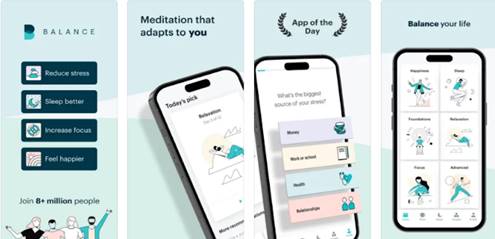
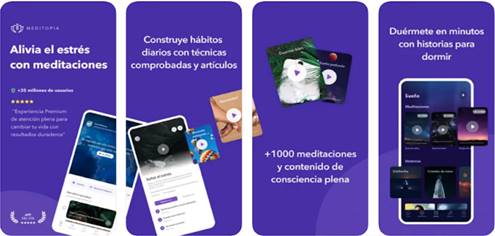
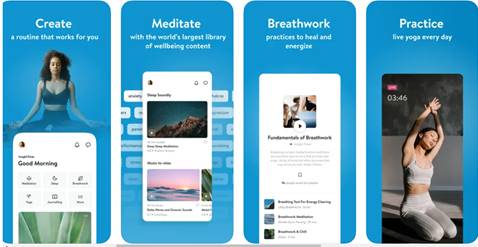
It is worth highlighting the app «Yana: your emotional companion»—rated 4.9 stars on Google Play—as the best app analyzed, as it meets the majority of the criteria outlined in the analysis and is considered a model to follow for the design of the mental health app prototype presented in later sections. Additionally, other apps such as «Balance», «Meditopia: meditation, sleep, relaxation» and «Insight Timer» have received multiple recognitions and meet most of the analysis indicators, though they do not reach the level of effectiveness shown by «Yana: your emotional companion».
Figures 1, 2 and 3 show the main features of the apps «Balance», «Meditopia: meditation, sleep, relaxation» and «Insight Timer»:
Figure 1. Balance App
Source: Balance
Figure 2. Meditopia App
Source: Meditopia
Figure 3. Insight Timer App
Source: Insight Timer
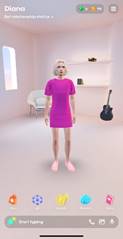
To explain more accurately the strengths and areas for improvement of the analyzed applications, we outline the Life Skills (LS) that were considered in their evaluation. Regarding the Instrumental Life Skill in ubiquitous and mobile technology and design—specifically the app interface—we positively assessed that most of the analyzed applications are multi-device, meaning they can be used on smartphones, tablets, computers, smartwatches, and even with Oculus glasses in the case of «Replika: My AI Friend», allowing for a more immersive user experience. Figure 4 shows the immersive experience of the user within the app «Replika: My AI Friend»:
Figure 4. Immersive experience of the user in Replika: My IA Friend
Source: Replika: My IA Friend
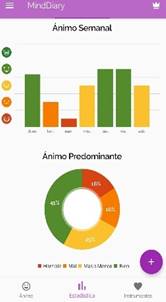
On the other hand, few of the analyzed apps allow users to access them without an internet connection—such as MindDiary: Mood Journal or «My Oasis: Relaxation and stress relief game»—which forces users to remain constantly connected. Figure 5 shows an example of the mood tracking graphs provided to users by «MindDiary: mood journal»:
Figure 5. User mood charts in MindDiary: Mood journal
Source: MindDiary: Mood journal
Figure 6 depicts a gameplay scene from «My Oasis: Relaxation and stress relief game»:
Figure 6. Gameplay My Oasis

Source: My Oasis
In addition, most apps require users to register and track their activity within the application in order to send them reminders, offers, and promotions for this and other products offered by the company. Notably, «Cíngulo: guided therapy» and «MindDiary: mood journal» stand out as examples of apps that do not require user registration.
The vast majority of apps only allow free access to their content for very short periods—typically one week or at most one month—or require users to subscribe to a premium trial period, after which they must subscribe to continue using the content. As a result, users are not given sufficient time to truly assess whether these tools are effectively helping improve their well-being. «Lojong: meditation and mindfulness», «Bearable: Mood and symptoms tracker» and «Headspace: Meditation and sleep» only offer a seven-day free trial; Siente allows users to complete seven sessions for free with no time limit; and «Breethe: Meditation and Sleep» offers a fourteen-day trial. Meanwhile, «Meditopia: meditation, sleep, relaxation», «Insight Timer», «Daylio Journal», «Calm» and «Moodnotes: mood journal» require users to subscribe to the premium trial to access acceptable content within the app.
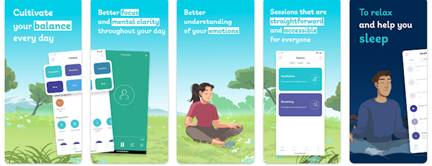
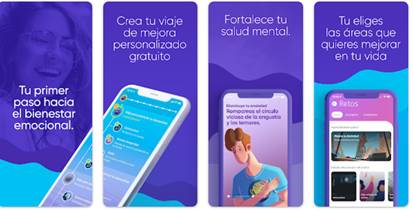
In fact, the only analyzed app that offers a substantial free trial period for its premium content—despite being designed as a paid app—is «Balance», which allows users to access it free of charge for an entire year. On the other hand, some apps are available for free, such as «Meditate with Petit Bambou»—which can also be accessed via its website and provides expanded content through its premium version—«Meyo: anxiety, self-esteem and emotional well-being» (which includes ads in its free version), Amaha, «My Oasis: Relaxation and stress relief game», «Replika: My AI Friend», «Cíngulo: guided therapy», and «Yana: your emotional companion» (which also offers a premium version). Figures 7 and 8 show the main emotional management tools these apps offer to their users:
Figure 7. Free tools for the emotional management of the user in Petit Bambou
Source: Petit Bambou
Figure 8. Free tools for the emotional management of the user in Meyo: Emotional Wellness
Source: Meyo: Emotional wellness
However, the following apps stand out for having the most refined and visually appealing designs: «Yana: your emotional companion», «Headspace: Meditation and sleep», «My Oasis: Relaxation and stress relief game», «Replika: My AI Friend» and «Balance». On the other hand, we also find examples of simple yet effective design in apps such as «Lojong: meditation and mindfulness», «Cíngulo: guided therapy» and «MindDiary: mood journal».
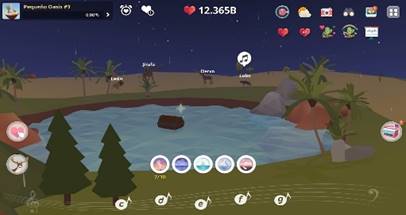
Additionally, some applications include particularly complex menus—such as «My Oasis: Relaxation and stress relief game»—which offer a wide range of options organized into various sections. Figure 9 is an example of the complex menu of the app «My Oasis: Relaxation and stress relief game»:
Figure 9. Menu complexity of My Oasis
Source: My Oasis
According to the Cognitive Life Skill, in relation to the language used in the apps, we found that many applications are available in only one or two languages, which limits global accessibility. Some examples include: «Balance» — English only; «Wysa: Sleep Depression Support»— English and learning Spanish; Siente — Spanish only; «Replika: My AI Friend» — English and Japanese; «MindDiary: mood journal» — English and Spanish; «Bearable: Mood and symptoms tracker»— English; Amaha — English; and «Cíngulo: guided therapy» — Portuguese.
In contrast, other apps are translated into a wide range of languages, enhancing accessibility: «Daylio Journal»— 29 languages; «My Oasis: Relaxation and stress relief game»— 14 languages; «Meditopia: meditation, sleep, relaxation»— 12 languages; «Insight Timer» — 11 languages; «Meyo: anxiety, self-esteem and emotional well-being» — 9 languages; «Moodnotes: mood journal» — 8 languages; and «Lojong: meditation and mindfulness» — 5 languages.
On another note, it is essential that applications involve collaboration with mental health professionals in the development of their content and/or validation of the topics they address. This is the case for «Headspace: Meditation and sleep», «Bearable: Mood and symptoms tracker», «Cíngulo: guided therapy», «Lojong: meditation and mindfulness», «Yana: your emotional companion», «Moodnotes: mood journal» and «Insight Timer». However, «Daylio Journal» and «My Oasis: Relaxation and stress relief game» were developed by app creators without input from mental health experts.
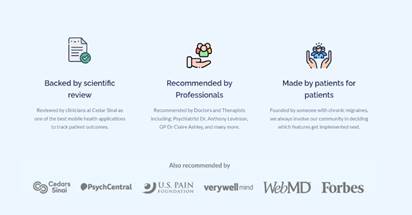
In most of the apps analyzed, authorship could be identified, although sometimes with difficulty due to the complexity of finding this information. In the case of «MindDiary: mood journal», however, it was not possible to determine the authorship of the app. Figure 10 shows how «Bearable: Mood and symptoms tracker» collaborated with mental health professionals in the development of the app.
As already mentioned, although none of the applications succeeded in meeting all the dimensions and indicators of the «Analysis Model of Educommunicative Apps for Emotional Well-being», and given that a detailed analysis of each would be too extensive, we will carry out a case study of the app that proved to be the most comprehensive in terms of indicators: Yana: Your Emotional Companion.
Figure 10. Expert recommendations in Bearable
Source: Bearable
3.1. Yana: your Emotional Companion
«Yana: your emotional companion» is an application for Android and iOS that was launched in 2020, born from the idea of Andrea Campos, who had spent four years developing a tool to help manage the anxiety and depressive disorders she had suffered from since childhood.
This application is based on tools derived from cognitive-behavioural therapy, with its core feature being the chatbot Yana (You Are Not Alone), which aims—through Artificial Intelligence—to help users improve their emotional well-being, without replacing or interfering with any treatment recommended by mental health professionals.
Figure 11 shows the logo of the app «Yana: your emotional companion»:
Figure 11. Yana logo: your emotional companion

Source: Yana: your emotional companion.
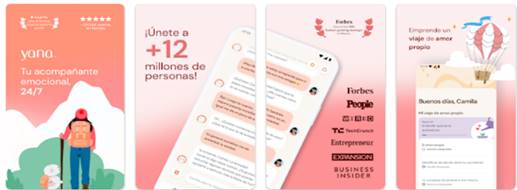
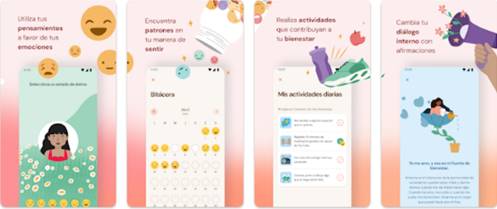
«Yana: your emotional companion» has reached over 12 million users despite being available in only one language: Spanish. Additionally, it holds a rating of 4.9 out of 5 stars, making it one of the highest-rated apps. It is a multi-device application that offers a wide range of tools for free, allowing users to manage their mental health effectively. Figures 12 and 13 present the main tools offered by «Yana: your emotional companion» to its users:
Figure 12. App Yana presentation: my emotional companion
Source: Yana: your emotional companion
Figure 13. Summary of emotional management tools in Yana: your emotional companion
Source: Yana: your emotional companion
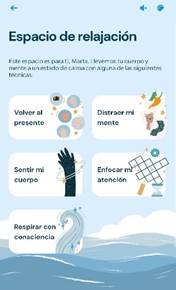
The app's aesthetics and design are very well-crafted, contributing to a simple and intuitive user experience. Users can also learn a great deal about mental health through conversations with the chatbot, as well as through the exercises and programs offered within the app. Figures 14 and 15 show examples of guided exercises and the relaxation space that «Yana: your emotional companion» offers its users:
Figure 14. Guided exercise Yana: your emotional companion

Source: Yana: your emotional companion
Figure 15. Relaxation space in Yana: your emotional companion
Source: Yana: your emotional companion
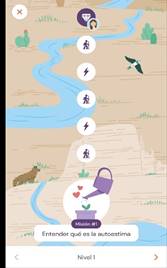
Figure 16 shows an example of the thematic activity program that is included in «Yana: your emotional companion».
Figure 16. Activity program about self-esteem in Yana: your emotional companion
Source: Yana: your emotional companion
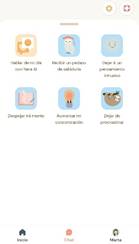
The user does not have the option to interact with other users or create communities within the app, in order to establish the most personal relationship possible between «Yana: your emotional companion» and the user. No mental health stereotypes are promoted, and the app shows respect and empathy toward all types of opinions and situations users may experience. «Yana: your emotional companion» is available 24/7 to listen and offer help—within its capabilities—without judgment. Figure 17 displays all the preset topics users can discuss with the «Yana: your emotional companion» chatbot:
Figure 17. Topics to discuss with the Yana chatbot: your emotional companion
Source: Yana: your emotional companion
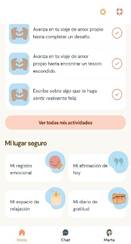
Figure 18 shows the «My Safe Place» section in «Yana: your emotional companion», where users can access the emotion log, relaxation space, daily affirmations, and/or gratitude journal:
Figure 18. My safe place space for the user in Yana: your emotional companion
Source: Yana: your emotional companion
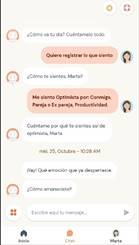
Figure 19 illustrates a conversation with the chatbot in Yana: My Emotional Companion:
Figure 19. Conversation with the Yana chatbot: your emotional companion
Source: Yana: your emotional companion
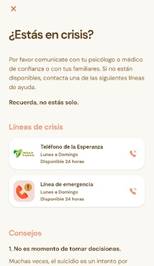
As previously analyzed, «Yana: your emotional companion» offers a wide range of tools to help users assess and manage their mental health. However, as the app itself states, it does not replace treatment prescribed by a specialist at any point. Figure 20 shows how «Yana: your emotional companion» offers support to the user in the event of a crisis:
Figure 20. Crisis contact support in Yana: your emotional companion
Source: Yana: your emotional companion
This app also features a help button and allows users to connect with healthcare professionals and/or call emergency hotlines—which can be crucial in preventing situations such as self-harm or suicide attempts. Additionally, it informs users of the importance of consulting a mental health expert if necessary and repeatedly emphasizes that «Yana: your emotional companion» is merely a tool intended to support the emotional well-being of individuals seeking to improve their daily lives. It is not recommended for people who have been diagnosed with a mental health disorder.
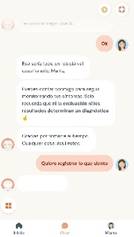
It is important to highlight how «Yana: your emotional companion» supports the monitoring of users’ emotional well-being. The app does this through two main tools: mood tracking and emotional monitoring. «Yana: your emotional companion» prompts users to complete both as soon as they open the app, but they can be repeated at any time—users can even set up notifications to track their mood on a daily basis.
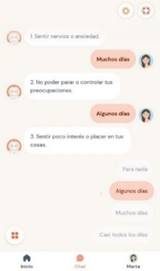
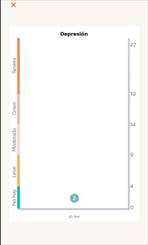
Once the user logs in «Yana: your emotional companion», the app applies the questionnaire «PHQ-4» (Patient Health Questionnaire), in order to value the person's levels of anxiety and depression.
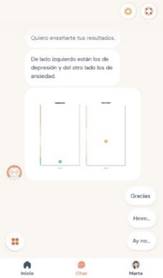
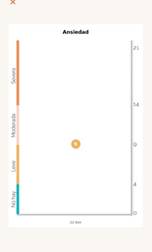
Figures 21, 22 and 23 show some of the questions that are included in the questionnaire «PHQ-4»:
Figure 21. Starting of the PHQ-4 questionnaire in Yana: your emotional companion
Source: Yana: your emotional companion
Figure 22. Explanation of PHQ-4 Questionnaire Results in Yana: your emotional companion
Source: Yana: your emotional companion
Figure 23. User anxiety results from the PHQ-4 questionnaire in Yana: your emotional companion
Source: Yana: your emotional companion
Figure 24 shows the results of a user's depression from the PHQ-4 questionnaire within «Yana: your emotional companion»:
Figure 24. Results of a user's depression from the PHQ-4 of Yana: your emotional companion
Source: Yana: your emotional companion
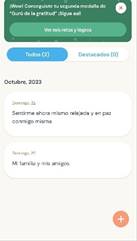
On the other hand, this application does not encourage users to share their progress or completed content on social media. Additionally, it allows users to create their own content within the existing activities, aiming to foster their innovation and creativity. Figure 25 shows an example of a user's mood tracking entry within «Yana: your emotional companion»:
Figure 25. Mood tracking in Yana: your emotional companion
Source: Yana: your emotional companion
Figure 26 illustrates how the user has the opportunity to create content within «Yana: your emotional companion»:
Figure 26. Content creation by the user in Yana: your emotional companion
Source: Yana: your emotional companion
Based on all the points mentioned above, we consider «Yana: your emotional companion» to be an application that meets all the previously analyzed indicators from an educommunicative perspective, making it a valuable tool to help users improve their emotional well-being.
4. Discussion
As outlined throughout this research, recent years have seen a continuous rise in the number of mental health apps entering the market. These applications aim to help users monitor and manage their emotional well-being. The main emotional management tools they offer include relaxation exercises, meditation and mindfulness practices, journaling, mood tracking and evaluation, and guided activities designed to promote self-awareness and emotional self-regulation.
The mental health of the population has deteriorated significantly, as shown by data from the Spanish Mental Health Confederation and Mutua Madrileña (2023). In a context where anxiety and depressive disorders have increased markedly (López-Ibor, 2022), these apps can serve as complementary tools to support emotional well-being. For this reason, it would be essential for all such applications to offer a free version that allows users open access. Many of these apps were developed in response to the pandemic, as a means of supporting public well-being through technology, and most have continued to update their content to better meet users' evolving needs.
In fact, it is worth highlighting that the spread of Artificial Intelligence tools has enabled apps such as «Replika: My AI Friend» and «Yana: your emotional companion» to incorporate conversational chatbots that offer constant support to users.
The smartphone is the most widely used digital device worldwide, with nearly 70% global reach (We Are Social, 2023). However, apps should serve as complementary tools that contribute to users' emotional well-being, rather than forcing them to remain constantly connected (Thompson & Furman, 2018; Lavatelli & Vidal, 2021; Pinzón-Espinosa, 2022). Therefore, we reiterate the need to reduce the level of control over app users and to prioritize their mental health.
According to the indicators analyzed, in order to consider an app educommunicative for emotional well-being, the following aspects should be regarded as key: from the instrumental dimension, accessibility and usability; from the cognitive dimension, dynamic and integrated learning; from the attitudinal dimension, the user–app relationship, and respect and empathy; from the axiological dimension, the values transmitted and the presence or absence of stereotypes; from the entrepreneurial dimension, innovation, creativity, and user-generated content; from the holistic dimension, learning and global aspects; and from the user emotional well-being dimension, emotional well-being monitoring and connection with mental health professionals—these last two being especially relevant.
Moreover, as previously mentioned, not all applications have been developed with the collaboration of mental health professionals. In order to create a digital tool that truly supports the population, it would be essential to bring together experts from different fields. On one hand, technology experts would contribute to the design and conceptualization of content that mental health professionals consider suitable for users. At the same time, mental health communication professionals would provide strategies to communicate expert information in a truthful, engaging, and effective manner for users.
For all these reasons, the creation of multidisciplinary teams would enhance the usability and effectiveness of these apps, bringing them as close as possible to meeting the emotional well-being needs of the population.
5. Conclusions
Mental health apps are not fully comprehensive in terms of meeting the indicators outlined in the «Analysis Model of Educommunicative Apps for Emotional Well-being». Among them, «Yana: your emotional companion» stands out as the best-rated example of a well-rounded app of this kind. However, other applications such as «Balance», «Meditopia: meditation, sleep, relaxation» and «Insight Timer» have also received recognition and meet the majority of the indicators.
Regarding the parameters of Instrumental Life Skills, with a focus on the ubiquitous and mobile design and technology of the apps, we positively evaluated that most are multi-device, meaning they can be used across various platforms. However, only a few apps allow users to access content without an internet connection, which limits their usability in areas without coverage—a particularly sensitive issue for apps dealing with mental health, where ongoing support and monitoring are essential. Another access limitation is the restricted period of free use. After a short trial period, most apps become premium, which is not affordable for everyone. Added to this weakness is the user interface, which is not always user-friendly or easy to navigate, as in the case of «My Oasis: Relaxation and stress relief game». Additionally, language accessibility presents another barrier, since not all apps are available in multiple languages.
In line with the core principles of educommunication for mental health (Marta-Lazo & Gabelas, 2016; Gabelas-Barroso et al., 2023), the collaboration of mental health professionals in the development of specialized content for this type of app is essential, especially given the sensitive nature of topics such as mental states, personal concerns, and their possible consequences and effects.
A permanently accessible SOS help button should be included in all applications and a connection to mental health professionals, allowing users to press it at any time they feel they are experiencing a crisis. This way, mental health apps would always be available to support users and could help prevent situations such as anxiety attacks, self-harm attempts, or suicidal ideation, among other critical cases.
Mood tracking, vital sign monitoring, and journaling features provided by these apps could be very valuable for mental health professionals in reviewing data from individuals with mental disorders who are in need of ongoing supervision. In this way, mental health apps could serve as complementary tools that help to collect and track data on patients' progress over time—supporting the management and control of their mental health conditions.
For all the reasons mentioned, acceptance of apps as complementary tools to treat anxious-depressive problems could be beneficial, and they should be established as a key concept in the treatment, prevention and promotion within the field of health (Restrepo y Jaramillo, 2012). The WHO (1993) already stated the need to look for balanced mental state to reach emotional wellness. So, it would be essential to promote accessible tools for all citizens like apps, as a proposal to help in the search for integral well-being.
Ethics and Transparency
Acknowledgements
The authors would like to thank Eva Bun-bury for the English translation of this article.
Conflict of Interest
There is no conflict of interest in the present text.
Funding
This article has been funded by the Research Group on Digital Communication and Information (GICID) of the University of Zaragoza, recognized by the Government of Aragon with the code S29_23R (No. 62 of the Official Gazette of Aragon, dated 28/04/2023), within the area of Social Sciences and financed by the European Social Fund for Regional Development, ERDF “Building Europe from Aragon”.
Author Contributions
|
Contribution |
Author 1 |
Author 2 |
Author 3 |
Author 4 |
|
Conceptualization |
X |
|
|
|
|
Data curation |
|
X |
|
|
|
Formal Analysis |
X |
|
|
|
|
Funding acquisition |
X |
|
|
|
|
Investigation |
X |
|
|
|
|
Methodology |
X |
|
|
|
|
Project administration |
|
X |
|
|
|
Resources |
|
X |
|
|
|
Software |
X |
|
|
|
|
Supervision |
|
X |
|
|
|
Validation |
|
X |
|
|
|
Visualization |
|
X |
|
|
|
Writing – original draft |
X |
|
|
|
|
Writing – review & editing |
|
X |
|
|
Data Availability Statement
Appendix 1 is included after the bibliography and contains the code book for the present research.
References
App Store (2023). Apps salud mental. App Store. https://tinyurl.com/ydmsjf68
Bardin, L. (2002). El análisis de contenido. Akal.
Blasco-Navarro, M. (2025). La promoción de la salud mental a través de las TRIC. Análisis de las apps educomunicativas para el bienestar emocional. [Tesis inédita]. Universidad de Zaragoza.
Borja, A., Carvajal, H. & Vite, H. (2020). Modelo de emprendimiento y análisis de los determinantes para su sostenibilidad. Revista espacios, 41(24). Recuperado de https://tinyurl.com/58zaek2r
Buff Studio (2021). My Oasis: juego de relajación y alivio del estrés. (2.46.2) [Aplicación móvil]. Google Play. https://tinyurl.com/3hrnca8e
Calm.Com, Inc. (2012). Calm (5.18) [Aplicación móvil]. App Store. https://tinyurl.com/yhkr23h2
Cíngulo. (2019). Cíngulo: Terapia Guiada (2.43.1) [Aplicación móvil]. Google Play. https://tinyurl.com/yvmx6a4h
Confederación Salud Mental España Y Fundación Mutua Madrileña. (2023). La situación de la salud mental en España. (1). Confederación SALUD MENTAL ESPAÑA y Fundación Mutua Madrileña. https://tinyurl.com/utpr7s9u
Elevate Labs, Llc. (2020). Balance: Meditation & Sleep (1.40.1) [Aplicación móvil]. App Store. https://tinyurl.com/5f9whmun
Fundación Facilísimo. (2017). Siente - Mindfulness. (2.0.) [Aplicación móvil]. App Store. https://tinyurl.com/yx823y9b
Gabelas, J.A. (2010). La creación de un cortometraje: un proceso de medicación en la promoción de la salud del adolescente. [Tesis doctoral, Universidad Complutense de Madrid]. https://tinyurl.com/mub49826
Gabelas-Barroso, J.A., García-Marín, D. & Aparici, R. (Coords.). (2023). La invasión del algoritmo. Gedisa.
Gabelas-Barroso, J.A. & Marta-Lazo, C. (2020). La era TRIC: factor R-elacional y educomunicación. Ediciones Egregius.
Gabelas, J.A.; Marta-Lazo, C. Y Aranda, D. (2012). Por qué las TRIC y no las TIC. Revista de los Estudios de Ciencias de la Información y de la Comunicación, (9). https://doi.org/10.7238/c.n9.1221
Gabelas, J.A.; Marta-Lazo, C. Y González-Aldea, P. (2015). El factor relacional en la convergencia mediática: una propuesta emergente. Anàlisi. Quaderns de Comunicació i Cultura; 53, 20-34. https://tinyurl.com/f96cwm6c
Galderisi, S., Heinz, A., Kastrup, M., Beezhold, J., & Sartorius, N. (2015). Toward a new definition of mental health. World psychiatry: official journal of the World Psychiatric Association (WPA), 14(2), 231–233. https://doi.org/10.1002/wps.20231
Google Commerce Ltd. (2021). Bearable: Mood and symptoms tracker (1.0.219). [Aplicación móvil]. Google Play. https://tinyurl.com/3tfcmt2k
Google Commerce Ltd. (2014). Headspace: meditación y sueño (4.48.0) [Aplicación móvil]. Google Play. https://tinyurl.com/yfjcmzxx
Google Commerce Ltd. (2020). The Inner Hour App (3.45.1) [Aplicación móvil]. Google Play. https://tinyurl.com/3jyyayeu
Google Play. (2023). Apps salud mental. Google Play. https://tnyurl.com/mryk4za7
Insight Network Inc. (2018). Insight Timer - Meditation App. (15.13.5) [Aplicación móvil]. App Store. https://tinyurl.com/3xtfrwt3
Lavatelli, L. & Vidal, V. (2021). Comunicación y salud mental: un cruce potente. RevCom, (12), e056. https://doi.org/10.24215/24517836e056
Lojong Meditation, Mindfulness And Sleep. (2020). Lojong: Meditación y Mindfulness -Ansiedad +Sueño (2.21.4) [Aplicación móvil]. Google Play. https://tinyurl.com/2ahf9tsb
López-Ibor, M.I. (2022). En busca de la alegría. Editorial Espasa.
Luka, Inc. (2016). Replika - My AI Friend (9.5.3) [Aplicación móvil]. App Store. https://tinyurl.com/55z6vf7v
Marta Lazo, C. & Gabelas, J.A. (2013). Intermetodología educomunicativa y aprendizaje para la vida. COMeIN [en línea], mayo 2013, núm. 22. ISSN: 1696-3296. https://doi.org/10.7238/c.n22.1340
Marta-Lazo, C. & Gabelas, J.A. (2016). Comunicación digital. Un modelo basado en el Factor Relacional. Editorial UOC.
Marta-Lazo, C. & Gabelas-Barroso, J.A. (2023). Diálogos posdigitales: Las TRIC como medios para la trasformación social. Gedisa
Meditation Company. (2018). Meditopia: meditación, dormir (3.74.5) [Aplicación móvil]. App Store. https://tinyurl.com/2u7bhpzw
Meyo Tech. (2020). Meyo: Ansiedad, Autoestima y Bienestar Emocional (3.3.0) [Aplicación móvil]. Google Play. https://tinyurl.com/597jt38w
Montoya, N., Rodríguez, A. Y Lopes, E. (2022). Herramienta para la medición de valores corporativos en las organizaciones: ProtocoloEva®. En: Monge, L., Rangel, M.A., López, J. y Martínez, I. (eds.). Resultados de investigaciones en instituciones de educación superior. ISBN: 978-84-09-45828-8. https://tinyurl.com/nk7amwbd
Krippendorff, K. (1990). Metodología de análisis de contenido. Teoría y práctica. Paidós Comunicación.
Omg. I Can Meditate! Inc. (2016). Breethe: Meditation & Sleep (4.9.0) [Aplicación móvil]. App Store. https://tinyurl.com/2dv8ctb8
Oms. (1993). Iniciativa Internacional para la Educación en Habilidades para la Vida en las Escuelas. [Online]. https://tinyurl.com/fwymnx74
Oms. (3 de junio de 2022c). Por qué la salud mental debe ser una prioridad al adoptar medidas relacionadas con el cambio climático. Organización Mundial de la Salud. https://tinyurl.com/2p85ykx
Oms. (17 de junio de 2022b). Salud mental: fortalecer nuestra respuesta. Organización Mundial de la Salud. https://tinyurl.com/m742399h
Oms. (8 de junio de 2022a). Trastornos mentales. Organización Mundial de la Salud. https://tinyurl.com/44wbzu57
Petit Bambou. (2015). Petit Bambou (5.7.3) [Aplicación móvil]. Google Play. https://tinyurl.com/ferhw62j
Pinzón-Espinosa, J., Van Der Horst, M., Zinlstok, J. Et Al. (2022). Barriers to genetic testing in clinical psychiatry and ways to overcome them: from clinicians’ attitudes to sociocultural differences between patients across the globe. Transl Psychiatry 12, 442 (2022). https://doi.org/10.1038/s41398-022-02203-6
Piñuel, J. L. (2002). Epistemología, metodología y técnicas del análisis de contenido. Estudios de Sociolingüística, 3(1), 1-42.
Relaxio S.R.O. (2017). Daylio Diario (1.33.0) [Aplicación móvil]. App Store. https://tinyurl.com/4c2yvevn
Restrepo, O.; Diego, A., & Jaramillo, E. J. (2012). Concepciones de salud mental en el campo de la salud pública. Revista Facultad Nacional de Salud Pública, 30(2), 202-211. https://tinyurl.com/4uzn2p36
Thiveport, Llc. (2020). Moodnotes - Diario del ánimo (3.13.0) [Aplicación móvil]. App Store. https://tinyurl.com/yckyse
Thompson, R. & Furman, R. (2018). From Mass to Social Media: Governing Mental Health and Depression in the Digital Age. Sincronía, (73),398-429. https://tinyurl.com/4n8n4uxn
Touchkin Eservices Private Limited. (2016). Wysa: Mental Health Support (5.9.9) [Aplicación móvil]. App Store. https://tinyurl.com/yc74nuh8
Two Cats App. (2020). MindDiary: diario del ánimo (2.3.1) [Aplicación móvil]. Google Play. https://tinyurl.com/44rje22x
Ugalde Binda, N. & Balbastre-Benavent, F. (2022). Investigación cuantitativa e investigación cualitativa: buscando las ventajas de las diferentes metodologías de investigación. Revista De Ciencias Económicas, 31(2), 179–187. https://doi.org/10.15517/rce.v31i2.12730
Villalonga, C. (2017) Educomunicación para el "Apprendizaje": análisis de competencias mediáticas y relacionales en las aplicaciones móviles. [Tesis doctoral, Universidad Nacional de Educación a Distancia (España)]. https://tinyurl.com/92xxpysf
We Are Social. (2023). Digital 2023. Global Overview Report. We are Social. https://tinyurl.com/am3ye9r5
Yana App S.A.P.I. De C.V. (2020). Yana: tu acompañante emocional (3.1.0) [Aplicación móvil]. Google Play. https://tinyurl.com/mr2vcz2u
Appendix 1: Codebook
Dimension 1: Instrumental Life Skills in ubiquitous and Mobile Technology Design: App interface
|
Indicator |
Definition |
Variable Type |
Scale of possible values |
|
Logo y synopsis |
Logo identification and brief description |
Binary |
0: Absent / 1: Present |
|
Typology |
Type of app (informative, interactive, tracking, etc.) |
Categorical nominal |
1: Informational / 2: Interactive / 3: Mixt / 4: Other |
|
Operating system |
Available platforms |
Categorical nominal |
1: Android / 2: iOS / 3: Both/ 4: Others |
|
Conectivity |
Needs internet conection |
Binary |
0: Offline / 1: Online / 2: Mixt |
|
User registration |
Requires user registration to access functions |
Binary |
0: No / 1: Yes |
|
Premium availability / trial |
There is a free version, paid version, or trial period |
Categónominal |
1: Free / 2: Freemium / 3: Paid only
|
|
Age rating |
Recommended age range |
Categorical ordinal |
1: <7 / 2: 7+ / 3: 12+ / 4: 18+ |
|
User rating |
Average rating |
Continuous |
Number (ej. 4.3) |
|
Number of downloads |
Estimate based on the platform |
Ordinal |
1: <10k / 2: 10k–100k / 3: 100k–1M / 4: >1M |
|
Accesibility and usability |
Level of ease of access, navigation, and text readability |
Ordinal |
1: Low / 2: Medum / 3: High
|
|
Aesthetics and design |
Assessment of visual appeal and graphic coherence |
Ordinal |
1: Poor / 2: Acceptable / 3: Good / 4: Excelent |
Dimension 2: Cognitive Life Skills in App Language
|
Indicator |
Definition |
Type of variable |
Scale of possible values |
|
Language |
Languages offered |
Categorical nominal |
1: Spanish / 2: English / 3: Bilingual/ 4: Other |
|
Author |
Información sobre los autores |
Categorical nominal |
0: No visible / 1: Visible |
|
Suitability of creators / collaborators |
Suitability of creators/collaborators in relatin to the app's content |
Ordinal |
1: Low/ 2: Medium / 3: High |
|
Content understanding |
Clarity in the instructions |
Binary |
1: Difficult / 2: Moderate / 3: Easy |
|
Correlation between content and activities |
Coherence between what is taught and what is proposed to be done |
Binary |
1: Low/ 2: Medium / 3: High |
|
Dynamic and integrated learning |
Contains interactive elements that integrate theory and practice |
Ordinal |
1: No / 2: Partially / 3: Yes |
Dimension 3: Attitudinal Life Skills in App Interaction Processes
|
Indicator |
Definition |
Type of variable |
Scale of possible values |
|
Interactivity |
Degree of user participation |
Ordinal |
1: None/ 2: Basic / 3: Moderate / 4: High |
|
Communicative directionality |
Type of communication flow |
Categorical nominal |
1: Unidirectional / 2: Bidirectionall / 3: Multidirectional |
|
Communication flow |
Manner in which the information is presented |
Categorical nominal |
1: Informative / 2: Formative/ 3: Participative |
|
Target user |
Main intended audience |
Categorical nominal |
1: Childhood / 2: Adolescence / 3: Adulthood / 4: General |
|
User-app relatioship |
Degree of connection with the user |
Ordinal
|
1: Low / 2: Medium / 3: HIgh |
|
Collaborative competence |
Allows collaborative work between users |
Binary |
0: No / 1: Yes |
|
Content diversity |
Thematic variety |
Ordinal
|
1: Low/ 2: Medium / 3: High |
|
User diversity |
Audience diversity (age, gender, etc.) |
Ordinal |
1: Low / 2: Moderate / 3: High |
|
Respect and empathy |
Respectful language, supportive messages |
Ordinal |
1: Absent / 2: Partial/ 3: Present |
Dimension 4: Axiological Life Skills in the ideology and Values of Apps
|
Indicator |
Definition |
Type of variable |
Scale of possible values |
|
Values conveyed (EVA Protocol) |
Axiological evaluation of the content |
Cualitative (coded) |
0: Negative / 1: Neutral / 2: Positive |
|
Stereotypes |
Analysis of gender, roles, and social representation |
Categorical nominal |
0: Reproduces stereotpyes/ 1: Does not reproduce them |
|
Digital identity |
Allows the user to create their own identity within the app |
Binary |
0: No / 1: Yes |
Dimension 5: Entrepreneurial Life Skills in the Production and Distribution Processes of Apps
|
Indicator |
Definition |
Type of variable |
Scale of possible values |
|
Entrepreneurial factors |
Entrepreneurial model characteristics |
Ordinal |
1: Not identifiable / 2: Partial / 3: Solid |
|
Ecosystem actors |
Diversity of collaborators, sponsors, etc. |
Categorical nominal |
1: Individual / 2: Institutional / 3: Multiple |
|
Publication and dissemination |
Update frequency, social media dissemination |
Ordinal |
1: Infrequent / 2: Regular / 3: Frequent |
|
Innovation and creativity |
Original resources |
Ordinal |
1: Low/ 2: Medium / 3: High |
|
User-generated content |
Possibility to generate content |
Binary |
0: No / 1: Yes |
Dimension 6: Holistic Life Skills in Mobile and Ubiquitous Learning through Apps
|
Indicator |
Definition |
Type of variable |
Scale of possible values |
|
Learning through the app
|
Type of content learned in the app (Integration of body, mind, emotions)
|
Coded qualitative |
0: No / 1: Parctial / 2: Integrated |
|
Holistic aspects of the app |
The app allows the user to learn mental health content in a clear, organized manner with a holistic approach |
Binary |
0: No / 1: Yes |
Dimension 7: Control and Analysis of the User’s Emotional Well-being in Apps
|
Indicator |
Definition |
Type of variable |
Scale of possible values |
|
App category |
Classification by main function |
Categorical nominal |
1: Self-help / 2: Psychotherapy/ 3: Mindfulness / 4: Others |
|
Type of app |
Classification based on content |
Categorical nominal |
1: Game / 2: Emotion journal / 3: Relaxation app/ 4: Other |
|
Suitability for mental disorders |
Relationship between content and types of conditions |
Ordinal |
1: General / 2: Specific / 3: Individualized |
|
Emotional management tools |
Practical techniques (exercises, tests, meditations) |
Categorical multiple |
1: Journal / 2: Mindfulness / 3: Breathing / 4: Oher |
|
Emotional well-being monitoring |
Self-assessment, feedback, internal tests |
Binary |
0: Not included / 1: Included |
|
Conection with experts |
Channels for contact or professional referral |
Binary |
0: No / 1: Yes |
|
Guidelines for mental health treatment and app usage |
It is specified that this app is only a complementary tool to support users' emotional well-being |
Binary |
0: No / 1: Yes |
|
Recommendations on emotional well-being |
Well-being tips |
Ordinal |
1: Generic / 2: Personalized / 3: Interactive |