index●comunicación
Revista científica de comunicación aplicada
nº 15(2) 2025 | Pages 57-81
e-ISSN: 2174-1859 | ISSN: 2444-3239
Sociodigital Networks and Quality of Life among Patients with Rare Diseases
Redes sociodigitales y calidad de vida en los pacientes con enfermedades raras
Received on 14/03/2025 | Accepted on 09/06/2025 | Published on 15/07/2025
https://doi.org/10.62008/ixc/15/02Redes
Judit Díaz Campos | Global MPN Scientific Foundation y MPN España
juditdc2001@gmail.com | https://orcid.org/0009-0007-1913-8500
Mònica Puntí-Brun | Universidad de Girona (UdG)
monica.punti@udg.edu | https://orcid.org/0000-0001-7101-1151
Abstract: This study aims to analyse how communication in social media influences the quality of life of patients with rare diseases (RD) through a comparative approach across different associations and platforms. The methodology includes a content analysis of Facebook and Instagram, surveys with patients and families, and in-depth interviews with representatives from the associations AIPAMM and MPN Spain. Findings indicate that the use of social media not only facilitates access to personalized information but also provides a space for emotional support. Significant differences were also observed in the effectiveness of communication strategies depending on the platform used and the type of content shared. In conclusion, social media are important tools for improving the visibility of RD and providing emotional support to patients, although challenges such as information quality and accuracy remain.
Keywords: Health Communication; Rare Diseases; Sociodigital Networks; Quality of Life; E-Health; Communication Strategies.
Resumen: El objetivo de este estudio es analizar cómo la comunicación en redes sociodigitales influye en la calidad de vida de los pacientes con enfermedades raras (ER), a través de un enfoque comparativo entre diferentes asociaciones y plataformas. La metodología incluye un análisis de contenido de Facebook e Instagram, encuestas a pacientes y familiares y entrevistas en profundidad a responsables de las asociaciones AIPAMM y MPN España. Los resultados muestran que el uso de redes sociodigitales no solo facilita el acceso a información personalizada, sino que también ofrece un espacio de apoyo emocional. Asimismo, se observan diferencias significativas en la efectividad de las estrategias comunicativas según la plataforma utilizada y el tipo de contenido compartido. En conclusión, las redes sociodigitales son herramientas clave para mejorar la visibilidad de las ER y proporcionar apoyo emocional a los pacientes, aunque persisten retos como la calidad y veracidad de la información.
Palabras clave: Comunicación en salud; enfermedades raras; redes sociodigitales; calidad de vida; salud digital; estrategias comunicativas.
To quote this work: Díaz Campos, J. & Puntí-Brun, M. (2025). Social Media and Quality of Life among Patients with Rare Diseases. index.comunicación, 15(2), 57-81. https://doi.org/10.62008/ixc/15/02Redes
1. Introduction
Rare diseases (RD), conditions with a low prevalence in the population (less than 5 in 10,000 people), have a significant impact on the quality of life of patients (FEDER, 2018). According to the Spanish Federation of Rare Diseases (FEDER, 2020), it is estimated that around 300 million people suffer from a rare or minority disease worldwide. Approximately 7,000 to 8,000 RD have been identified to date (Schöngut-Grollmus & Energici, 2021).
Despite the magnitude of the problem, awareness of some of these diseases is very limited, which prevents early diagnosis and access to effective treatments. The average delay for a patient to receive a diagnosis of a rare disease is 1.5 years, and one in four patients waits four years for a diagnosis (Levine et al., 2023). This lack of visibility and unawareness, both in society and within the medical community, increases the sense of isolation and difficulties faced by patients and their caregivers (Pelentsov et al., 2016). As a result, patients and their families are forced to cope not only with the disease, but also with uncertainty and the unavailability of appropriate sources of information (von der Lippe et al., 2017).
Myeloproliferative neoplasms (MPNs) are rare diseases (RD) defined by Díaz Campos as «a group of three infrequent blood cancers (essential thrombocythemia [ET]; polycythemia vera [PV]; and myelofibrosis [MF])» (2003: 6). Being considered RD, people living with MPNs need resources, with MPN associations playing a major role in providing support to patients. Myeloproliferative neoplasms are characterized by excessive production, proliferation and accumulation of myeloid cells lacking regulation of their maturation or function, leading to a range of clinical manifestations (Jiménez, 2017). Associations provide emotional support and information to patients by organizing lectures and events to improve their quality of life (MPN Spain, 2024; AIPAMM, s.f.).
In this scenario, new technologies are increasingly used worldwide for healthcare purposes (e-Health), as they improve the accessibility and quality of healthcare services (Mercado-Martínez y Urias-Vázquez, 2014). Social media have emerged as a key tool for improving communication between patients, families and healthcare providers (Mansilla-Moreno et al., 2024). Web-based platforms such as Facebook enable the creation of online communities where patients can share their experiences, access updated information, and receive emotional support (Apperson et al., 2019). These platforms not only facilitate access to information, but also provide a space for making connections with other users that would otherwise have a sense of isolation due to them having a rare disease.
In parallel to the progressive development of the Internet, the concept of digital health –or e-Health– has significantly evolved since it was first defined in the '90s, (Oh et al., 2005). However, a consensus, universally-accepted definition is not yet available for e-Health. The literature consistently defines it as a multidisciplinary field integrating information and communication technologies (ICTs) aimed at improving the quality of healthcare services, enhancing health systems management, and fostering patient and healthcare providers' engagement (Oh et al., 2005; Zerón, 2024). Since 2005, the World Health Organization (WHO) has promoted the development of national e-Health strategies, which have already been adopted in more than 120 countries (Zerón, 2024).
The COVID-19 pandemic was a turning point in relation to e-Health, as it accelerated digital transformation and provided the opportunity to improve public health services (Zerón, 2024). Additionally, artificial intelligence has expanded diagnostic and therapeutic options, albeit they pose ethical challenges regarding privacy and algorithmic biases (De los Ríos Uriarte, 2024). Investment in e-Health has increased significantly in the United States, United Kingdom, China, Canada, Brazil, Mexico, Colombia, Germany, Switzerland and France, ranging from 160 million to 47.4 billion dollars. Initiatives are focused on telemedicine, process automation, artificial intelligence applied to medication use, and wearable devices (Arias et al., 2025). According to the CEPAL, Latin American countries, including Argentina, Colombia, Costa Rica, Cuba, Paraguay, Peru and Uruguay, have developed national e-Health strategies, which demonstrates their commitment to digital transformation in healthcare (Arias et al., 2025).
The primary objective (PO) of this study was to examine the impact of social media communication strategies on the quality of life of patients with MPN (Primary Objective). A comparative analysis was conducted of two associations and their use of two web-based platforms. Our purpose was to identify the most effective communication strategies in delivering emotional support and useful information to patients (Specific Objective 1, SO1). The study involved an analysis of sociodigital media post content, complemented with surveys and in-depth interviews. These actions were aimed at assessing patients' perception of the quality of the information and support received from social media groups (Specific Objective 2, SO2). Additionally, differences were assessed in the effectiveness of communication strategies according to the type of web-based platform and post content format (Specific Objective 3, SP3).
We selected the term ‘sociodigital networks' instead of 'social media' to specify the particular type of web-based platforms examined in this study, i.e. Facebook and Instagram. This decision was based on the need to differentiate general social media –a type of social organization– from online networks. According to Olmedo-Neri (2020), the term «sociodigital network» reflects the hybrid nature of these platforms, where networking processes and information flows converge in a non-physical space.
The rationale for this study lies in the transformative potential of sociodigital networks in the field of e-Health, especially in the case of RD, where access to information is limited. Some studies underline the role of sociodigital networks in health-related communication (Armayones et al., 2015; Pemmaraju et al., 2017). However, the evidence available on the impact of these networks on the emotional well-being and quality of life of patients with RD is scarce (Saad et al., 2021). The results of this study will contribute to gain a deeper understanding of the effectiveness of these web-based platforms as communication tools. Our findings will help develop valuable recommendations for patient associations to optimize their use of these platforms.
The RACE model developed by Marston in 1963 will be applied to identify the way communication strategies are structured and evaluated on sociodigital networks. This approach, later adopted in institutional communication, consists of four steps: Research, Action, Communication, and Evaluation (Álvarez, 2011). This strategy will help us assess how patient associations disseminate information, plan their actions, implement their communication campaigns, and evaluate their impact on the community. Being this model not only applied to digital marketing, but also to strategic communication planning, the RACE model is especially appropriate for use by patient associations, whose communication strategies have social, emotional and informative purposes.
This model, added to evidence from previous studies on e-Health communication, provides insights of the differential use of these platforms by associations and their impact on patients' emotional well-being. The results will contribute to developing more effective communication strategies in the field of RD, thereby improving support to patients and enhancing their visibility in cyberspace.
1.1. Rare Diseases and Quality of Life: the Need for Innovative Communication Strategies
According to European reports, RD are characterized by their heterogeneity and low prevalence, affecting less than 1 in 2,000 people (Schöngut-Grollmus & Energici, 2021), which hinders an appropriate management of the disease by patients and healthcare providers. In Europe, it is estimated that over 7,000 identified RD affect millions of patients. However, this large number of diseases continues to pose a significant challenge to healthcare systems, as awareness of these diseases is very limited, as in the case of Fanconi anemia or Apert syndrome (FEDER, 2018). Limited access to information, combined with the unavailability of RD specialists, has a significant impact on the quality of life of patients.
According to Rivera Salas and Curro Lau, «health-related quality of life (HRQL) refers to an individual health status, more specifically, to clinical evaluation and therapeutic decision-making by both the healthcare provider and the patient» (2021: 192). This term encompasses several dimensions, as it integrates positive and negative feelings and involves a holistic approach to well-being and functioning. The term 'quality of life' embraces three dimensions of human life i.e. physical, emotional and social life (Rivera Salas & Curro Lau, 2021). Other dimensions such as work or social life may also be considered.
Patients suffering from a RD and their caregivers do not only encounter complex medical challenges, but also a wide range of emotional and social problems arising from illness (FEDER, 2018). The most significant challenges include loneliness and isolation (Pelentsov et al., 2016). Patients and their families often struggle to find informational and social resources that assist them in coping with the impact of the disease on their daily life (Halverson et al., 2024). Social isolation is especially prevalent among patients who do not find support from their close relatives and friends due to the rarity of their condition. These patients perceive a lack of empathy from their community, even from healthcare, social and educational professionals, in the absence of multidisciplinary coordination protocols (FEDER, 2022).
Limited access to accurate and reliable information on RD is one of the main challenges negatively affecting the quality of life of patients (Pelentsov et al., 2016). In the study by Ashtari & Taylor (2023), interviewees expressed their concern regarding the quality and reliability of the information they found, and highlighted the need to have it presented in an intuitive way that was easy to search. Some studies on e-Health emphasize the importance of digital literacy (Mansilla-Moreno et al., 2024). In this context, creating more effective communication strategies is essential to improve the quality of life of those living with a RD. These strategies should be aimed at ensuring access to validated medical information, promoting patient/caregiver support networks, and facilitating communication among patients, health providers, and patient associations.
In this scenario, patient associations emerge as a key stakeholder. These organizations provide psychological and social support and raise awareness of the specific needs of patients suffering from RD (Armayones et al., 2015). However, the scant resources of patient associations often prevent them from effectively reaching a wider audience (Levine et al., 2023). Collaboration between associations, healthcare providers and web-based platforms are crucial for overcoming these limitations.
As research on RD and the availability of specific treatments are limited, patients and their caregivers often resource to non-conventional media, including social media and virtual communities to exchange information, find support, communicate, engage in social interactions and raise awareness of their situation (Seco Sauces & Ruiz-Callado, 2018; Halverson et al., 2024). The development of new communication strategies that leverage these web-based platforms is crucial for enhancing access to information and emotional support, thereby contributing to improving the quality of life of patients.
1.2. Rare Diseases and Social Media: Impact on Patient Communication and Support
Social media have changed the way people with RD access information and seek support. In a recent study (Halverson et al., 2024), respondents claimed that social media are socially beneficial to them, as they enable them meet other patients with the same condition; finding people in their close social circle who share similar disease experiences can be difficult for these patients. Other social benefits include befriending or interacting with people with the same disease, which is a significant psycho-social experience for them.
These platforms have become a key tool for overcoming communication barriers, especially when access to reliable information and tailored resources is limited (Levine et al., 2023). Through Facebook, Twitter, Instagram and TikTok, patients, caregivers and patient associations share their experiences (Apperson et al., 2019), access updated information (Halverson et al., 2024), and create support communities (Seco Sauces y Ruiz Callado, 2018) that help them cope with their illness. Being social isolation and lack of awareness common problems of patients with RD (Currie & Szabo, 2020), social media provide a means to connect with other people with similar conditions and generate a sense of belonging.
One of the most important effects of virtual communities in this context is their capacity to empower patients (Seco Sauces & Ruiz Callado, 2018). Prior to the advent of social media, the visibility of RD was very limited, and patients lacked a space to express and give voice to their experiences. According to Seco Sauces & Ruiz Callado, these platforms empower patients and are a «key tool for building self-management skills, with positive effects on the health and quality of life of patients» (2018: 160). The capacity to produce self-generated content, such as blogs, posts and videos, has enabled patients to have a stronger voice in the public debate.
Through the strategic use of social media, patient associations have broadened their audience, launched campaigns to raise awareness of RD, and coordinated fundraising initiatives to promote research on their treatment options (Levine et al., 2023). Platforms such as Twitter (currently X) also facilitate the dissemination of information and collaboration between patients and healthcare providers (Pemmaraju et al., 2017). Hence, these platforms eliminate geographic barriers and provide access to information and resources available worldwide. Through social media, patients find emotional support, recommendations and advice that help them self-manage their conditions (Levine et al., 2023).
However, the use of social media in health communication and, more specifically, RD, also poses some significant challenges, such as disinformation (Wang et al., 2019; Espinoza-Portilla & Mazuelos-Cardoza, 2020). Social media are a rapid, accessible source of information that may also contribute to disinformation (Wang et al., 2019). The lack of control on the quality of health information shared on these platforms may lead patients to follow inappropriate advice or adopt practices that are not recommended by healthcare providers (Swire-Thompson & Lazer, 2019; Fridman et al., 2023). Hence, it is essential that patient associations and healthcare providers cooperate to ensure that accurate, expert-validated information is shared:
To effectively fight the dissemination of health misinformation on social media, it is essential that public healthcare providers, researchers, universities, professional associations, scientific societies, non-governmental organizations, programmers, data analysts, science communicators, and non-public health professionals from public and private organizations cooperate in the development of capacity-building initiatives that promote interdisciplinary research. (Espinosa-Portilla & Mazuelos-Cardoza, 2020: 5)
Privacy is another important concern (Deuitch et al., 2021). Patients with RD share their personal and clinical details on social media, which entails the risk that their information is misused and inappropriately disclosed. In previous studies, patients expressed their privacy and security concerns regarding their personal information (Ashtari & Taylor, 2023). Although privacy settings are often available on social media platforms, they are not always effective, leading to ethical concerns about the management of health data shared online.
Despite these challenges, the positive impact of social media on the life of patients with RD is undeniable. These platforms have broadened access to medical information and emotional support, thereby enabling patients to self-manage their condition an actively raise awareness of their needs. Social media have transformed communication about RD by generating a space where patients have their voices heard and feel supported and connected.
2. Materials and Methods
For the purposes of this study, a mixed approach was used involving quantitative and qualitative techniques to analyze the impact of communication on sociodigital networks in patients suffering from a RD. This approach provides a comprehensive overview of the effectiveness of the communication strategies used by different patient associations and their impact on the quality of life of patients.
This study consisted of three stages. The first stage involved an analysis of web-based platform content and in-depth interviews with coordinators and communication supervisors of patient associations. The second stage included interviews with patients and caregivers. In the third stage, an analysis was performed of all data collected.
Firstly, an analysis was performed of the content posted by two RD patient associations on the sociodigital networks Facebook and Instagram [MPN España (https://mpn-esp.es/) and AIPAMM (https://aipamm.it/). Posts were collected during a six-month period (January-June 2024). This period covers the regular activity of associations over half a year. This strategy makes it possible to identify communication patterns sustained over time rather than specific campaigns or exceptional events. It is an intermediate period that does not coincide with highly-seasonal periods (such as Christmas or summer), which facilitates data comparability.
Analysis was focused on Facebook and Instagram, as they are the platforms most widely used by the associations included. In addition, these platforms are aimed at an adult and family audience, which coincides with the profile of the majority of RD patients. Other platforms such as Twitter (now X) were excluded owing to health associations having a lower outreach, as well as to their more informative rather than relational dynamics. TikTok was also ruled out, due to the low presence of these associations on this platform and the highly-specific formats used on it. LinkedIn was not included because it is professionally oriented and does not reflect interaction between patients and associations.
The analysis sheet was designed on the basis of previous studies (Díaz Campos, 2023). Posts were categorized based on their content (text, image, video, infographics); the topic addressed (medical information, emotional support, awareness-raising campaigns); and the tone used (informative, emotional, motivational, educational and/or interactive). Then, the frequency of posts and the engagement generated (number of ‘likes’, comments and shares) was estimated to identify the formats with the highest impact and the most relevant topics for the community. The rate of engagement (total engagements/number of followers x 100) was calculated from this data. Other data collected included the use of links, mentions, hashtags or labels, to name a few.
Content analysis identified 11 key values that guided the coding of posts related to myeloproliferative neoplasms (MPNs). These values included: Cohesion (instilling unity among affected people); engagement (invitation to actively engage in the community); commitment (willingness to improve the well-being of patients and their families); transparency (clarity in the management of the group); solidarity (support to those coping with the disease); optimism (hope in medical advances); coherence (alignment of action to the needs of the community; equity (promotion of a fair and inclusive care); advocacy (calls for greater visibility and support); struggle and defense (active expression of resistance to difficulties), and mutual support (emotional and practical reciprocity among affected people). The value Entity (acknowledgement of a shared identity between patients and families) was also considered. Based on these categories, the symbolic and social content of posts was analyzed. Each post may convey several of these values, thereby contributing to the construction of a coherent and collective narrative that reflects the experiences and needs of the MPN community.
Table 1. Number of posts included in the content analysis of sociodigital networks
|
|
MPN Spain |
AIPAMM |
|
|
53 |
24 |
|
|
45 |
45 |
Source: Created by the authors.
In addition, in-depth interviews were conducted with the leaders of these associations and the persons in charge of communication to verify their sociodigital network communication strategies and communication plans. Interviews provide an insight into the way associations plan and implement their communication actions, and help identify the challenges and successful actions they have undertaken. An analysis was performed of elements such as the frequency and type of content posted, the platforms used, audience engagement, and success metrics used to evaluate the impact of their campaigns.
These interviews were aimed at identifying best practices and areas for improvement. This step enabled the development of evidence-based recommendations for optimizing communication strategies in the field of RD. The results of the interviews were integrated with the findings from content analysis to ultimately offer a comprehensive and coherent overview of the communication strategies used in the RD scenario.
The main topics addressed in the interviews included content planning; communication tone; emotional management of the community; objectives pursued with each type of post; perceived impact on patients; coordination with other entities; and response to critical situations or offensive comments. Interviews were analyzed from a theme-based perspective by which emerging categories regarding communication goals, values transmitted and disease management practices were identified.
Interviews were structured around several themes, namely: communication plans and goals; social network management; audience's perception; engagement with patients and families; and resources. The following questions were posed: «What is the main function you attribute to social media communication in your association?» «What are your goals when you publish content on social media?» «What types of posts tend to generate more engagement or emotional response from your followers» «How do you decide what topics to address?» «What challenges do you encounter when managing social media communication?» «What role do patients and their families play in your communication strategy»
Secondly, a structured interview was conducted with patients and families active on these sociodigital network MPN communities to better understand their perceptions and needs regarding communication on sociodigital networks. The interviews included questions regarding patients' topics of interest, preferred content formats, perceived impact of sociodigital networks on their quality of life and well-being, and access to information and resources. In addition, participants were asked to provide comments and suggestions for improving communication on sociodigital networks. The responses obtained provided valuable insights into patients' preferences and expectations, as well as the areas for improvement in the communication strategies of patient associations. The interviews were distributed electronically by the patient associations. A total of 90 questionnaires from patients and families were returned. Personal data was not collected.
Some of the questions included «What type of posts shared by the association do you find most useful?» «Do you feel that the association's social media content help you feel more supported in coping with the disease?» «What topics would you like to see addressed more frequently?» «What format do you prefer for receiving information: reels, infographics, explanatory texts, or testimonials?»
Responses were analyzed using descriptive statistics (frequencies and percentages) and grouped by preferences (format, tone, theme) to link them with the results of content analysis. Social media formats and topics were inductively identified through the analysis of published posts, and subsequently cross-checked with survey results. This strategy enabled us to identify the elements that align with patient expectations. For instance, informative videos and testimonials are perceived as more familiar, whereas long texts generate less interest.
Thirdly, the method used for data analysis combined descriptive statistics (for interviews) with content analysis. This method made it possible to identify general patient perception patterns regarding sociodigital network communication and its impact on their quality of life. When comparing the different web-based platforms (Facebook and Instagram), special attention was paid to the most effective communication strategies. On another note, qualitative data derived from interviews, as well as content analysis were examined through a theme analysis. This way, we identified the strengths and weaknesses of the communication strategies currently used by the associations, and determined key emotional factors for patients.
This study has some limitations, including the use of a non-probability sample (participation was voluntary), which may lead to biases in results. The study complies with current personal data protection laws and respects the privacy of the patients and associations involved.
3. Results
3.1.
Sociodigital Networks: Quality of Life and
Access
to Information
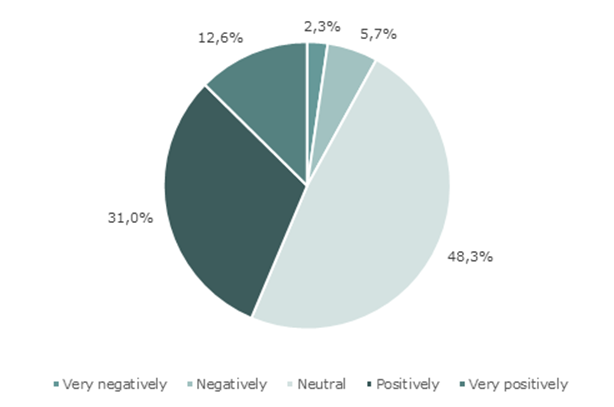
The use of sociodigital networks had a significant impact on the quality of life and access to information of patients and their caregivers (see Figure 1). According to the interviews, the majority of patients and caregivers perceived that sociodigital networks had a neutral impact (48.3%), closely followed by a positive or very positive impact (43.6%) on their quality of life and well-being. Interestingly, only 8% perceived them as having a negative or very negative impact. Social platforms have provided a space where patients can share their experiences, receive emotional support, and feel part of a community. Indeed, some of the final reflections of interviewees included acknowledgement for the association's initiatives, support to patients, and assistance in better understanding their disease.
Some respondents claimed that social media may have a negative impact: «I have deleted all my social media accounts. Information is often manipulative or manipulated». Additionally, patients demand more visibility in all areas, as well as disease-specific information (treatments, symptoms, interpretation of laboratory tests, nutrition, and research, among others). Other demands included that associations use a less technical and simpler language, provide quality information, and expand their activity beyond social media: «I think it's very important to constantly ensure the quality of information and create opportunities for in-person interaction at the global and regional levels [...] beyond just social media»
Interestingly, a duality was noted in the impact perceived by patients. Although a significant proportion of patients find communication on social networks beneficial, the neutrality and criticism observed invite us to further investigate the way content and engagement are managed. It is important to determine whether the content currently offered meets the emotional and practical needs of the community or it just reproduces poorly-accessible or impersonal communication patterns. It would be advisable for the associations to promote spaces for active listening –for example, open surveys or focus groups– to collect proposals, criticisms and specific suggestions that could be translated into improvements in their communication channels. Likewise, the use of more dynamic, accessible and tailored formats would strengthen the link with the community and augment their positive impact. The point is to create a strong and united community of patients, caregivers, and healthcare providers.
Figure 1. Respondents' evaluation of the impact of sociodigital networks
on their quality of life
Source: prepared by the authors.
In addition, social media have significantly improved patients’ access to information and resources. Interestingly, respondents showed a neutral position concerning the impact of social media communication on their quality of life. In contrast, the majority of patients agreed (45.3%) or strongly disagreed (38.4%) that social media had improved their access to information. In the rest of responses, patients were neutral (12.8%), disagreed (2.3%) or totally disagreed (1.2%).
The interviews with the persons in charge in the associations MPN España and AIPAMMM confirm these findings. The two associations perceived that social media had improved the quality of life and well-being of patients and their caregivers. One of the associations claimed that they continuously receive positive comments and offer support daily through their platforms. The other association explained that social media had helped patients and caregivers to meet others and learn about the association. However, social media do not seem to have contributed to gaining a deeper understanding of their disease. The two associations agree that social media have improved access to information and resources. «Social networks have been decisive», says one of the interviewees. Through social media, associations provide informative contents about the disease and about mental health, among other topics.
Although the overall impact of social media communication is primarily perceived as positive, the results also reflect the need to further improve and refine communication strategies. Negative comments refer to the presence of barriers regarding the way information is shared or adjusted to patients' needs. This suggests that associations should explore more personalized or specific formulas and improve the educational purpose of their contents. Content curation should be promoted, as well as collaboration with healthcare providers to ensure that more reliable and tailored information is provided.
Regarding future improvements, associations plan to change their communication strategies on social media to further increase their effectiveness. Improvements involve updating their communication plans and hiring qualified social media managers. To evaluate the success of its social media efforts, one of the associations performs a monthly content analysis and a follower engagement evaluation. The two associations are committed to further improve their communication strategies to maximize the positive impact of these platforms on the quality of life of patients and their caregivers.
3.2. Content: Themes and Format
In the interviews, patients and caregivers were asked about topics of interest for webinars and podcasts. The preferred webinar topics included current and future treatments (88.4%); quality of life in terms of symptom management or daily life improvements (81.4%); and advanced knowledge of MPN (65.1%). To a lesser extent, participants were interested in obtaining basic information about the disease, research on genetics, nutrition, and physical exercise. They also suggested other topics such as permanent and temporary disability, clinical trial results, research studies, and information about pregnancy, support resources and centers, and MPN comorbities. Regarding podcasts, respondents would like to receive some advice for improving their quality of life (83.7%), learn about disease symptoms and self-management strategies (74.4%); and view interviews with patients and testimonials (65.1%). To a lesser extent, respondents were interested in receiving basic information about the disease, and mentioned other topics such as medical history and pregnancy. Patients and their caregivers especially appreciate the information that helps them improve their daily life and better understand the disease.
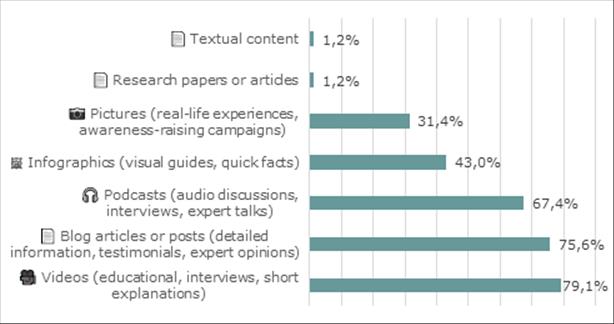
In relation to content formats (See Figure 2), patients prefer educational videos, interviews or short explanatory posts (78.4%); articles or posts containing detailed information, testimonials or expert opinions (73,9%); and podcasts containing audio discussions, interviews or expert talks (67%). To a lesser extent, users are interested in infographics, pictures and other textual contents. The majority of patients and caregivers would be interested in joining online discussion groups or communities: 54.5% might join; 35.2% would join; and 10.2% would never join an online group. The preferred means for engaging MPN-related content include webinars with experts (70.5%), and posts and discussions on social networks (54.5%). These results underscore the importance of diversifying content formats and fostering online interaction to meet the diverse preferences and needs of patients and their caregivers.
Figure 2. Respondents’ preferred content formats
Source: prepared by the authors.
The post content analysis reveals that they are typically of high quality in terms of images and videos, which helps capture their audience’s attention and contributes to conveying the message effectively. A consistent use of colors, logos and other visual elements strengthen association’s identity and facilitates identification by followers. In addition, the use of relevant hashtags i.e. #MPNEspaña, #MPNSpain, #MPNsm, #MyeloproliferativeNeoplasms, to name a few, helps increase the visibility of posts and reach a wider audience. Nevertheless, associations do not always use hashtags. Association posts on sociodigital networks generally include a combination of text (92%), infographics (61.5%), images (15.6%), and videos (6.1%). These posts are intended to convey visually-appealing and straightforward information.
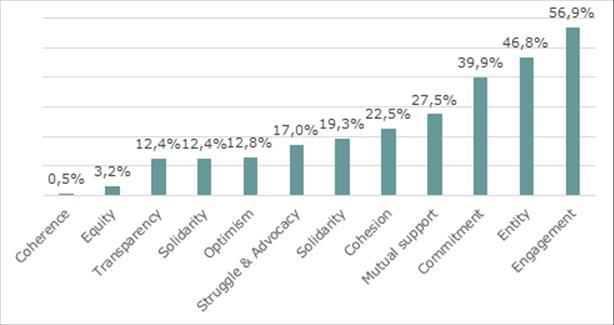
The most frequent topics addressed by the associations in their posts included MPN-related events (61.5%), and news and updates (26.6%). Other considerably less frequent topics were related to basic information about the disease (14.7%); motivational resources and support (11%), and treatments (6.9%). Other topics as frequent as those mentioned above or with a frequency <5% included lifestyle, extended information, participation in research studies, or information about each of the three types of cancers encompassed by the term MPN (TE, PV and MF). However, these topics are not always aligned with the interests and needs of patients and caregivers. As mentioned above, interviewees demand more disease-specific information or lifestyle recommendations. Posts on Facebook and Instagram were classified according to the values they conveyed (See Figure 3). The most frequent values included engagement (56.9%), entity (46.8%) and commitment (39.9%). For example, a post announcing a lecture with expert healthcare professionals was classified as «engagement» and «commitment»; patient testimonials about their daily life was categorized as «cohesion» and «mutual support»; and posts highlighting the need for further research were labeled as «claim» and «struggle and advocacy». These values are essential for fostering a feeling of community among patients and their caregivers.
Figure 3. Values transmitted by associations on their Facebook and Instagram posts
Source: prepared by the author.
These findings are aligned with the insights gained from the interviews with the persons in charge of communication and the leaders of the associations. Associations select the content to be posted on each platform on the basis of their target audience. One of the associations published the same content on all sociodigital networks and adjusted the style depending on whether it addressed patients or healthcare/pharmacy professionals. When aimed at patients, content was posted on Instagram and Facebook, among other platforms, whereas LinkedIn and Twitter (currently X) were the media of choice for professionals. On another note, the other association primarily used Facebook to communicate with older adults aged 50 to 55 years; LinkedIn when addressing the industry and stakeholders, and Instagram to address young patients.
3.3. Engagement, Interaction, and Communication Strategies
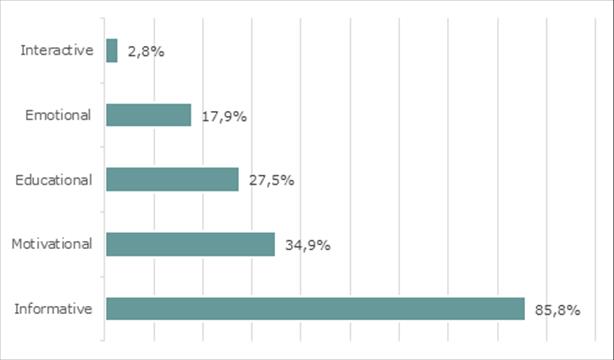
Post content analysis revealed that the type of content and topic influenced the level of interaction and engagement. The tone and style (See Graph 4) of the majority of posts is informational (85.8%), motivational, and educational. To a smaller degree, posts are also emotional and interactive.
Figure 4. Tone and Style of Facebook and Instagram Posts
Source: prepared by the author.
AIPAMM posts on Instagram had an average of 49.2 words; 1.3 emoticons; 4.9 likes and 0.25 comments per post. Videos were not posted on this account, and the average rate of engagement was 3.9%, with a total of 205 followers. Activity in the MPN España account was higher, with an average of 86.2 words; 4.5 emoticons; 40.4 likes and 2.1 comments per post. In addition, eight videos were posted on this account, with a mean number of views of 988.1, and an engagement rate of 8.4%. MPN España has a total of 1,005 followers.
AIPAMM posts on Facebook had an average of 44.3 words; 1.1 emoticons; 5.8 likes; 0.4 comments and 3.6 shares per post. The rate of engagement was 0.01%, with a total of 915 followers. Activity in the MPN España account was higher, with an average of 74.7 words per post; 4.8 emoticons; 17.6 likes, 1.8 comments and 3.6 shares per post. In addition, six videos were posted on this account, with a mean number of views of 802.7, and an engagement rate of 1.79%. MPN España has a total of 818 followers.
The persons in charge of communication reported using a variety of strategies to increase the visibility and outreach of their posts on social media. One of the strategies is the use of patients' and health providers' video testimonials. The other strategy involved publishing frequent content on social media platforms and maintaining active communication with the audience. World MPN-related days and posts about associated contents is an effective strategy to reach a wider audience. Videos are one of the most attention-grabbing formats.
However, associations also face some challenges when communicating with their audience on social media. Reportedly, one of the primary challenges is «We are not medical professionals and anything related to health is a very sensitive topic». This claim underlines the importance given by associations to providing verified quality information. These associations deem it essential to receive advice and guidance from healthcare professionals. Associations also acknowledge that their communication strategies should be led by professional social media managers. However, finding professionals with specific training in creating social media content may be challenging.
Regarding communication plans, one of the associations has established an organizational communication plan, although it needs to be updated. Social media and websites are the gateway to associations. SEO strategies are also used to improve their visibility in MPN-related searches. In contrast, the other association has not yet developed any communication plan, although they plan to do so. The associations' activity on social media is aimed at educating patients and healthcare providers; building patients' capacity to do a critical use of social media; giving visibility to and raising awareness of MPN; and helping people with the disease.
Engagement and interaction on social media are essential for MPN patient associations. Patients appreciate being given the opportunity to engage with associations' content and connect with others in a similar situation. Associations use a variety of strategies to increase the visibility and outreach of their content. However, they face some challenges related to the management of sensitive information and the lack of involvement of healthcare professionals. Communication plans and social media-specific strategies will contribute to maximizing the positive impact of social networks in the community of patients.
These results demonstrate the need to update engagement strategies. What prevents patients from engaging? Formats may not be motivational enough; topics may not be familiar enough, or patients may not be aware of the value of their contributions. The associations should foster more horizontal and inclusive spaces in which personal experiences are acknowledged and valued. Projects such as co-created campaigns, creative contests, or open calls for collaboration could foster a more active and authentic participation.
4. Discussion and conclusions
This study explores the sociodigital network communication strategies used by associations of patients with rare diseases, more specifically, MPN España and AIPAMM. Research was based on interviews with patients, an analysis of sociodigital network content, and interviews with the persons in charge of communication and leaders of the associations. The results obtained provide a comprehensive overview of the strategies used by these associations on sociodigital networks to improve the quality of life of patients, facilitate access to information, and promote engagement and interaction.
The results demonstrate that the use of social media has a positive impact on the quality of life and well-being of patients and their caregivers (PO). Social platforms provide a space where patients can share their experiences, receive emotional support and feel part of a community. This finding is consistent with previous studies demonstrating that social media is a valuable source of social and emotional support to patients with chronic diseases (Seco Sauces & Ruiz-Callado, 2018; Apperson et al., 2019). In addition, social media have significantly improved access to information and resources (Halverson et al., 2024). Patients appreciate having access to update information about treatments, research studies, and practical advice for disease self-management. Hence, access to reliable and relevant information empowers patients and helps them make informed decisions about their health.
The analysis of the interviews and sociodigital network contents reveals that the topics generating the highest interest among patients include quality of life, symptom management, nutrition, physical activity, and current and future treatments. The most appreciated content formats include educational videos, infographics, podcasts, and comprehensive articles (SO3). These formats provide clear and accessible information to patients, which is essential for their education and empowerment. Associations noticed that short video testimonials from patients’ and health providers are highly effective in increasing the visibility and outreach of their content. In addition, world disease-related days and reminders of important events generated numerous interactions. This underscores the importance of these topics and formats for communication with patients.
Engagement and interaction on social media are essential for MPN patient associations. Patients appreciate being given the opportunity to engage with associations' content and connect with others in a similar situation. Associations use a range of strategies to increase the visibility and outreach of their content. However, they face some challenges related to the management of sensitive information and the lack of involvement of healthcare professionals. The interviews reveal that associations are committed to improving their social media communication strategies. MPN España has established a formal communication plan, although it needs to be updated. Moreover, MPN España is working on developing SEO strategies to improve the visibility of the association in MPN-related searches. AIPAMM is seeking a professional media manager with specific training in the disease.
Social media has proven to be a valuable tool for enhancing the quality of life and access to information of patients with MPN and their caregivers. Associations should continue to employ specific strategies to tailor content to their target audience and maximize the impact of their posts on social media. In addition, it is crucial that associations address challenges concerning the management of sensitive information and the lack of involvement of healthcare providers, as well as further improve their communication strategies. Finally, this study highlights the role of social medial in providing social and emotional support, as well as in fostering education and empowerment among patients with RD.
The findings of this study open an avenue for future longitudinal research aimed at exploring the long-term impact of social media on the quality of life of patients with RD. Future studies should focus on the collaboration between patients and healthcare providers for the development of digital education and health-related communication plans aimed at enhancing the quality of the information shared online. These lines of research will contribute to optimizing the use of social media as a supportive and informative tool for patients with rare diseases.
Ethics and Transparency
Acknowledgements
We thank the associations MPN España and AIPAMM for their collaboration in the interviews. Thanks to the patients who so kindly completed our survey, whose contribution has been essential to this study.
Conflict of Interest
None declared.
Funding
This research study received no external funding.
Author Contributions
Indicate with an 'X' in the corresponding cell or cells. The heading will not be numbered but must have the same format as the main headings.
|
Contribution |
Author 1 |
Author 2 |
Author 3 |
Author 4 |
|
Conceptualization |
X |
X |
|
|
|
Data curation |
|
X |
|
|
|
Formal Analysis |
|
X |
|
|
|
Funding acquisition |
|
|
|
|
|
Investigation |
X |
X |
|
|
|
Methodology |
X |
X |
|
|
|
Project administration |
X |
X |
|
|
|
Resources |
X |
|
|
|
|
Software |
X |
X |
|
|
|
Supervision |
X |
X |
|
|
|
Validation |
X |
X |
|
|
|
Visualization |
|
X |
|
|
|
Writing – original draft |
|
X |
|
|
|
Writing – review & editing |
X |
X |
|
|
Data Availability Statement
Data is not accessible.
References
AIPAMM (s.f.). Associazione AIPAMM. AIPAMM. https://tinyurl.com/amdnp8ew
Álvarez, A. (2011). Medición y Evaluación en Comunicación. Doxa Comunicación: revista interdisciplinar de estudios de comunicación. https://tinyurl.com/3vyrps6f
Apperson, A., Stellefson, M., Paige, S. R., Chaney, B. H., Chaney, J. D., Wang, M. Q. & Mohan, A. (2019). Facebook groups on chronic obstructive pulmonary disease: Social media content analysis. International Journal of Environmental Research and Public Health, 16(20). https://doi.org/10.3390/ijerph16203789
Arias, A. C., Medina Chicaiza, R. P., Arroba, Í.R., Lascano, C. del R., Medina, A. P. & Quispe, J. S. (2025). Sistematización teórica de salud digital. Revista Científica Multidisciplinaria SAPIENTIAE, 8(16), 122-141. https://doi.org/10.56124/sapientiae.v8i16.008
Armayones, M., Requena, S., Gómez-Zúñiga, B., Pousada, M. & Bañón, A. M. (2015). El uso de Facebook en asociaciones españolas de enfermedades raras: ¿cómo y para qué lo utilizan? Gaceta Sanitaria, 29(5), 335-340. https://doi.org/10.1016/j.gaceta.2015.05.007
Ashtari, S. & Taylor, A. (2023). Patients with rare diseases and the power of online support groups: implications for the Medical Community. JMIR Formative Research, 7. https://doi.org/10.2196/41610
Currie, G. & Szabo, J. (2020). Social isolation and exclusion: The parents' experience of caring for children with rare neurodevelopmental disorders. International Journal of Qualitative Studies on Health and Well-Being, 15(1). https://doi.org/10.1080/17482631.2020.1725362
De los Ríos Uriarte, M. (2024). La inteligencia artificial en la salud: oportunidades y desafíos. Medellín. Biblia, Teología Y Pastoral Para América Latina Y El Caribe, 50(189), 259-282. https://tinyurl.com/3bju8vmy
Deuitch, N. T., Beckman, E., Halley, M. C., Young, J. L., Reuter, C. M., Kohler, J., Bernstein, J. A., Wheeler, M. T., Undiagnosed Diseases Network, Ormond, K. E. & Tabor, H. K. (2021). "Doctors can read about it, they can know about it, but they've never lived with it": How parents use social media throughout the diagnostic odyssey. Journal of Genetic Counseling, 30(6), 1707-1718. https://doi.org/10.1002/jgc4.1438
Díaz Campos, J. (2023). Evaluación de la comunicación en redes sociales y enfermedades raras: percepción de la comunidad de MPN España en Facebook (Trabajo Final de Trabajo). Universidad de Girona https://tinyurl.com/543tt93k
Espinoza-Portilla, E., & Mazuelos-Cardoza, C. (2020). Desinformación sobre temas de salud en las redes sociales. Revista Cubana de Información en Ciencias de la Salud, 31(2). https://tinyurl.com/nn85pydz
FEDER. (2022). Impacto psicosocial en el retraso diagnóstico. https://tinyurl.com/5sbf3ksp
FEDER (2018). Estudio sobre situación de necesidades sociosanitarias de las personas con enfermedades raras en España: Estudio ENSERio. Datos 2016-2017. https://tinyurl.com/2xcmjb55
Fridman, I., Johnson, S. & Elston Lafata, J. (2023). Health information and misinformation: A Framework to guide research and practice. JMIR Medical Education, 9. https://tinyurl.com/43x9eeya
Halverson, C. M., Doyle, T. A. & Vershaw, S. (2024). Social media use by patients with hypermobile Ehlers–Danlos syndrome. Molecular Genetics & Genomic Medicine, 12(6). https://doi.org/10.1002/mgg3.2467
Jiménez, S. I. (2017). Neoplasias mieloproliferativas. De la clínica a la biología molecular. Acta Médica Colombiana, 42(1), 15-17. https://tinyurl.com/267dnme2
Levine, J. A., Delval, F., Kitchen, A. & Tena, G. (2023). A qualitative needs assessment of external communication by rare disease associations. PREPRINT (Version 1). https://doi.org/10.21203/rs.3.rs-2492686/v1
Mansilla-Moreno, M., Parejo-Cuéllar, M. & De-Casas-Moreno, P. (2024). Instagram, the Tool of E-patients with Multiple Sclerosis. index.communication, 14(1), 207-227. https://doi.org/10.62008/ixc/14/01Instag
Mercado-Martínez, F. J. & Urias-Vázquez, J. E. (2014). Enfermos renales hispanoamericanos en la época de las redes sociales virtuales: análisis de contenido de sus publicaciones, 2010–2012. Revista Panamericana de Salud Pública, 35(5/6), 392-398. https://tinyurl.com/5xmvp9w8
MPN España (2024). Hazte Socio de MPN España y Conéctate en MPN World. MPN España. https://tinyurl.com/5n6kncsx
Oh, H., Rizo, C., Enkin, M. & Jadad, A. (2005). What is eHealth (3): A systematic review of published definitions. Journal of Medical Internet Research, 7(1). https://doi.org/10.2196/jmir.7.1.e1
Olmedo Neri, R. A. (2020). Implicaciones metodológicas sobre el uso del análisis de redes sociales en redes sociodigitales. Quórum Académico, 17(2), 73-94. https://tinyurl.com/bdu8v2xf
Pelentsov, L. J., Fielder, A. L., Laws, T. A. & Esterman, A. J. (2016). The supportive care needs of parents with a child with a rare disease: results of an online survey. BMC Family Practice, 17, 88. https://doi.org/10.1186/s12875-016-0488-x
Pemmaraju, N., Utengen, A., Gupta, V., Kiladjian, J. J., Mesa, R. & Thompson, M. A. (2017). Rare cancers and social media: analysis of Twitter metrics in the first 2 years of a rare-disease community for myeloproliferative neoplasms on social media—#MPNSM. Current Hematologic Malignancy Reports, 12, 598-604. https://doi.org/10.1007/s11899-017-0421-y
Rivera-Salas, P. E. y Curro-Lau, M. G. (2021). Promoción de la calidad de vida a través del periodismo responsable digital. index.comunicación, 11(1), 187-217. https://doi.org/10.33732/ixc/11/01Promoc
Saad, R., Saad, S., Haigh, O., Molinari, D., Labetoulle, M. & Rousseau, A. (2021). Using pre-existing social networks to determine the burden of disease and real-life needs in rare diseases: the example of Thygeson's superficial punctate keratitis. Orphanet Journal of Rare Diseases, 16, 1-7. https://doi.org/10.1186/s13023-021-01707-6
Schöngut-Grollmus, N. & Energici, M. A. (2021). Decisiones médicas en enfermedades raras: de su definición estadística a su comprensión social. Saúde e Sociedade, 30(2). https://doi.org/10.1590/S0104-12902021200393
Seco Sauces, M. O. & Ruiz-Callado, R. (2018). Las comunidades virtuales de pacientes con enfermedades raras: Análisis de su influencia en la toma de decisiones y en el cambio de conductas relacionadas con el proceso de enfermedad. Revista Salud Uninorte, 34(1), 160-173. https://tinyurl.com/nhzmj3xh
Swire-Thompson,
B. & Lazer, D. (2020). Public health and online
misinformation: challenges and recommendations. Annual Review of Public
Health, 41(1), 433-451.
https://doi.org/10.1146/annurev-publhealth-040119-094127
Von der Lippe, C., Diesen, P. S. & Feragen, K. B. (2017). Living with a rare disorder: a systematic review of the qualitative literature. Molecular Genetics & Genomic Medicine, 5(6), 758-773. https://doi.org/10.1002/mgg3.315
Wang, Y., McKee, M., Torbica, A. & Stuckler, D. (2019). Systematic literature review on the spread of health-related misinformation on social media. Social Science & Medicine, 240, 112552. https://doi.org/10.1016/j.socscimed.2019.112552
Zerón, A. (2024). Estrategia mundial sobre salud digital. Revista ADM, 81(2), 73-76. https://dx.doi.org/10.35366/115432