index●comunicación
Revista científica de comunicación aplicada
nº 15(2) 2025| Pages 83-107
e-ISSN: 2174-1859 | ISSN: 2444-3239
Epilepsy Visibility on Instagram: The Role of Influencers as Health Content Creators
La visibilidad de la epilepsia en Instagram: el rol de los ‘influencers’ como creadores de contenido en salud
Received on 15/03/2025 | Accepted on 12/06/2025 | Published on 15/07/2025
https://doi.org/10.62008/ixc/15/02Lavisi
Ana Ibáñez-Hernández | Universidad de Alicante
ana.ibanez@ua.es | https://orcid.org/0000-0002-0023-4232
Carmen Carretón-Ballester | Universidad de Alicante
mc.carreton@ua.es | https://orcid.org/0000-0002-4851-9683
Abstract: More than 50 million people of all ages live with epilepsy worldwide, according to the WHO. The lives of these patients are shaped not only by the sudden but also varied symptoms with which the disease manifests itself in each patient, but also by the associated social stigma. Social media serve as both sources of information and participatory spaces aligned with the e-Health model, enabling users to share experiences and speak openly about the condition. Using quantitative and qualitative methods, a total of 10 Instagram accounts, 211 posts and 874 comments made from December 1, 2024 to February 28, 2025 were analyzed. The results allow us to conclude that, in the case of epilepsy, although patient-influencers are a minority in this social network, their testimonies and informative work contribute to normalize and make the disease visible, as well as to break stereotypes and reduce stigma.
Keywords: Health communication; social networks; epilepsy; patient-influencer; information overload.
Resumen: Más de 50 millones de personas de todas las edades conviven con la Epilepsia en el mundo, según la OMS. La vida de estos pacientes se ve marcada por los repentinos y variados síntomas con los que se manifiesta la enfermedad en cada paciente, pero también por el estigma social asociado. Las redes sociales se erigen como fuente de información para los pacientes, pero también como plataformas participativas del modelo e-Salud, a través de las cuales compartir experiencias y hablar abiertamente de la enfermedad. Mediante métodos cuantitativos y cualitativos se analizó un total de 10 cuentas de Instagram, 211 publicaciones y 874 comentarios realizados del 1 de diciembre de 2024 al 28 de febrero de 2025. Los resultados permiten concluir que, en el caso de la epilepsia, aunque los pacientes-influencers son residuales en esta red social, sus testimonios y labor divulgativa ayudan a normalizar y visibilizar la enfermedad, así como a romper estereotipos y reducir el estigma.
Palabras clave: comunicación en salud; redes sociales; epilepsia; paciente-influencer; infoxicación.
1. Introduction
Epilepsy is a chronic neurological disorder that, according to the World Health Organization (WHO, 2019), affects around 50 million people of all ages worldwide. In Spain, the Spanish Society of Neurology (SEN, 2023) estimates that around half a million people live with epilepsy, with approximately 20,000 new cases diagnosed annually, mostly in children and adults over 65. The heterogeneity of symptoms associated with the disease makes diagnosis difficult, and the condition presents uniquely in each individual, severely impacting their quality of life.
Reducing the burden and increasing public awareness of the condition represent essential public health priorities, given its profound impact not only on patients but also on their families, who often face stigma and discrimination (WHO, 2019).
Since 1986, the WHO has been promoting health literacy as a set of cognitive and social skills that allow individuals to access, understand, and use information effectively as part of an emancipatory process, empowering citizens to make informed health decisions (Juvinyà-Marín, 2021). Consistent with this belief in patient autonomy and responsibility, the WHO (2022a) places self-care at the core of its strategies to improve community health. Self-medication arises as a direct consequence when individuals identify or recognise symptoms without requiring a healthcare professional.
Patients, patient associations, pharmaceutical companies, and healthcare professionals face the challenge of acquiring new communication competencies in the digital environment and fostering the creation of relevant, high-quality content online. These actors use the media available to them as «instruments for citizen participation to shape public opinion and reach the political sphere» (Carretón & Lorenzo, 2018: 233), thereby raising awareness and visibility of epilepsy and reducing stigma through better understanding.
Research suggests that epilepsy receives insufficient media attention, and patients, in the absence of accurate information, often seek knowledge from others with similar conditions to share symptoms, experiences, and challenges (Carretón & Feliu, 2011).
1.1. Health Misinformation
In this context, social media holds significant potential for healthcare professionals to share knowledge and engage their audiences (De las Heras-Pedrosa et al., 2020). However, communication through these channels can also facilitate the spread of misinformation, increasing patients’ vulnerability (Costa-Sánchez & López-García, 2020). Health-related misinformation is not always the result of deliberate deception for personal gain, as warned by the WHO (2020), but often causes both physical and psychological harm, intensifying the stigma surrounding certain conditions and sowing confusion and polarisation in society.
This could be prevented through transparent, responsible, coordinated, and strategic communication (Rodríguez-Vélez, 2022), which requires the promotion of health literacy models that equip citizens with the skills to manage their wellbeing, develop critical thinking, and improve their consumption of health-related information. It also calls for greater oversight and regulation due to the social impact and implicit responsibility that health messages carry (Jiménez-Marín et al., 2021).
The COVID-19 pandemic highlighted the urgent need for ethical, effective health communication, where both institutions and the media must bear the responsibility for disseminating truthful and accessible information (Costa-López, 2020).
During the pandemic, the WHO (2020) coined the term «infodemic» to describe the overabundance of unreliable information that hinders informed decision-making. The mass spread of hoaxes created confusion and fear, undermining public health measures (Almansa-Martínez et al., 2022; Pérez-Dasilva et al., 2020; Pichihua-Vegas, 2022; Salaverría et al., 2020). Closely related to this is the concept of «infoxication»— an overload of information that overwhelms patients, complicating their ability to assess the veracity of content and encouraging self-medication or self-diagnosis without medical supervision (Campos-Arroyo et al., 2023).
To address this, the WHO (2021) emphasizes reducing the information gap and enabling the population to make informed and responsible decisions about their own health and that of their communities. Aligned with the 2030 Agenda, the WHO stresses the necessity of digital health networks that are transparent, accessible, equitable, and promote digital health literacy. This includes mechanisms for active citizen participation, the implementation of e-Health globally (WHO, 2022b), and a focus on safe self-care and self-medication (WHO, 2022a) supported by reliable information, thus avoiding risks such as masking symptoms of more serious illnesses (Lifshitz et al., 2020).
Healthcare is now advancing towards e-Health 4.0, driven by Big Data, artificial intelligence, 5G, the Internet of Things, and wearable technologies. This model promotes a personalised, predictive, precise, and preventive approach to medicine (Moreno-Vida, 2024), placing the patient at the centre of the healthcare system and enhancing interaction with professionals. In this way, the evolution of the e-Health model becomes a vital mechanism for improving health—whether in the public or personal sphere (Mosquera, 2002)—closely aligned with the communication for social change paradigm of Martínez-Beleño and Sosa-Gómez (2016), which emphasises its potential societal impact through media literacy programmes as part of global health promotion strategies.
The International Telecommunication Union (2022) warns that nearly 66% of the global population uses the Internet to seek information, yet most lack the skills to distinguish reliable from false content. This makes it necessary to «develop and implement policies, action plans, and strategies related to Media and Information Literacy, and increase awareness, prevention capacities, and resilience to false or misleading information» (Grizzle et al., 2023: 5). According to UNESCO (2020), accessible, evidence-based health information can save lives. Therefore, the public must be equipped with the tools, skills, and competencies to understand media mechanisms, algorithmic biases, and the role of AI in the dissemination of misinformation, while fostering a critical mindset to help identify and reject false health content.
1.2. Towards a More Active Patient Role in Self-Care
In the last decade, patients have acquired a more active and competent role in their healthcare (Cófreces et al., 2014). In the same way that the internet has facilitated greater access to health information, technological devices have enabled users to exert better control over their own health. These tools provide individuals with increased confidence in their self-care abilities, allowing them to monitor their condition in real time and take preventive measures and offering new opportunities for health outreach and health promotion among citizens (Álvarez Cordero, 2019).
Technology now enables accurate monitoring of patient health that can lead to false beliefs about their health status and raise doubts about the judgement of healthcare professionals—or worse, question their diagnosis and make the wrong decisions for their wellbeing (Campos-Arroyo et al., 2023).
In addition, the easy access to health information and the proliferation of content on social networks has led to new dynamics in the relationship between patients and health professionals within the Network Society (Torres-Valdés & Santa-Soriano, 2014). The ease of consulting symptoms online has boosted dependence on the so-called «Dr. Google» (Lee et al., 2007), impacting on the traditional forms of interaction during medical consultations.
As has been warned, this unlimited access to health information—which is complex and scientific in nature—represents a risk for the most vulnerable users, who may lack the necessary training to interpret it or to discern between reliable sources and those offering malicious content (Flores-González et al., 2022).
1.3. The Influencer Patient: A New Health Advocate
For over a decade, social networks have permeated all aspects of society. While their full impact is difficult to measure, these platforms have become a routine tool for people facing serious illnesses, playing a crucial role in providing information, guidance, and emotional support to patients and their families.
Through personal posts, comments, and support groups, users express emotions and share experiences (Miller et al., 2022). Caregivers also frequently turn to these platforms for information on treatments—a trend that is expected to grow as younger generations take on caregiving roles. Willis et al. (2023) observed that patients actively form communities on social media, especially among younger users, where health information is exchanged and mutual support is offered.
Instagram, owned by Meta, is one of the most popular platforms for sharing visual content, typically accompanied by accessible, non-technical language. This makes it especially appealing to digital natives and Gen Z (Ibáñez et al., 2023; Gargi, 2024). According to the tech consultancy WindUp (2025), Instagram offers a variety of formats that have evolved since its creation in 2010 to adapt to user demands. These include: Stories (ephemeral posts disappearing after 24 hours); Reels (short, high-impact videos under 60 seconds); IGTV (long-form videos up to one hour) or Live (real-time broadcasts that foster closeness and trust with audiences). Many of these formats are used to create content known as «memes», which can go viral among specific user communities by distorting reality in a humorous or satirical way (Racioppe & Párraga, 2020).
The 2023 Health and Life study by the insurer AEGON confirms the growing influence of content creators on healthcare decisions in Spain, where an increasing number of individuals take medications based on influencer recommendations—emerging as new opinion leaders in digital health communication.
The profile of the health-related influencer is highly diverse. It ranges from qualified healthcare professionals who combine their scientific expertise with strong communication skills for educational purposes (Sancho-Belinchón, 2025) to micro-influencers—accounts with modest followings that nevertheless build loyal, engaged communities by offering valuable content (Pérez-Ordóñez & Castro-Martínez, 2023). Among these are patient-influencers, individuals who share personal experiences with illness and gain credibility and high engagement through authentic, first-hand testimony.
Willis and Delbaere (2022), examining the rise of patient-influencers in the United States, highlighted the ethical concerns around covert persuasive tactics used by pharmaceutical companies via these profiles. In response, governments like that of the USA have begun regulating such practices, requiring patient-influencers to disclose paid collaborations using hashtags such as #ad or #sponcon (Chan, 2023; Willis et al., 2023).
In Spain, Royal Decree 444/2024 (known as the «Influencer Law») imposed certain obligations on prominent content creators, such as clearly labelling advertisements. However, this legislation applies only to influencers with high earnings or large audiences, excluding micro-influencers and nano-influencers, who constitute the majority of health content (IAB Spain, 2022).
Patient-influencers belong to this latter group, producing valuable health-related content and interacting closely with their communities (Pérez-Ordóñez & Castro-Martínez, 2023). Their followers often regard them as credible experts on specific conditions, amplifying their impact within digital spaces.
In Spain, both patient-influencers and many patient associations use Instagram and other platforms (Seco-Sauces & Ruiz-Collado, 2020) to raise awareness about conditions such as epilepsy and to combat stigma, favouring knowledge-based discourse over spectacle (Fung et al., 2020; Wiedicke et al., 2022; Martín-García et al., 2024).
The overall aim of this study is to explore epilepsy-related content on Instagram, with a particular focus on the role of patient-influencers as trustworthy health prescribers.
– SO1. To quantify the publication outcomes from various actors who regularly communicate about epilepsy on Instagram.
– SO2. To assess the most common formats and resources used in epilepsy-related content creation.
– SO3. To identify common themes and determine the intent behind content depending on the type of actor.
– SO4. To determine the impact of communication from these profiles within their communities.
2. Methodology
This study focuses on epilepsy as a major chronic condition encompassing all seizure types or syndromes classified by the International League Against Epilepsy (Beniczky et al., 2025).
1. The first phase involved a literature review to examine existing studies on the influence of patient-influencers in the management of various diseases, particularly epilepsy. This was conducted using a Boolean search in the WOS (Core Collection) database with the strategy: «patient influencer» AND «epilepsy». Studies that addressed the phenomenon from a communication or public perception perspective were included. Those focused on clinical or biomedical aspects or those lacking reference to the patient as a communication agent were excluded.
2. The second phase employed an inductive methodology to derive general conclusions from specific case observations. Instagram was selected as the subject of the case study due to its growth in Spain (CNMC, 2025). Using the hashtag #epilepsia, profiles were selected based on Instagram’s own suggestions. The hashtag #epiléptico was excluded to avoid content that could perpetuate stigma.
Of the initial 20 accounts, 11 were excluded for not having any posts during the analysis period (from 1 December 2024 to 28 February 2025). During the analysis, one account belonging to a patient-influencer was added to the sample, as it aligned with the objectives of the study. The final sample consisted of 10 profiles and 211 posts. The analysis was complemented by reviewing the 874 comments associated with these posts, in order to provide context.
3. The third stage involved content analysis using both quantitative and qualitative approaches, following the methodology validated by Martín-García et al., (2024) for analysing Instagram profiles. The themes were coded during the analysis process (see Table 1). The data were processed using SPSS.
Table 1. Content analysis matrix for social media posts
|
Instagram Account |
|
|
Profile Type |
1. Pharmaceutical laboratory 2. Patient association 3. Volunteer 4. Patient 5. Scientific society |
|
Quantitative Metrics |
Number of Followers, Posts, Likes, Comments, Shares |
|
Intention |
THEME 1. Clinical advances (surgery) 2. Pharmacological treatments 3. Epilepsy education 4. Healthy habits 5. Disease management 6. Patient advice 7. Testimonies 8. Related events 9. Social inclusion 10. Associative life 11. Other. |
|
TONE (yes/no): 0. Neutral/without tone; 1. Informative; 2. Empathetic; 3. Educational; 4. Persuasive; 5. Normalising/visibility-enhancing; 6. Humorous; 7. Grateful. |
|
|
Format (yes/no) |
Text / Image-Photo / Video / Reel / Meme |
Source: own elaboration.
3. Results
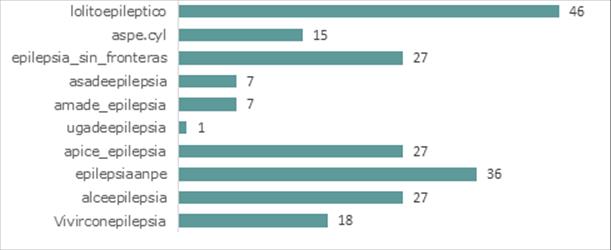
The typological analysis shows that 57% of the accounts correspond to patient associations (@epilepsiaanpe, @apice_epilepsia, @alceepilepsia, among others), which significantly outnumber patient profiles (21.8%), volunteer organisations (12.8%), and pharmaceutical laboratories (8.5%), such as the account @vivirconepilepsia by the pharmaceutical company UCB Pharma.
Graph 1. Number of posts by profile (n)
Source: own elaboration.
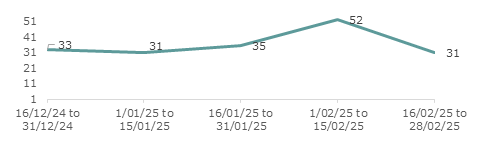
During the period analysed, the distribution of posts was relatively homogeneous, except for the peak observed between 1 and 15 February, which coincides with the International Epilepsy Day, celebrated on the second Monday of February.
Graph 2. Chronological distribution of posts (n)
Source: own elaboration.
Quantitative metrics indicate that although users tend to «like» nearly all the posts analysed, they rarely leave comments and even less frequently share the publications. Statistically (see Table 2), the standard deviation shows greater dispersion around the mean for «likes» and number of comments. Therefore, the median is used as a descriptive statistic for the results obtained.
Table 2. Descriptive statistics for profile indicators
|
|
Minimum |
Maximum |
Std. Deviation |
Mean |
Median |
|
Likes |
5 |
362 |
47.963 |
46.06 |
34 |
|
Comments |
0 |
94 |
10.875 |
4.14 |
1 |
|
Shares |
0 |
45 |
4.982 |
1.78 |
0 |
Source: own elaboration.
The calculation of engagement metrics for the analysed profiles (Table 3) suggests that a higher number of posts does not guarantee a higher engagement rate. The average engagement rate per profile is very similar to that obtained during the analysis period: @ vivirconepilepsia: 1.79%; @alceepilepsia: 1.71%; @epilepsiaanpe: 1.74%; @apice_epilepsia: 1.97%; @amade_epilepsia: 7.32%; @asadeepilepsia: 2.46%; @epilepsia_sin_fronteras: 3.38%; @aspe.cyl: 2.34%; @lolitoepileptico: 2.05%. Exception: @ugadeepilepsia: 6.83%, slightly above average during the study period.
Table 3. Profile metrics and average engagement rate
|
Profile |
Followers |
Posts |
Following |
|
|
|
E.R. |
|
n |
n |
n |
x̅ |
x̅ |
x̅ |
% |
|
|
@vivirconepilepsia |
8268 |
642 |
895 |
134 |
46 |
1905 |
1.81 |
|
@alceepilepsia |
1937 |
1142 |
268 |
32 |
1 |
384 |
1.69 |
|
2113 |
687 |
628 |
34 |
0 |
2827 |
1.64 |
|
|
@apice_epilepsia |
2101 |
1589 |
859 |
46 |
1 |
762 |
2.26 |
|
@ugadeepilepsia |
274 |
35 |
106 |
12 |
0 |
- |
4.43 |
|
@amade_epilepsia |
297 |
43 |
58 |
22 |
1 |
- |
7.56 |
|
@asadeepilepsia |
852 |
83 |
292 |
26 |
0 |
- |
3.18 |
|
467 |
279 |
406 |
11 |
1 |
325 |
2.49 |
|
|
@aspe.cyl |
502 |
91 |
221 |
10 |
0 |
329 |
1.98 |
|
@lolitoepileptico |
3953 |
1127 |
2900 |
73 |
9 |
1625 |
2.08 |


|
n: number x̅: average |
|
|
|
E R..: Engagement Rate |



Source: Instagram profiles and online engagement calculators: https://tinyurl.com/mr4a6vrp https://tinyurl.com/bdeyju6e
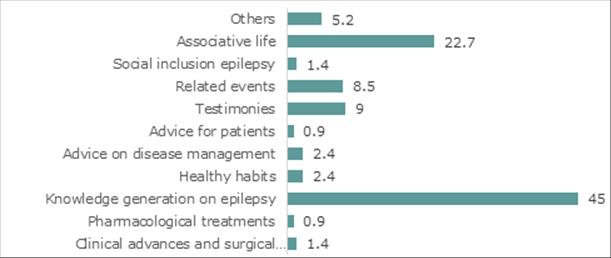
Regarding the post themes, the most frequent content relates to raising awareness and providing knowledge about epilepsy (45%) and associative life (22.7%). At a notable distance, these are followed by testimonies (9%) and related events (8.5%). Topics such as inclusion, clinical advances, treatments, and practical advice for managing the disease or for patients have a residual presence.
The cross-tabulation statistical analysis reveals a statistically significant and moderate relationship (Cramer's V[1] = .494; p = .000) between the type of profile and the topics, with a Chi-squared value (X[2]) of 154.210 and a significance level of p = .000. Nevertheless, the linear association (p = .072) indicates that this correlation does not imply causality. Even so, some clear trends can be observed: topics related to clinical advances and pharmacological or surgical treatments appear almost exclusively in pharmaceutical laboratory profiles. Associative life content is primarily published by patient associations. Testimonies are linked to personal patient profiles and, to a lesser extent, associations. Volunteers also have a notable presence in disseminating epilepsy-related content.
Graph 3. Post themes (%)
Source: own elaboration.
The data reveal that the most frequent communicative intentionality in the sample is informative (86.7%), followed by normalising/visibility-enhancing (64.9%) and empathetic (52.6%) (Table 4).
Table 4. Intentionality of posts (%)
|
Intentionality |
% |
Intentionality |
% |
|
|
Informative |
86.7 |
Grateful |
28.4 |
|
|
Normalising/Visibility |
64.9 |
Neutral or unintentional |
20.9 |
|
|
Empathetic |
52.6 |
Persuasive |
17.1 |
|
|
Educational |
44.5 |
Humorous |
1.9 |
|
|
Assertive |
35.1 |
|
|
|
Source: own elaboration.
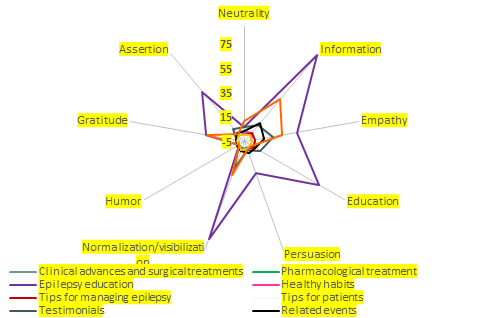
As shown in Graph 4, themes and intentionality are interrelated as follows:
1. Associative life, epilepsy education, related events, and testimonies are rarely neutral.
2. Empathy is especially present in posts about epilepsy awareness, associative life, testimonies, and events.
3. The intent to educate appears in content about epilepsy knowledge and personal experiences.
4. The normalising/visibility-enhancing tone aligns with posts on epilepsy education, associative life, and testimonies.
5. Assertive content (advocacy-oriented) is most common in associative and event-related posts.
Graph 4. Relationship between theme and intentionality (n)
Source: own elaboration.
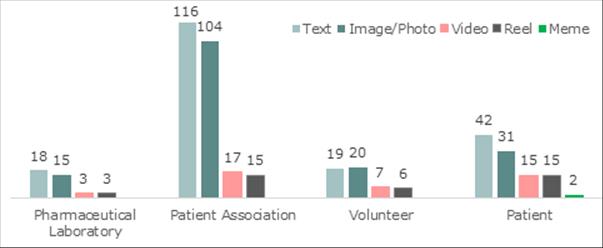
In terms of the resources or formats used, text predominates (92.4%), followed by images or photographs (80.6%). Videos rank next (19.9%), with Reels close behind in third position (18.5%). Memes appear only marginally, accounting for a residual presence of 0.9%.
By cross-tabulating the types of formats to determine whether there is a combined relationship between them, the correlation analysis and the measures of association corroborate what was expected: there is a statistically significant (X21= 204.765; p = .000), very strong and inverse relationship (Φ = -.985 and a significance level p = .000) between the use of image and the use of video. Video use is inversely proportional to image use. Similar is the strong (Φ = -.970; p = .000) statistically significant relationship between image and reel (X21= 198.374; p = .000). In the case of video and reel use, the analysis indicates that the reel is statistically highly related to video use (Φ = .955; p = .000) (X21 = 192.511; p = .000). Therefore, the null hypothesis of independence between these formats is rejected.
Graph 5. Cross-tabulation of profile type*Resources used (n)
Source: own elaboration.
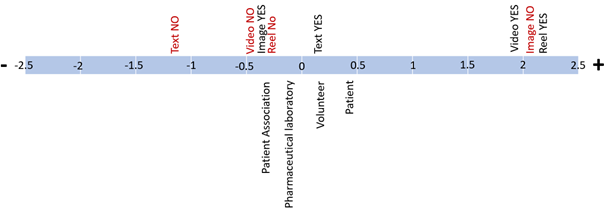
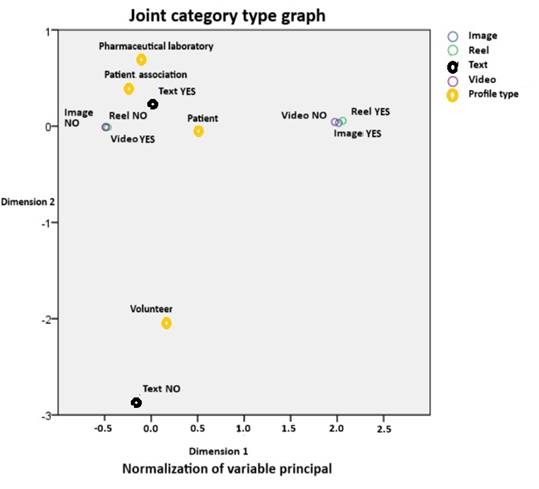
To verify whether there is a relationship between the type of profile and the resources or formats used in the contents, a contingency table was created (Graph 5), the statistical analysis of which shows a statistically significant dependence. To determine whether there is a relationship between the categories of the two variables, a multiple correspondence analysis was performed, which indicates that dimension 1 explains 60.1% of the variance, with a Cronbach's Alpha Coefficient of .834.
Figure 1 and Graph 6 illustrate that «patient association» and «pharmaceutical laboratory» profiles tend to use both images and text, whereas «volunteer» and «patient» profiles rely more heavily on text.
Figure 1. Dimension 1. Multiple correspondence analysis
Source: own elaboration.
Graph 6. Joint category type graph
Source: Prepared by the authors based on the graph obtained from SPSS.
With respect to total interactions and resource use, the analysis does not reveal any statistically significant relationship, indicating that the variables and their categories are independent. However, it is noteworthy that the largest number of interactions fall within the range of 1 to 80 interactions, followed by the range of 81 to 161 (Table 5).
Table 5. Cross-tabulation interactions*Resources
|
Interactions |
Resources |
|
||||
|
Text |
Image |
Video |
Reel |
Meme |
||
|
1-80 |
160 |
142 |
33 |
30 |
2 |
|
|
81-161 |
28 |
22 |
8 |
8 |
0 |
|
|
162-242 |
2 |
1 |
1 |
1 |
0 |
|
|
243-323 |
3 |
3 |
0 |
0 |
0 |
|
|
324-404 |
0 |
0 |
0 |
0 |
0 |
|
|
405-485 |
2 |
2 |
0 |
0 |
0 |
|
Source: own elaboration.
4. Discussion
The results presented above provide a general overview of the profiles that publish content about epilepsy on Instagram, achieving the overall aim of this study and confirming the diversity of sources that assume the role of active communicators on this social network.
It has been possible to answer SO1 by quantifying the results of the publications of the different agents who regularly communicate about epilepsy on Instagram. Thus, associations, laboratories and patient-influencers try to disseminate aspects related to the disease in order to raise awareness and generate knowledge. Their efforts also seek to normalise epilepsy and combat the stigma surrounding it, intentionally distancing themselves from the sensationalism and morbid fascination often associated with the platform (Fung et al., 2020; Wiedicke et al., 2022).
The analysis revealed a profile that fulfils the role of «patient-influencer» who, having become a communicator, contributes to the normalisation of epilepsy and emerges as a reliable and close reference point for their followers—echoing the findings of Martín et al. (2024).
With regard to the resources and formats addressed in SO2, laboratories present a more polished, professional and homogeneous image in their publications, with content focused on knowledge and dissemination of the disease. Nevertheless, the photographs used, probably from image banks, repeatedly show a middle-aged white male, which limits the social representation of the diversity of people affected by epilepsy, which can impact individuals of any sex or age (SEN, 2023).
Patient associations, for their part, tend to publish in a less professional and more irregular manner, thus failing to exploit the potential of the channel (Martin-García et al., 2024). They prioritise, with images and texts, information about the life of the association—such as activities, workshops, subsidies, and care programmes—and promote events and campaigns to raise awareness of epilepsy on commemorative dates, rather than focusing on scientific dissemination or personal experiences.
In the field of volunteering, the only account found was @epilepsia_sin_fronteras, managed by José Luis Navarrete and affiliated with the Valencian association ALCE. His publications show frequent collaboration with the Colombian association @familiaspurpura; however, interaction remains limited.
As for the patient-influencer profile, Andrea Lozano, manager of @lolitoepileptico, presents herself as a communicator. She tends to combine all formats, standing out for her use of improvised live broadcasts to denounce situations and shed light on the life of individuals living with epilepsy. Her communication strategy is based on sharing her personal testimony, speaking openly with the community, which fosters empathy and interaction among her followers. For instance, the series of 7 reels where she describes the step-by-step of the 24-hour Video-Electroencephalogram (VEEG) diagnostic test garnered a total of 676 interactions.
With respect to SO3, the common themes and the intentionality of the contents according to the different agents were identified. It is established that almost half of the publications seek to generate knowledge about epilepsy in order to help patients. But, in addition, the dissemination of collective campaigns, such as the commemoration of International Epilepsy Day or the 50 million steps against stigma campaign, also reveal an intention to raise social awareness.
The content related to association life—in second position—could be attributed to the high representation of patient associations within the sample (7 out of 10). The cumulative volume of their publications yields a significant outcome, although it is not fully representative of the actors communicating about epilepsy on Instagram.
Although testimonies account for only 9% of the posts, a considerable number of personal stories and shared experiences emerge in the comments. This indicates that the experiential narrative encompasses the most relational levels of interaction, highlighting the social function and the «mirror effect» on the platform, where patients follow those profiles with which they empathise and feel identified due to their disease (Mansilla-Moreno et al., 2024; Carretón & Feliu, 2011).
The laboratories focus their communication efforts on generating health knowledge about epilepsy, events, healthy habits and, residually, advice on how to manage the disease. Although it obtains greater participation with open questions, interaction with users is mainly based on referring them to specialists or responding privately. This denotes a superficial informative intention, which requires clarifications managed outside the channel.
With an informative, educational, assertive, normalising and empathetic intentionality, patient associations are concerned with generating knowledge about epilepsy and associative life, such as social assistance, event organisation, and awareness-raising efforts. Their publications include information on specific programmes, partnerships, and awareness-raising activities such as International Epilepsy Day. In the comments, messages of gratitude and support predominate, as well as congratulatory remarks and emoticons. However, advice on how to manage the disease is infrequent, despite the specific interest of the affected audiences, which could indicate a certain reluctance to create content without the endorsement of scientific societies.
The @lolitoepileptico profile, meanwhile, is mainly focused on generating knowledge about epilepsy and testimonies. Its content includes personal experiences, the standardisation of diagnostic tests, demystifying the disease and raising awareness with workshops in educational settings. It is distinguished by its approach to epilepsy from a close and empowering perspective, with an empathetic, informative, educational and normalising tone. Its slogan, «Epilepsy does not control your life, you do», reinforces this positive and overcoming vision of the disease. It also collaborates with expert or specialised profiles on disability (@eldiscast) and neuroscience (@aledoneuro and @neurosciences). Nevertheless, the inference of any pharmaceutical laboratory is not observed in the content published by this profile, as suggested by Willis and Delbaere (2022), Chan (2023) or Willis et al. (2023).
Regarding SO4, which seeks to determine the impact of the communication of these profiles on the community, the analysis shows that the engagement rate during the period analysed practically coincides with the overall average of the profile, with a similar impact to the usual one on the account.
In the profile of the laboratory, the notorious activity in the comments is usually addressed privately or referred to specialists. The tendency to masculinise and represent older adults could limit the connection with the female or predominantly young audience of the channel, as suggested by Ibáñez et al., (2023) and Gargi (2024).
Although the study confirms that patient associations use this medium to exert influence and generate an impact on the community through their publications (Carretón & Lorenzo, 2018), the mostly informative nature of their posts could be minimising the impact among their followers. In the case of the volunteer-focused profile, conversation is scarce; however, this does not affect the engagement rate, which reached 3.38% in the period analysed, above the overall average of 2.49%.
The @lolitoepileptico profile shows a high level of audience engagement, with an engagement rate of 2.05%. Its 46 posts generate a support network where followers share experiences and seek advice. With 3,885 interactions—3,325 likes, 401 comments, and 159 shares—her content resonates meaningfully within the community. In the comments, it can be seen that her followers perceive her as a reliable source of information and a point of reference in the normalisation of epilepsy. An example of this is a mother who thanks the reels about the VEEG-24 hours, saying she plans to show them to her son to alleviate his fear of the test. Furthermore, Andrea Lozano's communication is characterised by transparency and closeness, as she naturally informs about breaks in her daily activity, whether for medical reasons or due to the needs of her epilepsy. These personal disclosures reinforce the bond with her followers and the support she receives from them, multiplying her impact on the network, as argued by Pérez-Ordóñez and Castro-Martínez (2023).
5. Conclusions
Despite being subject to methodological limitations related to the sample (Instagram), exclusion criteria (posts within the analysed period), geographical scope (Spain), and timeframe (3 months), this study concludes that the content on epilepsy shared on Instagram originates from a varied typology of accounts that serve as reliable references and foster civic participation in the development of the eHealth model promoted by the WHO. Overall, it can be concluded that:
1. The use of the most common resources and formats in the creation of content on epilepsy differs depending on the type of content creator. Text is mostly accompanied by images and, to a lesser extent, by video-reels, with memes and humour being rare, appearing almost exclusively the account of the patient-influencer.
2. Given that most profiles in the sample belong to patient associations, the most common themes include generating knowledge about epilepsy and promoting associative life.
3. Profiles with fewer users and lower volume of posts tend to achieve a higher level of engagement.
4. These platforms cultivate communities where patients exercise influence and other users find the support and empathy they need to cope with the daily challenges of unpredictable diseases like epilepsy, thereby encouraging self-care.
Based on this research, several social implications and practical recommendations can be drawn to enhance the digital communication strategies of epilepsy influencers on Instagram:
– Offer a diversified view of epilepsy, showing the different realities in which the condition manifests, in order to make a wide range of cases visible —anchored in informational accuracy and empathetic communication.
– Encourage responsible interaction with the audience through varied content, collaborations with healthcare professionals and experts, and the inclusion of personal questions to encourage participation and active listening by the community. To this end, it is necessary to offer relevant information and make the disease visible in order to normalise it and reduce the stigma associated with it.
– Humanise content by combining practical advice for patients with materials aimed at fostering greater social understanding of this disorder. Honest testimony, without drama and free of sensationalism, has proven to be a valuable tool for patient support and social awareness.
– Maximise the platform’s potential by leveraging the array of audiovisual formats available on Instagram to boost engagement, particularly among its predominantly young user base.
– Promote health and media literacy and encourage responsible communication attitudes endorsed by formal authorities (e.g., scientific societies), as a means to protect the public and combat misinformation.
Given the limitations of this study, future research could consider the object of study in other social networks, explore different territorial contexts, or apply the methodology to other chronic, rare, or underrepresented diseases that might benefit from greater visibility and normalisation through these channels.
6. Ethics and Transparency
6.1. Author Contributions
|
Function |
Author 1 |
Author 2 |
Author 3 |
Author 4 |
|
Conceptualisation |
X |
|
|
|
|
Data curation |
|
X |
|
|
|
Formal analysis |
|
X |
|
|
|
Acquisition of funding |
NOT PROVIDED |
|
|
|
|
Research |
X |
X |
|
|
|
Methodology |
X |
X |
|
|
|
Project management |
X |
X |
|
|
|
Resources |
NOT PROVIDED |
|
|
|
|
Software |
X |
X |
|
|
|
Monitoring |
X |
|
|
|
|
Validation |
X |
X |
|
|
|
Visualisation |
X |
|
|
|
|
Writing - original draft |
X |
X |
|
|
|
Writing - review and editing |
X |
X |
|
|
6.2. Data Availability
Data can be accessed through the Instagram accounts analysed, as well as through any social media engagement calculator application.
References
AEGON (2023). IV Estudio Salud y Vida. https://tinyurl.com/ywu7an4j
Almansa-Martínez, A., Fernández-Torres, M. J. & Rodríguez-Fernández, L. (2022). Disinformation in Spain one year after COVID-19. Analysis of the Newtral and Maldita verifications. Revista Latina de Comunicación Social, 80, 183-200. https://doi.org/10.4185/RLCS-2022-1538
Álvarez-Cordero, R. (2019). Las redes sociales en la educación médica y en la promoción de la salud. Gaceta médica de México, 155(6), 573-575. https://doi.org/10.24875/GMM.19005561
App
Sorteos (s.f). Calculadora de Engagement para
Instagram.
https://tinyurl.com/bdeyju6e
Arrieta, E. A., Castillo, L. M. & Amillategui, B. N. (2020). Pandemia, consumo audiovisual y tendencias de futuro en comunicación. Revista de Comunicación y Salud, 10(2), 149-183. https://tinyurl.com/23apym7c
Beniczky, S., Trinka, E., Wirrell, E., Abdulla, F., Al Baradie, R., Alonso Vanegas, M. et al. (2025). Clasificación actualizada de las crisis epilépticas: Documento de posición de la Liga Internacional contra la epilepsia. Epilepsia, 00, 1-20. https://doi.org/10.1111/epi.18338
Campos-Arroyo,
A. G., Manivel-Chávez, R. A. & Ruiz-Pérez, X. L. (2023). Infodemia y
automedicación. Milenaria, Ciencia y arte, 21, 32-34.
https://tinyurl.com/48hydm6e
Carretón, C. & Feliu, Á. (2011). El tratamiento de la epilepsia en la agenda de los
medios para una comunicación afirmativa. Revista Internacional de
relaciones públicas, 1(2), 237-261.
https://doi.org/10.5783/RIRP-2-2011-13-237-261
Carretón, C. & Lorenzo, F. (2018). Niveles de responsabilidad de los medios en sus relaciones con las minorías. Epilepsia y autismo. Revista Internacional de relaciones públicas, 15(3), 215-236. https://doi.org/10.5783/revrrpp.v8i15.521
Chan, W. (2023, 20 de marzo). Influencers cobran por promocionar medicamentos en TikTok. La lista. https://tinyurl.com/y4tp859d
Cófreces, P., Ofman, S. & Stefani, D. (2014). La comunicación en la relación médico-paciente. Análisis de la literatura científica entre 1990 y 2010. Revista de Comunicación y Salud, 4, 19-34. https://doi.org/10.35669/revistadecomunicacionysalud.2014.4.19-34
Comisión Nacional de Mercados y de la Competencia (CNMC). (2025). Instagram y TikTok, las redes sociales que más crecieron en el último año en España. https://tinyurl.com/mtbx3tjs
Costa-Sánchez, C., & López-García, X. (2020). Comunicación y crisis del coronavirus en España. Primeras lecciones. El profesional de la información, 29(3), e290304. https://doi.org/10.3145/epi.2020.may.04
De-las-Heras-Pedrosa, C., Rando-Cueto, D., Jambrino-Maldonado, C. & Paniagua-Rojano, F. J. (2020). Exploring the Social Media on the Communication Professionals in Public Health. Spanish Official Medical Colleges Case Study. International Journal of Environmental Research and Public Health, 17, 4859. https://doi.org/10.3390/ijerph17134859
Flores-González, R., Rodríguez-Estrada, A. & Saldierna, A. R. (2022). Fake news and coronavirus: Detecting key players and trends through analysis of twitter conversations. Profesional de la Información, 29(3), 1-22. https://doi.org/10.3145/epi.2020.may.08
Fuel (s.f). Calculadora de engagement. https://tinyurl.com/mr4a6vrp
Fung, I. C.-H., Blankenship, E. B., Ahweyevu, J. O., Cooper, L. K., Duke, C. H., Carswell, S.L., Jackson, A. M., Jenkins, J. C., Duncan, E. A., Liang, H., Fu, K.-W. & Tse, Z. T. H. (2020). Public Health Implications of Image-Based Social Media: A Systematic Review of Instagram, Pinterest, Tumblr, and Flickr. The Permanente Journal, 24(1). https://doi.org/10.7812/TPP/18.307
Gargi D. (2024). The Influence of Instagram Reels on Content Consumption Trends among Gen Z. Journal of Social Responsibility,Tourism and Hospitality, 4(06), 21–31. https://doi.org/10.55529/jsrth.46.21.31
Grizzle, A., Wilson, C., Tuazon, R., Cheung, C. K., Lau, J.,
Fischer, R., ... y Zibi Fama, P. A.
(2023). Ciudadanía alfabetizada en medios e información: pensar
críticamente, hacer clic sabiamente. UNESCO.
https://tinyurl.com/4ecf6h5p
IABSpain
(2022). El crecimiento de la marca a través de Influencer Marketing. Panorama
Influencers en España Instagram, Youtube & Tiktok.
https://tinyurl.com/2w66ettr
Ibáñez,
A., González, C., Artero. A. & Fuentes, M. (2023). El uso de Instagram como instrumento de
comunicación y difusión de la acción tutorial en el grado en Publicidad y
Relaciones Públicas. In Fortaleciendo el aprendizaje: recursos y
tutorización en el Programa de Acción Tutorial para el Alumnado
de la Universidad de Alicante (pp. 79-96). Octaedro.
https://tinyurl.com/yh3nf8uv
Jiménez-Marín, G., Bellido-Pérez, E. & Trujillo Sánchez, M. (2021). Publicidad en Instagram y riesgos para la salud pública: el influencer no sanitario como prescriptor de medicamentos, a propósito de un caso. Revista Española de Comunicación en Salud, 12(1), 43-57. https://doi.org/10.20318/recs.2021.5809
Juvinyà-Canal, D. (2021). Alfabetización en salud en la comunidad. Innovación educativa, 31. https://doi.org/10.15304/ie.31.7952
Lee, K., Hoti, K., Hughes, J. D. & Emmerton, L. (2017). Dr. Google is here to stay but health care professionals are still valued: an analysis of health care consumers’ internet navigation support preferences. Journal of medical Internet research, 19(6), e7489. https://doi.org/10.2196/jmir.7489
Lifshitz, A., Arrieta, O., Burgos, R., Campillo, C., Celis, M., De la Llata, M, Domínguez, J., Halabe, J., Islas, S., Jasso, L., Moreno, M., Plancarte, R., Reyes Sánchez, A, Ruiz Argüelles, G, Soda, A., Verástegui, E. & Sotelo, J. (2020). Automedicación y autoprescripción. Gaceta Médica de México,156(6), 612614. https://doi.org/10.24875/gmm.20000426
Mansilla-Moreno, M., Parejo-Cuéllar, M. & De Casas-Moreno, P. (2024). Instagram, the Tool of E-patients with Multiple Sclerosis. Index. Communication, 14(1), 207-227. https://doi.org/10.62008/ixc/14/01Instag
Martín-García, A., Buitrago, Á. & Martínez-Sanz, R. (2024). Mi día a día con una ostomía: el rol del paciente influencer en Instagram. Contratexto (41), 68-88. https://doi.org/10.26439/contratexto2024.n41.6851
Martínez-Beleño,
C. A. & Sosa-Gómez, M. S. (2016). Aportaciones y diferencias entre
comunicación en salud, comunicación para el desarrollo y para el cambio social.
Revista de Comunicación y Salud: 6(1), 69-80.
https://tinyurl.com/5n7jhaw4
Miller, T. T., Maurer, S. H. & Felker, J. T. (2022). Searching for a cure on Facebook: Patterns of social media use amongst caregivers of children with brain tumors. Cancer Medicine, 11(17), 3323-3331. https://doi.org/10.1002/cam4.4693
Moreno-Vida, M. N. (2024). Impacto de la medicina 4.0 en el sistema de salud. Revista de Derecho de la Seguridad Social, Laborum, (Extraordinario 6), 345-375. https://tinyurl.com/esxsfbtx
Mosquera,
M. (2002). Comunicación en salud: conceptos, teorías y experiencias. Comminit,
La iniciativa de la comunicación, 21(6), 84-107.
https://tinyurl.com/57cw9umk
Mutua Universal. (2014). Automedicación. https://tinyurl.com/4hnym4v9
Organización Mundial de la Salud (OMS). (1986, 21 de noviembre). Carta de Ottawa de Promoción de la Salud. https://tinyurl.com/mv9rx462
Organización Mundial de la Salud (OMS). (2019). Epilepsia. Un imperativo de salud pública. https://tinyurl.com/557wpyrt
Organización
Mundial de la Salud (OMS). (2020, 23 de septiembre). Gestión de la
infodemia sobre la Covid19. Promover comportamientos saludables y mitigar los
daños derivados de la información incorrecta y falsa.
https://tinyurl.com/5dkxpduv
Organización
Mundial de la Salud (OMS). (2021). Estrategia mundial sobre salud
digital 2020–2025. Organización Mundial de la Salud.
https://tinyurl.com/yjsvb46
Organización
Mundial de la Salud (OMS). (2022a). Directrices de la OMS sobre
intervenciones de autocuidado para la salud y el bienestar.
https://tinyurl.com/yjsvb46
Organización Mundial de la Salud (OMS). (2022b). Directriz de la OMS: recomendaciones sobre intervenciones digitales para fortalecer los sistemas de salud. https://tinyurl.com/3acxjr7b
Pérez-Dasilva, J. Á., Meso-Ayerdi, K. & Mendiguren-Galdospín, T. (2020). Fake news and coronavirus: Detecting key players and trends through analysis of Twitter conversations. Profesional de la Información, 29(3), 1-22. https://doi.org/10.3145/epi.2020.may.08
Pérez-Ordóñez, C. y Castro-Martínez, A. (2023). Creadores de contenido especializado en salud en redes sociales. Los micro influencers en Instagram. Revista de Comunicación y Salud, 13, 23-38. https://doi.org/10.35669/rcys.2023.13.e311
Pichihua-Vegas, S. P. (2022). Typology of
viral misinformation content during the first months of the COVID-19 health
emergency in Peru. Revista de Comunicación, 21(2), 197-223.
https://doi.org/10.26441/RC21.2-2022-A10
Racioppe, B. & Párraga, J. (2020). Memes en Instagram: un estudio de caso de cuentas dedicadas a la producción y circulación de estas narrativas contemporáneas. Perspectivas de la Comunicación, 13(1), 47-84. https://doi.org/10.4067/S0718-48672020000100047
Real
Decreto 444/2024, de 30 de abril, por el que se regulan los requisitos a
efectos de ser considerado usuario de especial relevancia de los servicios de
intercambio de vídeos a través de plataforma, en desarrollo del artículo 94 de
la Ley 13/2022, de 7 de julio, General de Comunicación Audiovisual. Boletín
Oficial del Estado. Núm. 106, de 1 mayo de 2024.
https://tinyurl.com/2b62efu5
Rodríguez-Vélez,
M. (2022). Digitalización desde la garantía de calidad farmacéutica. Indufarma:
industria farmacéutica, 5(21), 4-10.
https://tinyurl.com/3pm9sBe3
Salaverría, R., Buslón, N., López-Pan, F., León, B., López-Goñi, I. & Erviti, M. C. (2020). Disinformation in times of pandemic: Typology of hoaxes on COVID-19, Profesional de la Información, 29(3), 1-15. https://doi.org/10.3145/epi.2020.may.15
Sociedad Española de Neurología (2023). Manual de práctica clínica en epilepsia. https://tinyurl.com/yc34fj4c
Sancho-Belinchón, C. (2025). La divulgación de contenidos de salud en Instagram: análisis de influencers especializados. European Public & Social Innovation Review, 10, 1–16. https://doi.org/10.31637/epsir.2025.1334
Seco- Sauces, O. & Ruiz-Collado, R. (2020). Las enfermedades raras en la red.
Oportunidades y retos organizacionales
en la sociedad digital. Revista Prisma Social: revista de investigación
social, 29, 98-122.
https://tinyurl.com/3pmtcak4
Torres-Valdés R. M. & Santa-Soriano A. (2014). Necesidad de adaptar los procesos de comunicación en salud a la Sociedad Red. Nuevas formas relacionales entre profesional sanitario y paciente. Historia y Comunicación Social, 18, 651-661. https://doi.org/10.5209/rev:HICS.2013.v18.44277
UNESCO
(s.f). Alfabetización Mediática e Informacional.
https://tinyurl.com/3y2zupjc
Unión internacional de telecomunicaciones (ITU). (2022). Measuring digital development. Facts and Figures 2022. https://tinyurl.com/58vx4usm
United Nations Educational, Scientific and Cultural Organization (UNESCO). (2 de abril de 2020). Desinformación: un arma silenciosa en tiempos de pandemia. https://tinyurl.com/dntrsske
Wiedicke, A., Reifegerste, D., Temmann, L. J. & Scherr, S. (2022). Verbal and visual framing of responsibility for type 1 diabetes by patient influencers on Instagram. Social Media + Society, 8(4). https://doi.org/10.1177/20563051221136114
Willis, E. & Delbaere, M. (2022). Patient influencers: the next frontier in direct-to-consumer pharmaceutical marketing. Journal of Medical Internet Research, 24(3), e29422. https://doi.org/10.2196/29422
Willis, E., Friedel, K., Heisten, M., Pickett, M. & Bhowmick, A. (2023). Communicating health literacy on prescription medications on social media: in-depth interviews with “patient influencers”. Journal of Medical Internet Research, 25, e41867. https://doi.org/10.2196/41867
Windup (3 de febrero de 2025) Los diferentes formatos de contenido en Instagram. https://tinyurl.com/mw72rrbp