index●comunicación
Revista científica de comunicación aplicada
nº 16(1) 2026 | Pages 99-120
e-ISSN: 2174-1859 | ISSN: 2444-3239
Trends in the Impact of Artificial Intelligence on Audiovisual Productions: A Bibliometric Analysis
Tendencias sobre el impacto de la IA en producciones audiovisuales: un análisis bibliométrico
Received on 22/04/2025 | Accepted on 28/10/2025 | Published on 15/01/2026
https://doi.org/10.62008/ixc/16/01Tenden
Iván Martín-Rodríguez | Universidad del Atlántico Medio
ivan.martin@pdi.atlanticomedio.es | https://orcid.org/0000-0002-9376-8427
Ayose Lomba Pérez | Universidad del Atlántico Medio/Universidad de Las Palmas de Gran Canaria
ayose.lomba@pdi.atlanticomedio.es | https://orcid.org/0000-0002-2678-6158
Abstract: This article analyzes the impact of artificial intelligence on audiovisual through a bibliometric study of 825 articles published between 1977 and 2024. Through the analysis of co-occurrence networks and the identification of thematic clusters, the main lines of research that articulate this field are described: from deep learning and computer vision to the use of generative models in creative and cultural environments. The study proposes an interpretation of the key periods in the growth of scientific literature, focusing on the technological milestones that have reconfigured the relationship between machines, images, and narratives. The results not only allow us to map the development of the field, but also open up new lines of reflection on authorship, automated creation, and the place of artificial intelligence in contemporary culture.
Keywords: Artificial Intelligence; Audiovisual Production; Machine Learning; Deep Learning; Bibliometric Analysis; Bibliometrics
Resumen: Este artículo analiza el impacto de la inteligencia artificial en las producciones audiovisuales mediante un estudio bibliométrico de 825 artículos publicados entre 1977 y 2024. A través del análisis de redes de coocurrencia y la identificación de clústeres temáticos, se describen las principales líneas de investigación que articulan este campo: desde el aprendizaje profundo y la visión por computador, hasta el uso de modelos generativos en entornos creativos y culturales. El estudio propone una lectura de los periodos clave en el crecimiento de la literatura científica, atendiendo a los hitos tecnológicos que han reconfigurado la relación entre máquinas, imágenes y narrativas. Los resultados permiten no solo cartografiar el desarrollo del campo, sino también abrir nuevas líneas de reflexión sobre la autoría, la creación automatizada y el lugar de la inteligencia artificial en la cultura contemporánea.
Palabras clave: inteligencia artificial; producción audiovisual; machine learning; deep learning; análisis bibliométrico; bibliometría.
CC BY-NC 4.0
To quote this work: Martín-Rodríguez,
I. y Lomba Pérez, A. (2026). Trends in the Impact of
Artificial Intelligence on Audiovisual Productions: A Bibliometric Analysis.
index.comunicación, 16(1), 99-120. https://doi.org/10.62008/ixc/16/01Tenden
1. Introduction
Artificial intelligence (AI) can be defined, in general terms, as the ability of machines to perform tasks that, under normal conditions, would require human intelligence, such as learning, perception, or problem-solving (Bogue, 2022). Since its early developments aimed at automating mechanical processes, AI has evolved into a technology capable of intervening in increasingly complex areas, including the creation and management of cultural content.
One of the first sectors to integrate artificial intelligence-based systems was digital animation, where algorithms made it possible to generate more natural movements, automate repetitive processes, and optimize workflows in 3D environments (Li, 2021; Reddy et al., 2023). At the same time, visual effects adopted these tools for particle simulation, environment reconstruction, and the generation of high-precision synthetic images (Tong et al., 2021). As these solutions proved their effectiveness, their use expanded to other areas of audiovisual production such as automatic editing, assisted color grading, sound synthesis, automated translation and dubbing, and even scriptwriting and promotional campaign design.
The impact of artificial intelligence on the audiovisual industry is not limited to the technical level: these technologies are redefining the boundaries of authorship, visual languages, and modes of production, introducing new agents into the creative chain and blurring the line between the human and the automated. In this context, artificial intelligence AI is no longer just a technical automation resource but is now involved in the very definition of audiovisual authorship. The algorithmic generation of images, voices, and narrative sequences, including the aforementioned creation of preliminary scripts, positions AI as an agent that contributes directly to the expressive content of the work, rather than merely to its technical finish. This makes a debate on authorship and creative ownership, aesthetic attribution, and ethical responsibility for visual or audio material generated using models trained with previous files practically unavoidable. Several recent analyses of AI applied to audiovisual production describe precisely the acceleration of these practices and the ethical dilemmas associated with the authenticity of the image and voice, the algorithmic reuse of the performers’ identities, and the possible partial replacement of certain traditional creative functions (West & Burbano, 2020) .
Understanding this transformation requires paying attention not only to the tools developed, but also to the narratives, discourses, and imaginaries that surround them.
2. Justification and Objectives
In November 2022, the company OpenAI launched ChatGPT with public access in the form of a free web interface, a turning point in the relationship between users and large language models or LLMs (Large Language Models) implemented with artificial intelligence (Singh & Singh, 2023; C. Zhang et al., 2023). Artificial intelligence, within the field of computer science, already had a long history in both the industrial and technological spheres as well as in academia. It was in 1956 that the term “artificial intelligence” was coined at the Dartmouth Conference, marking the formal beginning of research in this field (Pardeshi & Mude, 2024).
In their chronology of studies on AI, these authors note how, since that date, scientific advances in this field have focused primarily on the field of computing itself: first with the paradigm of machine learning; and later through the development of neural networks in the 1980s, a precursor to convolutional neural networks that would bring about the emergence of deep learning. As a result of the application of these advances in different sectors, scientific interest in research centers on the use of AI has led to multiple bibliometric and systematic reviews in areas such as medicine (Sidik et al., 2024), education (Palmeiro et al., 2025), and economics (Ledro et al., 2022).
Particularly in terms of bibliometrics that specifically address studies on artificial intelligence and its influence on audiovisual production, in recent years some studies have partially or sectorially approached this perspective
On the one hand, Oña & Sánchez (2025) offer a bibliometric analysis of publications indexed in Scopus between 2000 and 2024, examining how AI is integrated into specific stages of audiovisual production, from automated script and image generation to 3D animation, motion capture, visual effects, voice synthesis, and automatic dubbing. The authors highlight exponential growth in work after 2019 and the influence of deep learning tools on industrial and creative automation. Researchers, however, limit their study to audiovisual production from a strictly technical perspective, without delving into broader cultural aspects such as narrative, social reception, or the role of the mass media. Furthermore, they do not include video games as part of their audiovisual production analysis. Video games, however, have historically been linked to the development of AI, given its implementation in both game mechanics and narrative generation.
On the other hand, Herrera-Viedma et al. (2018) use science mapping techniques to chart the first ten years of a journal specializing in artificial intelligence and interactive multimedia, highlighting the centrality of terms such as Big Data, Machine Learning, and Artificial Intelligence .
Likewise, recent works on film management and economics, such as Gutzeit & Tiberius (2023) , have identified thematic clusters on industrial success factors, digital marketing, social media, data-driven personalization, streaming transformation , and emerging ethical tensions surrounding the use of AI in film production. Nonetheless, the authors' focus is more on the business sphere than on communication.
The main objective of this study is to understand these conceptual, intellectual, and social structures of scientific production and how research in artificial intelligence has evolved in a multidisciplinary area such as audiovisual communication, where technology and art, information and entertainment, reality and virtuality converge. In the complex ecosystem of cultural industries, this bibliometric analysis also aims to cover studies that span the entire spectrum of audiovisual leisure and entertainment, from television series to films, video art products, and triple-A video games.
3. Method
A descriptive and interpretative approach was used to analyze the scientific literature. From a quantitative perspective, bibliometrics was applied as a tool to examine scientific production (López-Rodríguez et al., 2022), for the purpose of comparing, measuring, and objectifying research activity (Dávila Rodríguez et al., 2009).
3.1. Materials
An exhaustive search was carried out in the Web of Science Core Collection (Clarivate Analytics) to identify and select the relevant scientific literature. The search string used is shown below:
(“ai” or “artificial intelligence” or “ia” or “llm” or “chat gpt” or “dalle” or “dall-e” or “adobe firefly” or “bing image creator”) and (“audiovisual communication” or “cinema” or “video game*” or “videogame” or “television” or “tv” or “entertainment industr*” or “podcast*” or “streaming platform*” or “broadcast*” or “tv show*” or “movie*” or “motion picture*”).
For the study, we used R version 4.3.3 and RStudio version 2023.12.1-402.
This source was chosen because of its recognized methodological soundness and the quality of its content. This multidisciplinary, internationally esteemed database not only guarantees the relevance and reliability of the documents retrieved, but also allows for advanced bibliometric analysis using standardized indicators, thus contributing to providing the study with a solid and verifiable empirical basis (Codina et al., 2020).
In the search, manuscripts were selected whose subject (title, abstract, and keywords) included descriptors related to the research objective: artificial intelligence, audiovisual communication, image generative tools, conversational apps. After the query, the metadata of the scientific production was downloaded for analysis.
A total of 825 publications produced between 1977 and 2024, written by 2,773 authors and collected from a total of 476 sources, were included. The search and extraction of information was conducted on January 18, 2025. The database is open access and can be consulted at Zenodo (Rodríguez & Lomba Pérez, 2025).
3.2. Analysis Procedure
The procedure used to describe the profile of scientific production was carried out by considering the volume of publications, which made it possible to analyze their evolution over time, identify the most influential scholars, and emphasize the most relevant sources.
For the trend analysis, network and graph techniques were applied, used for the quantitative analysis of their structural properties These tools allow key metrics to be calculated to interpret the behavior of the nodes within the network (Robledo-Giraldo et al., 2013).
In particular, the conceptual structure of the field was addressed, understood as the set of relevant thematic areas that shape the development and evolution of a specific discipline (Cobo et al., 2001). This phase focused on the analysis of cooccurrence of keywords provided by the authors as a way to identify thematic patterns.
The thematic network was constructed using the Fruchterman-Reingold algorithm, a model based on physical principles that simulates forces of attraction and repulsion between vertices, facilitating effective representation even in large networks (Hansen et al., 2019). In this model, the links between nodes act as attractive forces, while the nodes exert repulsive forces on each other, whether or not they are directly connected (Golbeck & Klavans, 2015).
In addition, the Leiden algorithm was used, which improves the efficiency of local movement in the network by randomly relocating edges to nearby communities, thereby helping to optimize the detection of modular structures (Traag et al., 2019).
The entire analytical process was carried out with the help of the Bibliometrix library (Aria & Cuccurullo, 2017), designed in R, which offers statistical tools for the processing of bibliometric data and its graphical visualization (López et al., 2024).
4. Results
4.1.
Characteristics of Scientific Production on the Use
of Artificial Intelligence in Audiovisual Productions
There is an annual growth rate of 4.32% (1977-2024), with six periods observed according to the production trend, between the years 1977-1993, 1994-1999, 2000-2012, 2013-2019, 2020-2022, and 2023- 2024 (see Figure 1).
In the first period (1977-1993), a total of 35 scientific articles were collected, which represents 2.34% of the total research output, with the journals Weed Science Society of America (N=8), Oxford University Press (N=7), and Cambridge University Press (N=6) standing out.
The second period (1994-1999) includes 54 articles, 6.66% of total production, with the Weed Science Society of America journal once again being the most relevant (N=6), followed by Pergamon-Elsevier Science Ltd (N=5).
The third period (2000-2012) includes a total of 93 scientific articles, representing 11.47% of scientific output, with Cambridge University Press as the leading journal (N=14).
The fourth period (2013-2019) includes a total of 135 studies, representing 16.65% of scientific output, with the journal Institute of Electrical and Electronics Engineers Access (IEEE Access) receiving the highest number of citations during this period (N=41).
The fifth period (2020-2022) has a total of 221 articles, representing 27.25% of scientific output, with IEEE Access once again contributing the most articles (N=46), followed by Elsevier (N=28).
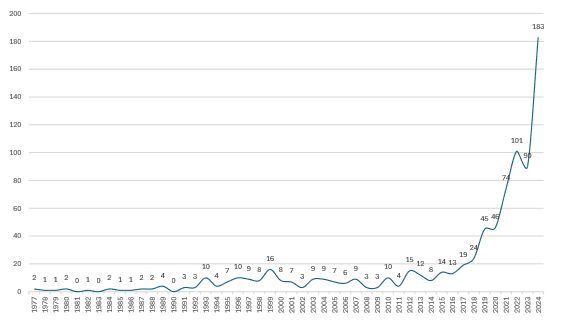 |
The sixth period (2023-2024) has the highest number of publications with a total of 273 articles, accounting for 33.66% of total article production, with the IEEE group again contributing the majority of papers (N= 71).
Figure1. Annual scientific output

Source: own elaboration.
Regarding authorship, the most notable are engineer Yuzhi Li (n=13) from Shanghai University (Shanghai, China); engineer Yuting Wang (n=12) from Rutgers University (New Jersey, United States); and electrical engineer Yipeng Zhang (n=9) from the University of California (United States). In terms of production by country, China stands out in terms of number of articles (n=193), followed by the United States (n=185) and South Korea (n=53). On the other hand, the most relevant research centers include Shanghai Jiao Tong University (n=24), Tsinghua University (n=21), Zhejiang University (n=21), and the University of Florida (n=18).
4.2.
Trends in Research on the Use of Artificial Intelligence
in Audiovisual Productions
The 3,564 author keywords were analyzed. Search terms were excluded to identify the basic conceptual structure (AI, artificial intelligence, LLM, chat gpt, Chat GPT, DALLE, DALL-E, Adobe Firefly, Bing Image Creator, Audiovisual Communication, Cinema, Video Game, Videogame, Television, TV, Entertainment Industry, podcast, Streaming Platform, Broadcast, TV show, Movie, Motion Picture). The words deep learning (n=47), machine learning (n=41), and learning (n=31) stand out in terms of number of occurrences. The first two words emphasize artificial intelligence learning and self-learning systems and how they are trained (deep learning, machine learning), while the third (learning) refers to learning in a more general way, not only focused on the field of machines, but also connecting with other words related to teaching (education, games).
Figure 2 . Author's keywords

Source: own elaboration.
The analysis of the co-occurrence of author keywords identified six clusters with an degree of association greater than 0.75 (see Figure 2).
The first cluster groups the keywords deep learning (n=47), machine learning (n=41), and recommender systems (n=29). This set focuses on the development of artificial intelligence models applied to image processing, visual data analysis, and improving interaction with audiovisual content. The research included in this group employs deep neural networks, classification algorithms, and hybrid machine learning approaches to address tasks such as image generation and manipulation, visual pattern prediction, and emotional understanding of content.
Within this field, research dedicated to emotional recognition in film images stands out, using models that combine affective signals with visual pattern analysis, which allows the emotional impact of the content on the viewer to be encoded (Huang, 2024). Also included are studies addressing the automated detection of alterations in videos, in the context of digital production or content security, where deep learning is used to identify visual manipulations (Shahzad et al., 2022).
Another set of studies focused on the application of neural networks such as LSTM (long short-term memory) in the prediction of data flows, with indirect applications to the sequential analysis of moving images and their possible adaptation to the processing of audiovisual content flows in digital environments (Latif & Ali Najah Ahmed, 2023). There are also proposals focused on attack detection through the fusion of visual features, reflecting an interest in securing transmission and display environments using models trained in computer vision (Zhang et al., 2024).
Finally, there are works that explore the use of explainable artificial intelligence models applied to image-based diagnosis which, although originating in the biomedical field, have important implications for the audiovisual sector in terms of the transparency of the algorithmic processes involved in the creation, editing, or curation of content (Deshpande et al., 2022).
The second cluster (blue) includes the keywords learning (n=31), machine (n=12), and games (n=11), grouping together research concerned with the application of AI to the field of education, especially in the development of immersive environments and personalized learning experiences. This set of studies lies at the intersection of pedagogy, technology, and video game design, reflecting a growing trend toward integrating intelligent systems into both academic and professional training contexts.
One notable line of research addresses the design of learning environments based on serious games or serious video games, which incorporate intelligent pedagogical agents capable of interacting with students through natural language, adapting educational content to their specific needs (Ferro et al., 2021). This type of approach seeks to optimize motivation and learning effectiveness, especially in STEM (Science, Technology, Engineering, Mathematics) areas and at pre-university levels.
Another important aspect of this cluster dedicated to the development of simulators and autonomous agents for training cognitive skills using techniques such as Monte Carlo search (Fu, 2019) or reinforcement learning, with a particular interest in their application in complex strategic and training contexts.
Likewise, AI models aimed at recognizing motor patterns in sports activities are being explored, with direct implications for personalized teaching and the gamification of physical and emotional learning in virtual environments (Zhang et al., 2024).
Finally, some studies, such as those by Barbosa et al. (2024), integrate user behavior analysis and sentiment analysis using machine learning for educational and commercial purposes, developing recommendation and personalization tools that leverage content generated by students or participants themselves on digital platforms.
The third cluster (green) relates to the use of artificial intelligence applied to communication and broadcasting systems through different audiovisual channels. The keywords are satellite broadcasting (n=26), broadcasting (n=21), and artificial intelligence (AI) (n=17). This set of studies analyzes how AI systems are transforming the way content is generated, distributed, and consumed in traditional media and digital platforms, including television, streaming, and social media.
One of the most relevant thematic lines addresses the use of AI algorithms to classify audiences, optimize content, and personalize experiences in digital broadcasting services. These technologies make it possible to automate content management on video platforms, establish recommendation patterns, and improve audience segmentation (Saruthirathanaworakun et al., 2024). At the same time, it examines how AI-based tools can influence consumer behavior, enhancing interaction and engagement through techniques such as sentiment analysis or contextual data mining (Yuan et al., 2025).
Studies are also identified, included those conducted by Kim et al. (n.d.), which reflect on the symbolic and cultural representation of artificial intelligence in audiovisual media, paying special attention to figures namely virtual presenters or intelligent assistants, and how these are perceived by the audience in terms of realism, trust, and emotional connection.
In addition, a line of research is examined that explores the use of live transmission systems using unmanned aerial vehicles (UAVs), where artificial intelligence improves broadcast performance in highly mobile contexts and variable network conditions through adaptive multipath transmission mechanisms (Song et al., 2023).
Other works analyze how the media has constructed specific narratives around the role of artificial intelligence through the analysis of media events in which human professional players have faced off against AI systems, mentioning cases such as Kasparov vs. Deep Blue or Lee Sedol vs. AlphaGo (Bory, 2019). Using games particularly chess and Go, they explore how an image of AI associated with positive values is promoted to facilitate its social integration.
In the fourth cluster (purple), the keywords interference alignment (n=10) and degrees of freedom (n=7) are prominent, which affect aspects of the theoretical-mathematical functioning of AI. A significant portion of the studies included in this cluster focus on the design and improvement of interference alignment algorithms, a fundamental technique for maximizing spectral efficiency in multiple-input multiple-output (MIMO) communication systems. These works, for instance those contributed by Anand et al. (2016) and Zeng et al. (2018), address proposals to optimize the alignment of interfering signals, reduce information loss, and improve the quality of the received signal even under conditions of intense interference, which is essential for environments such as multiple broadcasting or heterogeneous networks.
Other articles develop new AI variants adapted to the imperfect availability of channel information, proposing algorithms such as those founded on minimum mean square error (MMSE) that allow high levels of performance to be maintained even when channel data are not completely accurate. These approaches are relevant for achieving robust communications in highly dynamic contexts or those with technical constraints (Jeon et al., 2017; Razavi, 2016).
Aspects such as the scalability of degrees of freedom (DOF) as a function of the number of users or network configuration are also explored, allowing the theoretical capacity for interference-free transmission in systems with multiple transmitters and receivers to be evaluated (Shin & Lee, 2015).
The fifth cluster (orange) is mainly represented by the keywords security (n=16), Internet of Things (n=16), and data models (n=10), along with research focused on information protection and data model management in connected environments, especially within the Internet of Things ecosystem. These studies deal with the challenges that arise when multiple smart devices exchange information on open and heterogeneous networks, which requires scalable, secure, and efficient solutions.
A predominant line of research focuses on the development of trusted architectures that enable the validation of interactions among connected devices, proposing mechanisms that integrate blockchain and consensus functions as a guarantee of authenticity, traceability, and resistance to attacks (F. Zhang et al., 2023). These systems, generally distributed between the cloud, edge computing, and terminal devices, allow security policies to be implemented without the need for a central authority.
Another relevant research direction explores encryption and access control techniques to ensure data privacy in shared storage models, especially in industrial and urban contexts where the volume and sensitivity of data require robust protection measures (Chinnasamy et al., 2021). Solutions have also been developed to manage node mobility in content-centric networks, with protocols capable of dynamically adapting to changes in context and location (Fayyaz et al., 2023).
On the other hand, studies dedicated to lightweight user authentication in smart cities are included, with proposals that use formal logic and distributed validation to prevent common attacks without sacrificing energy efficiency or response times (Gupta et al., 2023). Furthermore, some works extend this issue to more demanding environments, such as satellite communications, where the space Internet of Things poses additional challenges in terms of connectivity and security (Kagai et al., 2024).
Finally, the sixth cluster includes the keywords generative AI (n=9) and media (n=11), with articles focusing on the relationship between generative artificial intelligence and the processes of content production, consumption, and analysis in the contemporary media ecosystem. This cluster covers works that examine how generative models, especially large language and image models such as ChatGPT, Gemini, and LLaMA, are affecting the news sector, audiovisual entertainment, and educational and social environments.
Caswell (2024) also points out the emergence of these systems in editorial routines and newsrooms, especially in large corporations such as the BBC, which are already experimenting with generative models to automate content personalization processes, format adaptation, and digital authoring infrastructure improvements.
From a critical perspective, questions are also raised about how these technologies reproduce social biases and prejudices, contributing to the reinforcement of inequalities through the media megaphone (Gillespie, 2024). This raises new challenges for transparency and governance in media representation processes.
Another aspect of the cluster addresses how new forms of production mediated by generative AI are inserted into the cultural dynamics of entertainment, particularly in relation to the perception of the symbolic and hedonic value of products such as films, series, or video games. From the field of entertainment science, it has been suggested that these values —associated with enjoyment, emotion, and the cultural resonance of content— are fundamental dimensions for understanding the consumer experience (Behrens et al., 2024).
Likewise, the frameworks of veracity and authenticity are examined with respect to the use of smart cameras and the manipulation of images generated by neural networks, which directly influences the viewer's trust in digital images, affected by the use of digital processing such as deepfakes (Punnappurath et al., 2024).
Finally, works such as those by McBride et al. (2024) are included that integrate the educational and social dimensions of the phenomenon, addressing how AI-generated narratives shape learning experiences, the representation of groups, and the construction of meaning from institutional or academic contexts.
5. Discussion and Conclusions
The analysis of annual scientific output (1977-2024) reveals a temporal evolution whose upward trajectory is divided into six major periods, a segmentation that responds both to the volume of publications and to the thematic and technological changes that mark each phase.
During the first period (1977-1993), the number of publications was very small, reflecting the nascent nature of the field and its links to disciplines outside the audiovisual environment, among agriculture, chemical engineering, and early robotics. During this period, artificial intelligence appeared tangentially in articles related to the modeling of biological systems, process automation, and physical simulations, with little impact in terms of media coverage or cultural creation.
The second period (1994-1999) followed a similar pattern, although interest began to grow in expert systems and the first computer applications associated with visual tasks, such as shape recognition, motion detection, and graphic simulation. Although production remained scarce, this stage anticipated a future convergence between AI and visual environments through applied studies involving cameras, sensors, and signal processing (Azarbayejani et al., 1997).
From 2000 onwards (third period), the literature began to incorporate more specific references to the notion of artificial intelligence in computational environments linked to visual data analysis, albeit still in an incipient form. even though concepts as computer vision or MIMO architectures do not appear to be consolidated at this stage, lines of research oriented towards visual signal processing are detected, anticipating a transition aimed at more sophisticated techniques of audiovisual representation and transmission that will be consolidated in the following decade (You et al., 2005). During this phase, the methodological foundations were laid for many of the tools that would later be integrated into editing, streaming, and automated post-production platforms.
The period 2013-2019 marks a turning point: the volume of publications doubles compared to the previous stage, and the field becomes academically established with the rise of specific journals such as IEEE Access, which consolidates its position as one of the main channels for scientific publication. This phase coincides with the rise of deep learning, the improvement of computational architectures (such as CNNs and RNNs), and the development of predictive models focused on the film, video game, and animation industries (Liu et al., 2016).
Reaching the last time period (2023-2024), a concentration of more than 33% of all historical scientific production is observed, a figure that clearly illustrates the impact that the democratization of generative artificial intelligence has had. This phenomenon cannot be explained solely by technological advances, but also by the interdisciplinary interest that AI arouses by situating itself at the intersection of engineering, social sciences, and digital humanities.
In this sense, it is significant that the first articles from the 2020-2022 period, including those applying convolutional neural networks to video analysis or classification techniques in streaming environments, already anticipated a change in the audiovisual paradigm, in line with the progressive optimization of production, editing, and transmission systems (Chang & Chang, 2020). Subsequently, with the advent of the extensive use of conversational interfaces, for instance OpenAI's ChatGPT, the focus of research shifted further towards issues of personalization, interactivity, and quality of experience (Reddy et al., 2023).
This reflects the result of a convergence between different scientific agendas: on the one hand, studies concern technical efficiency and computational performance; and on the other, interest in the social, symbolic, and ethical effect of AI on the media ecosystem. This dual focus is evident in the analysis of thematic clusters. For example, cluster 1 addresses the algorithmic development of deep learning models; while cluster 3, emphasizes the transformation of broadcast channels and audience behavior.
A cross-sectional reading of the results also draws attention to the influence of geographical and institutional factors. The preeminence of China and the United States as leading countries can be linked to their ability to integrate academic research, technological development, and private investment within highly interconnected scientific and technological ecosystems.
Similarly, the concentration of authors at top-tier universities such as Shanghai University and the prominent role of journals notably IEEE Access show that the field of study lies in a hybrid space between computer engineering, communication sciences, and digital design.
The incorporation of topics like security, ethics, image authenticity, and the perception of the symbolic value of cultural products suggests that the field of study is expanding toward more critical and interdisciplinary horizons. This points to the need to integrate approaches from the philosophy of technology, aesthetics, and media sociology into future research.
The respective study has identified the main trends and conceptual structures that articulate the field of research on artificial intelligence and audiovisual productions. Through the analysis of co-occurrences and thematic clusters, the existence of consolidated lines of research has been confirmed around technical aspects as deep learning, visual pattern detection, and image processing, along with other more emergent lines that focus on media creation environments, symbolic representation, or the ethical and cultural implications of these technologies.
Bibliometric analysis confirms that the most influential publications and the largest number of contributions are concentrated in institutions and countries with strong technological and academic capacity, reinforcing the idea of a structural asymmetry in the production of knowledge about artificial intelligence. Despite this, the content of the articlepoints to a broadening of the field towards more critical and interdisciplinary approaches, where the symbolic, political, and social dimensions of AI are increasingly occupying a prominent role.
Beyond the quantitative results, this research provides a solid basis for understanding how artificial intelligence is integrated into audiovisual production processes and how this relationship affects both the formats and discourses that circulate in the contemporary media ecosystem.
However, there is a stark contrast between the scarcity of articles that deal in detail with the use of AI in conventional, multimedia, and transmedia storytelling, and aspects namely its ability to intervene in processes including lore construction, character development, world building, and, in general, scriptwriting. These creative uses have prevailed until now as a fiefdom of the human condition and its consequent intellectual capacity, genuine and seemingly irreplaceable. This comforting assumption that the imagination that characterizes human beings can never be replaced is being significantly challenged by the rapid advances in artificial intelligence and its creative potential. The question of how close we are to the dystopian image of a more efficient and creative AI when it comes to narrative projects requires a greater volume of responses from the scientific community. This bibliometric analysis, therefore, provides a foundation for a future line of research aimed at exploring the deeper relationships between machine learning, creative writing processes, and the hallmarks of human audiovisual production, investigating, chiefly, the figure of the author and the need to redefine the very concept of art.
These results fulfill the main objective of the study, which is to understand the evolution of research on artificial intelligence in the audiovisual field and to identify the main conceptual structures that articulate the sphere.
The temporal segmentation obtained and the six thematic clusters detected offer an integrated view of the development of this domain, in which the technical, the creative, and the symbolic converge.
As a limitation, this work is based exclusively on the Web of Science database, which restricts the scope of the analyzed production to a specific set of sources. In future research, cross-validation with Scopus or other databases would allow for the comparison of results, expand documentary coverage, and strengthen the replicability of the analysis.
From an interpretive perspective, the discussion of the findings highlights the growing influence of algorithms on audiovisual production and consumption practices, as well as the challenges posed by their impact in terms of algorithmic bias, transparency, and creative authorship. This critical reading allows us to connect the technical dimension with the sociocultural implications of AI, underscoring the need to incorporate theoretical frameworks from the digital humanities and technological ethics.
The conclusions, therefore, not only synthesize the six evolutionary phases of the field, but also open up a research agenda aimed at examining the relationship between artificial intelligence, audiovisual narrative, and automated creation, as well as the role these technologies play in redefining authorship and contemporary cultural production.
Ethics and Transparency
Acknowledgements
We would like to thank Encarna Herrera Vega for her translation and linguistic revision work, which has contributed to the international dissemination of this manuscript and reinforced its clarity and precision.
Conflict of Interest
No conflict of interest is declared.
Funding
This work has not received funding for its development.
Author Contributions
|
Contribution |
Author 1 |
Author 2 |
Author 3 |
Author 4 |
|
Conceptualization |
X |
|
|
|
|
Data curation |
X |
X |
|
|
|
Formal Analysis |
X |
X |
|
|
|
Funding acquisition |
NA |
NA |
|
|
|
Investigation |
X |
X |
|
|
|
Methodology |
X |
|
|
|
|
Project administration |
X |
|
|
|
|
Resources |
X |
X |
|
|
|
Software |
X |
X |
|
|
|
Supervision |
X |
|
|
|
|
Validation |
X |
X |
|
|
|
Visualization |
|
X |
|
|
|
Writing – original draft |
X |
X |
|
|
|
Writing – review & editing |
X |
|
|
|
Data Availability Statement
The research database is available in open access via the following link: https://doi.org/10.5281/zenodo.15017961
References
Anand, K., Gunawan, E. & Guan, Y. L. (2016). Semiblind Interference Alignment: A New Framework. IEEE Signal Processing Letters, 23(5), 580-584. https://doi.org/10.1109/LSP.2016.2540003
Aria, M. & Cuccurullo, C. (2017). bibliometrix: An R-tool for comprehensive science mapping analysis. Journal of Informetrics, 11(4), 959-975. https://doi.org/10.1016/j.joi.2017.08.007
Azarbayejani, A., Perry, Chris, & and Pentland, A. (1997). Vision based modeling for film and multimedia production. Applied Artificial Intelligence, 11(4), 307-330. https://doi.org/10.1080/088395197118172
Barbosa, B., Saura, J. R., Zekan, S. B. & Ribeiro-Soriano, D. (2024). RETRACTED ARTICLE: Defining content
marketing and its influence on online user behavior: a data-driven prescriptive
analytics method. Annals of Operations Research, 337(S1), 17-17.
https://doi.org/10.1007/s10479-023-05261-1
Behrens, R., Kupfer, A.-K. & Hennig-Thurau, T. (2024). There is business like show business! What marketing scholars and managers can learn from 40 years of entertainment science research. Journal of the Academy of Marketing Science. https://doi.org/10.1007/s11747-024-01057-2
Bogue, R. (2022). The role of robots in entertainment. Industrial Robot: The International Journal of Robotics Research and Application, 49(4), 667-671. https://doi.org/10.1108/IR-02-2022-0054
Bory, P. (2019). Deep new: The shifting narratives of artificial intelligence from Deep Blue to AlphaGo. Convergence, 25(4), 627-642. https://doi.org/10.1177/1354856519829679
Chang, K.-W. & Chang, T.-S. (2020). VWA: Hardware Efficient Vectorwise Accelerator for Convolutional Neural Network. IEEE Transactions on Circuits and Systems I: Regular Papers, 67(1), 145-154. https://doi.org/10.1109/TCSI.2019.2942529
Chinnasamy, P., Deepalakshmi, P., Dutta, A., You, J. & Joshi, G. P. (2021). Ciphertext-Policy Attribute-Based Encryption for Cloud Storage: Toward Data Privacy and Authentication in AI-Enabled IoT System. Mathematics, 10, 68. https://doi.org/10.3390/math10010068
Codina, L., Morales-Vargas, A., Rodríguez-Martínez, R. & Pérez-Montoro, M. (2020). Uso de Scopus y Web of Science para investigar y evaluar en comunicación social: Análisis comparativo y caracterización. index.comunicación, 10(3), Article 3. https://doi.org/10.33732/ixc/10/03Usodes
Dávila Rodríguez, M., Guzmán Sáenz, R., Macareno Arroyo, H., Piñeres Herera, D., de la Rosa Barranco, D., & Caballero-Uribe, C. V. (2009). Bibliometría: Conceptos y utilidades para el estudio médico y la formación profesional. Revista Salud Uninorte, 25(2), 319-330.
Deshpande, N., Gite, S., Pradhan, B. & Assiri, M. (2022). Explainable Artificial Intelligence–A New Step towards the Trust in Medical Diagnosis with AI Frameworks: A Review. Computer Modeling in Engineering & Sciences, 133(3), 843-872. https://doi.org/10.32604/cmes.2022.021225
Fu, M. C. (2019). Simulation-Based Algorithms for Markov Decision Processes: Monte Carlo Tree Search from AlphaGo to AlphaZero. Asia-Pacific Journal of Operational Research (APJOR), 36(06), 1-25.
Gillespie, T. (2024). Generative AI and the politics of visibility. Big Data & Society, 11(2), 20539517241252131. https://doi.org/10.1177/20539517241252131
Golbeck, J. & Klavans, J. L. (2015). Introduction to Social Media Investigation: A Hands-on Approach. Introduction to Social Media Investigation: A Hands-on Approach, 1-288.
Gutzeit, L. J. & Tiberius, V. (2023). Business and Management Research on the Motion Picture Industry: A Bibliometric Analysis. Journalism and Media, 4(4), 1198-1210. https://doi.org/10.3390/journalmedia4040076
Hansen, D., Shneiderman, B. & Smith, M. (2019). Analyzing Social Media Networks with NodeXL: Insights from a Connected World 2nd Edition.
Herrera-Viedma, E., Baier-Fuentes, H., Cascón-Katchadourian, J., Merigó, J. & Martínez, M. A. (2018). A Bibliometric Overview of the International Journal of Interactive Multimedia and Artificial Intelligence. International Journal of Interactive Multimedia and Artificial Intelligence, 5(Regular Issue), 9-16.
Huang, P. (2024). Decoding Emotions: Intelligent visual perception for movie image classification using sustainable AI in entertainment computing. Entertainment Computing, 50, 100696. https://doi.org/10.1016/j.entcom.2024.100696
Jeon, S.-W., Kim, K., Yang, J. & Kim, D. K. (2017). The Feasibility of Interference Alignment for MIMO Interfering Broadcast—Multiple-Access Channels. IEEE Transactions on Wireless Communications, 16(7), 4614-4625. IEEE Transactions on Wireless Communications. https://doi.org/10.1109/TWC.2017.2700465
Latif, S. & Ali Najah Ahmed, A.-M. (2023). A review of deep learning and machine learning techniques for hydrological inflow forecasting. Environment, Development and Sustainability, 25, 1-28. https://doi.org/10.1007/s10668-023-03131-1
Ledro, C., Nosella, A. & Vinelli, A. (2022). Artificial intelligence in customer relationship management: Literature review and future research directions. Journal of Business & Industrial Marketing, 37(13), 48-63. https://doi.org/10.1108/JBIM-07-2021-0332
Li, Y. (2021). Film and TV Animation Production Based on Artificial Intelligence AlphaGd. Mobile Information Systems, 2021, 1-8. https://doi.org/10.1155/2021/1104248
Liu, T., Ding, X., Chen, Y., Chen, H., & Guo, M. (2016). Predicting movie Box-office revenues by exploiting
large-scale social media content. Multimedia Tools and Applications, 75(3),
1509-1528.
https://doi.org/10.1007/s11042-014-2270-1
López, A. C. C., Marin, A. A. L. & Pérez, M. Á. de las H. (2024). Indagación, modelización y pensamiento computacional:
Un análisis bibliométrico con el uso de Bibliometrix a través de Biblioshiny. Revista
Eureka sobre Enseñanza y Divulgación de las Ciencias, 21(1), Article 1.
https://doi.org/10.25267/Rev_Eureka_ensen_divulg_cienc.2024.v21.i1.1102
López-Rodríguez, C. E., Calderón-Salguero, L. D. & Mora-Ortiz, M. F. (2022). La internacionalización de servicios: Análisis bibliométrico y revisión sistemática de la literatura entre 2000 y 2021. Revista Facultad de Ciencias Económicas, 30(1), Article 1. https://doi.org/10.18359/rfce.6008
McBride, C., Lee, C. H. & Soep, E. (2024). “Gotta Love Some Human Connection”: Humanizing Data Expression in an Age of AI. Reading Research Quarterly, 59(4), 678-689. https://doi.org/10.1002/rrq.550
Martín-Rodríguez, I. & Lomba Pérez, A. (2025). Base de datos de investigaciones sobre el impacto de la IA en producciones audiovisuales [Dataset]. Zenodo. https://doi.org/10.5281/zenodo.15017961
Oña, A. O. C. & Sánchez, E. D. A. (2025). Convergencia entre la Inteligencia Artificial y la Producción Audiovisual: Un Análisis Bibliométrico de su Evolución, Tendencias y Contribuciones (2000-2024). VISUAL REVIEW. International Visual Culture Review / Revista Internacional de Cultura Visual, 17(5), 153-171. https://doi.org/10.62161/revvisual.v17.5811
Palmeiro, L. L., Marin, A. A. L., Perez, M. de los A. D. las H. & López, A. C. C. (2025). Evolución del Concepto de Inteligencia Artificial en la Literatura Científica: Un análisis sistemático. Digital Education Review, 46, Article 46. https://doi.org/10.1344/der.2025.46.65-76
Pardeshi, A. & Mude, D. (2024). Animating Intelligence: Impact Of AI & Machine Learning Revolution In Animation. 12, c784-c797.
Punnappurath, A., Zhao, L., Abdelhamed, A. & Brown, M. S. (2024). Advocating Pixel-Level Authentication of Camera-Captured Images. IEEE Access, 12, 45839-45846. https://doi.org/10.1109/ACCESS.2024.3381521
Razavi, S. M. (2016). Unitary Beamformer Designs for MIMO Interference Broadcast Channels. IEEE Transactions on Signal Processing, 64(8), 2090-2102. IEEE Transactions on Signal Processing. https://doi.org/10.1109/TSP.2015.2508782
Reddy, V., Muthiah, K. & Reddy, V.
(2023). Revolutionizing animation: Unleashing the power of artificial
intelligence for cutting-edge visual effects in films. Soft
Computing, 28, 1-15.
https://doi.org/10.1007/s00500-023-09448-3
Robledo-Giraldo, S., Duque-Méndez, N. D. & Zuluaga-Giraldo, J. I. (2013). Difusión de productos a través de redes sociales: Una revisión bibliográfica utilizando la teoría de grafos. Respuestas. https://doi.org/10.22463/0122820X.361
Saruthirathanaworakun, R., Le, N. T., Le, T., Srisiri, W., Chaitusaney, S., Kaewplung, P. & Benjapolakul, W. (2024). The Application of Artificial Intelligence in Spectrum Management and the Analytics of Frequency Data Using Big Data Technology. IEEE Access, PP, 1-1. https://doi.org/10.1109/ACCESS.2024.3471787
Shahzad, H. F., Rustam, F., Soriano Flores, E., Vidal Mazón, J. L., Torre Díez, I. de la & Ashraf, I. (2022). A review of image processing techniques for deepfakes. Sensors, 22(12), 4556. https://doi.org/10.3390/s22124556
Shin, W. & Lee, J. (2015). Retrospective Interference Alignment for the Two-Cell MIMO Interfering Multiple Access Channel. IEEE Transactions on Wireless Communications, 14(7), 3937-3947. https://doi.org/10.1109/TWC.2015.2415474
Sidik, A. I., Komarov, R. N., Gawusu, S., Moomin, A., Al-Ariki, M. K., Elias, M., Sobolev, D., Karpenko, I. G., Esion, G., Akambase, J., Dontsov, V. V., Shafii, M., Ahlam, D. & Arzouni, N. W. (2024). Application of Artificial Intelligence in Cardiology: A Bibliometric Analysis. CUREUS JOURNAL OF MEDICAL SCIENCE, 16(8), e66925. https://doi.org/10.7759/cureus.66925
Singh, H. & Singh, A. (2023). ChatGPT: Systematic Review, Applications and Agenda for Multidisciplinary Research. Journal of Chinese Economic and Business Studies. https://doi.org/10.1080/14765284.2023.2210482
Song, C., Han, B., Ji, X., Li, Y. & Su, J. (2023). AI-driven Multipath Transmission: Empowering UAV-based Live Streaming. IEEE Network, PP, 1-1. https://doi.org/10.1109/MNET.2023.3321521
Tong, Y., Cao, W., Sun, Q. & Chen, D. (2021). The Use of Deep Learning and VR Technology in Film and Television Production From the Perspective of Audience Psychology. Frontiers in Psychology, 12. https://doi.org/10.3389/fpsyg.2021.634993
Traag, V. A., Waltman, L. & van Eck, N. J. (2019). From Louvain to Leiden: Guaranteeing well-connected communities. Scientific Reports, 9(1), 5233. https://doi.org/10.1038/s41598-019-41695-z
West, R. & Burbano, A. (2020). AI, Arts & Design: Questioning Learning Machines. Artnodes: Revista de Arte, Ciencia y Tecnología, 26, 1.
You, M., Chen, C. & Bu, J. (2005). CHAD: A Chinese Affective Database. En J. Tao, T. Tan, & R. W. Picard (Eds.), Affective Computing and Intelligent Interaction (pp. 542-549). Springer. https://doi.org/10.1007/11573548_70
Yuan, H., Lü, K. & Fang, W. (2025). Machines vs. humans: The evolving role of artificial intelligence in livestreaming e-commerce. Journal of Business Research, 188, 115077. https://doi.org/10.1016/j.jbusres.2024.115077
Zeng, S., Wang, C., Qin, C. & Wang, W. (2018). Interference Alignment Assisted by D2D Communication for the Downlink of MIMO Heterogeneous Networks. IEEE Access, 6, 24757-24766. IEEE Access. https://doi.org/10.1109/ACCESS.2018.2831907
Zhang, C., Zhang, C., Li, C., Qiao, Y., Zheng, S., Dam, S., Zhang, M., Kim, J., Kim, S. T., Park, M., Choi, J., Bae, S.-H., Lee, L.-H., Hui, P., Kweon, I. & Hong, C. S. (2023). One Small Step for Generative AI, One Giant Leap for AGI: A Complete Survey on ChatGPT in AIGC Era. https://doi.org/10.13140/RG.2.2.24789.70883
Zhang, F., Wang, H., Zhou, L., Xu, D. & Liu, L. (2023). A blockchain-based security and trust mechanism for
AI-enabled IIoT systems. Future Generation Computer Systems, 146, 78-85.
https://doi.org/10.1016/j.future.2023.03.011
Zhang, Z., Tang, G., Ren, B., Li, H. & Shen, Y. (2024). TV-ADS: A Smarter Attack Detection Scheme Based on Traffic Visualization of Wireless Network Event Cell. Journal of Internet Technology, 25(2), Article 2. https://jit.ndhu.edu.tw/article/view/3042