index●comunicación
Revista científica de comunicación aplicada
nº 16(2) 2026 | Páginas 35-63
e-ISSN: 2174-1859 | ISSN: 2444-3239
Video Game Use Among Millennial Women in Spain: Consumption Patterns and Motivations
Consumo de videojuegos en mujeres millennials en España: patrones y motivaciones
Recibido el 10/01/2026 | Aceptado el 29/04/2026 | Publicado el 15/07/2026
https://doi.org/10.62008/ixc/16/02Consum
David de Matías Batalla | UNIE Universidad
dmatias@universidadunie.com| https://orcid.org/0000-0003-2903-838X
Coral Cenizo | CEU San Pablo
coral.cenizoruizbravo@ceu.es | https://orcid.org/0000-0003-1484-6763
Abstract: Video games have become a global cultural practice, making it essential to examine consumption from a gender perspective. Although millennial women represent a growing segment of the gaming audience, their experiences remain underexplored. This study analyses video game consumption among this group in Spain, focusing on age, device use, motivations, and perceived gender inclusion, while examining implications for the Technology Acceptance Model (TAM). A quantitative survey (N=500) was conducted using descriptive statistics, correlation analysis, and structural equation modelling (SEM). The findings reveal a distinct consumption pattern defined by short sessions, low monetary outlay, and a preference for mobile and narrative-driven games. Perceived inclusion and affective motivations significantly predict consumption intensity, whereas age and perceptions of gaming as a masculine realm act as inhibitors. The study provides empirical evidence regarding technological adoption in sociocultural and gendered settings.
Keywords: Cultural Capital; Gender Performativity; Millennial Women; Technology Acceptance Model (TAM); Technology Acceptance; Video Games.
Resumen: Los videojuegos se han consolidado como una práctica cultural global, lo que exige analizar su consumo desde una perspectiva de género. Este estudio examina el consumo de videojuegos entre mujeres millennials en España, considerando edad, dispositivo, motivaciones y percepción de inclusión, y sus implicaciones para el Technology Acceptance Model (TAM). Se aplicó una encuesta (N=500) con análisis descriptivo, correlacional y modelización mediante ecuaciones estructurales (SEM). Los resultados muestran un patrón diferenciado: sesiones breves, bajo gasto y preferencia por dispositivos móviles y juegos narrativos. La percepción de inclusión y las motivaciones afectivas predicen la intensidad de uso, mientras que la edad y la percepción del videojuego como espacio masculinizado actúan como inhibidores. El estudio aporta evidencia empírica sobre la adopción tecnológica en contextos socioculturales y de género.
Palabras clave: aceptación tecnológica; capital cultural; mujeres millennials; performatividad de género; Technology Acceptance Model (TAM); videojuegos.
To quote this work: De Matías Batalla, D. y Cenizo, C. (2026). Video Game Use Among Millennial Women in Spain: Consumption Patterns and Motivations index.comunicación, 16(2), 35-63. https://doi.org/10.62008/ixc/16/02Consum
1. Introduction
In recent decades, video gaming has become a common cultural practice in digitised societies, interacting with economic, identity-related, and technological dynamics that are reshaping media consumption and socialisation. Although this shift has generated growing academic interest, the allure is still marred by androcentric biases that prioritise competitive and technologically-intensive models.
Various studies show increased female participation as well as diverse motivations, devices, and video game genres (Newzoo, 2023; AEVI, 2024), indicating that millennial women play video games for leisure, story immersion, and personal well-being, which are shaped by gender, class, and available time (Labrador et al., 2022; FAD Juventud, 2023). From a cultural perspective, gaming is seen as a situated practice that either reproduces or subverts social structures, although gaps remain regarding how women negotiate their presence in a male environment (Bourdieu, 1984; Butler, 1990a).
Analysing the relationship with video games solely through instrument-based parameters is insufficient, given that perceptions of usefulness, accessibility, and value are mediated by gender-normative frameworks that shape the technological experience. Thus, usefulness within the Technology Acceptance Model (hereafter, TAM) should be viewed as a situated evaluation influenced by socialisation, symbolic recognition, and expectations of belonging, all of which impact the interpretation, assessment, and acceptance of video gaming as a cultural practice.
The present study addresses this gap by proposing a critical and intersectional reading of digital gaming consumption, incorporating dimensions that are symbolic, affective, and social, in contrast to functionalist models such as that of TAM (Davis, 1989). The analysis focuses on millennial women, who comprise a relevant group whose complex identity has scarcely been addressed.
Accordingly, the following research questions are proposed:
RQ1: How are video game consumption patterns among millennial women shaped by age, available time, device type, and gaming motivations, and what do these patterns reveal about the persistence of gender inequality in the gaming culture?
RQ2: To what extent do symbolic and social variables, such as the perception of gender inclusion and relational motivations, explain the intensity of video game consumption among millennial women beyond the instrumental assumptions of TAM?
This research will attempt to shed light on consumption patterns based on age, device type, and motivation, and to explore the role of symbolic factors in shaping the intensity of these routines. Its contribution is empirical and contextual, aimed at applying and contrasting theoretical frameworks in a largely unexplored setting.
2. Theoretical Framework
2.1. Video Gaming as a Structured Cultural Practice
Video games should be considered an organised cultural practice that encompasses dynamics of symbolic production, social exclusion, identity display, and technological appropriation. Cultural studies have shown that the gamer ecosystem cannot be analysed in isolation without considering the circumstances of its production, narratives, and rules of visibility, since it operates as a contested field in which meanings and hierarchies are negotiated (Consalvo, 2009; Taylor, 2012; Shaw, 2014).
Recreational gaming, especially by millennial women, should be approached as a situated social practice in which educational background, disposition, gender imaginaries, and technological access converge. This focus requires moving beyond functionalist views and adopting structural, performative, and critical perspectives.
2.2. Cultural Capital and Habitus in Recreational Digital Consumption
Bourdieu’s theory of cultural capital views this concept as being shaped by processes that create distinction, reproduction, and symbolic legitimation. Cultural capital as legitimised knowledge, disposition, and skills places individuals in social domains according to their acknowledgement and compliance with prevailing norms (Bourdieu, 1984).
This perspective has been criticised for prioritising class structures without sufficient attention paid to gender dynamics. Incorporating gender performativity complicates the stable nature of habitus, introducing a dynamic dimension in which dispositions are negotiated and resignified in specific contexts.
In educational and artistic domains, this perspective shows that inequality in access to cultural practices reflects structured habitus (Gaddis, 2013; Newman et al., 2013; Edgerton & Roberts, 2014). Recent studies have expanded this approach toward nondeclarative cultural capital and hybrid spaces in which economic aspects and symbolism become intertwined (Van-Der-Waal et al., 2024; Li & Zhao, 2025).
Video gaming has rarely been analysed as a legitimate cultural practice within the Bourdieusian framework, and even less so from an intersectional perspective. This research attempts to address this gap by positioning video game consumption as a practice in which symbolic capital is accumulated, contested, and reconfigured, especially among millennial women (Bourdieu, 1984).
2.3. Gender Performativity in Gaming Culture
Butler’s theory of performativity sees gender as the effect of repeated discursive and bodily practices that naturalise ways of inhabiting the body, language, and desire (Butler, 1990a; 1993). This approach destabilises binary conceptions by showing how norms of femininity and masculinity are inscribed through everyday acts, portrayals, and social regulations.
In the realm of consumption, things like products, discourse, and digital environments operate as gender technologies that shape subjectivity and delimit what is considered acceptable (McIntyre, 2018; Wei, 2024). In video gaming, this is expressed through sexualised depictions, online exclusion, and the reinforcement of a masculine habitus, which structure the participation of millennial women as a performance in which belonging and norms are negotiated (Márquez-Gallardo & Rovira-Lorente, 2024).
An exclusively performative analysis may underestimate the impact of social structures on these practices. By reviewing cultural capital theory, it is possible to understand how agency is influenced by inequality of access, legitimation, and the accumulation of symbolic resources in the digital realm.
Although such depictions have been analysed, a gap remains regarding how female players actively convey their identity when gaming. This study addresses this breach by proposing the female player as a performative subject who reinscribes or subverts gender norms through choices, participation, and visibility (Butler, 1990b; 1993).
2.4. Situated Technological Adoption: Beyond TAM
The TAM model explains technological acceptance based on perceived usefulness and ease of use (Davis, 1989), which is applicable to corporate and educational settings (Venkatesh & Davis, 2000). However, it presumes a universal and decontextualised subject, which becomes problematic regarding video game use by millennial women, where adoption does not respond solely to functional criteria.
Cultural capital theory and gender performativity challenge the universal nature of TAM’s technological subject by showing that dispositions toward technology are socially structured and enacted in practices that either reproduce or challenge prevailing norms (Bourdieu, 1984; Butler, 1990; 1993). Technological adoption thus becomes a situated process in which structure and performativity converge.
Motivations include emotional disengagement, intellectual stimulation, and a search for safe spaces (FAD Juventud, 2023; Labrador et al., 2022), while the choice of devices and games is influenced by belonging, self-display, and protection against a hostile environment (Nielsen, 2019). Meagre participation in eSports is not explained by difficulties of use, but rather by structural exclusion (PayPal & Newzoo, 2020).
Applying TAM without discernment reproduces a gender neutrality bias. Therefore, this study reexamines the model not only to expose its limits, but to offer a reformulation that incorporates technological habitus, symbolic agency, and perceived inclusion. Technological adoption is framed as a situated act linked to cultural agency, anticipation, and power structures (Dimov et al., 2023).
2.5.
Theoretical Convergence: An Intersectional Approach
to Recreational Gaming
Intersectionality involves considering multiple axes of differentiation that shape the gaming experience, in which socioeconomic status and educational background influence technological access and the legitimation of video games as a cultural practice. Although these dimensions are not explicitly incorporated into the model, they guide the interpretation by placing consumption within structures of inequality.
The articulation of cultural capital, gender performativity, and technological adoption makes it possible to explain recreational gaming as a structured and performative process shaped by socio-demographic background, gender norms, and technological access. Consequently, this study explores how and under what conditions millennial women adopt gaming practices, while considering video games as both a performative space and a field of symbolic struggle.
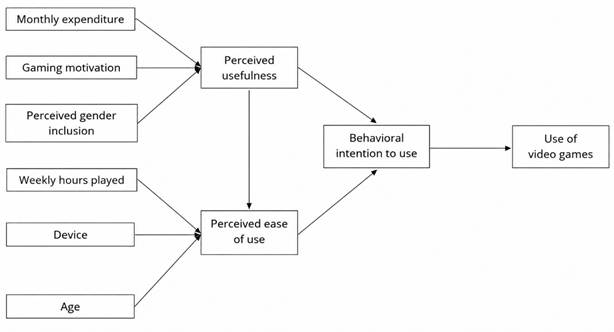
Figure 1 shows how the logic of moderate gaming arises among millennial women in a video game culture shaped by a gendered habitus and influenced by the economic and symbolic accessibility of video games.
Figure 1. Conceptual Framework
Source: created by the authors.
3. Methodology and Data Approach
3.1. Survey Design
The survey was designed to analyse video game use among millennial women through closed- and open-ended questions on motivations, types of video games used, consumption patterns, and participation in eSports.
Regarding questions aimed at motivation, these included entertainment, socialisation, relaxation, and achievement; As for types of video games, these encompassed simulators, adventure, role-playing, and shooting games; Consumption habits involved frequency and duration of play; And participation in eSports comprised questions on competitive gaming and tournaments. The authors used clear and accessible language adapted to different levels of familiarity.
The panel was selected through non-probability convenience sampling. While this approach is suitable for exploratory studies, it has limitations in terms of representativeness and generalisability. Therefore, the results should be interpreted with caution. The sample included women aged 25 to 40 residing in Spain who play video games at least once a month, which is a representative range for the millennial generation.
3.2. Operationalisation of Variables and Instrument Validation
Operationalisation combined validated scales and specific indicators, measuring perceived usefulness and ease of use through Moore & Benbasat’s (1991) adaptation of Davis’s (1989) scales. Usefulness was measured with five items, and ease of use was calculated with three, which were assessed using Likert scales.
Video game use was measured through a single self-reported indicator, following Keil’s (1991) approach and TAM studies (Davis, 1989). This decision is appropriate for observable and clearly-defined behavioural variables.
The remaining variables were operationalised through indicators that captured key dimensions of digital gaming consumption, such as expenditure, motivations, inclusion, intensity, device type, and sociodemographic variables. Table 1. Summary of the main dimensions, indicators, and items:
Table 1. Operationalisation of Variables
|
Variable |
Dimension |
Items on |
Type of |
|
Monthly expenditure on video games |
Level of monetary spending |
None |
Continuous quantitative (€) |
|
Reason for playing video games |
Motivations for use |
Video games |
Nominal |
|
Inclusion |
Perception of inclusion |
Men’s leisure |
Ordinal |
|
Hours of gaming per week |
Intensity of use |
1 or less 2 3 4 5 6 7 8 9 10 or more |
Continuous quantitative (hours) |
|
Gaming device |
Access medium |
Video game console |
Nominal qualitative |
|
Age of female gamers |
Sociodemographic profile |
From 25 to 40 |
Continuous quantitative (years) |
Source: Created by the authors.
The operationalisation of gender performativity, which is qualitative and contextual in nature, was addressed by using proxy indicators of gender inclusion and motivations rather than a direct scale (Butler, 1990a). These indicators indirectly captured the position and negotiation of female players in the gaming environment by using quantitative strategies for complex constructs, yet without exhausting the richness of these experiences.
A pilot test (N = 50) was conducted with similar participants to assess the clarity, coherence, and adequacy of the items. The instrument was also reviewed by experts in digital communication and gender, which improved its wording and content validity.
3.3. Data Collection and Analysis
The survey was distributed electronically by email, social media, and forums, reaching 500 female players who responded anonymously in compliance with the Ethics Committee, after being informed of the purpose, voluntary nature, and confidentiality of the study. The quantitative data were analysed using descriptive statistics, including frequencies and percentages, as well as graphic displays to identify consumption patterns.
The qualitative data were analysed through inductive content analysis, identifying recurring categories and key themes related to motivations and experiences. Structural Equation Modeling (SEM) was used to address the research questions and validate the TAM.
SEM makes it possible to examine complex relationships between observed and latent variables, assessing measurement properties and structural relationships within a unified model. This methodological robustness provides greater clarity and validity in interpreting results.
3.4. Validation and Reliability
To ensure reliability and validity, controls were implemented during the data collection and analysis phase, which involved supervising distribution to ensure sample diversity. Statistical software and cross-validation were used to verify consistency and detect errors.
The SEM displayed a good fit (RMSEA ≤ .05; CFI, IFI, and NNFI ≥ .90), which met the criteria established in the literature, and this was complemented by an EFA to evaluate the structure of the constructs. Bartlett’s test was significant (p < .001), and the KMO value (≈.60–.65) indicated acceptable sampling adequacy.
The EFA identified two factors with eigenvalues of 2.10 and 1.30, explaining 68% of the variance, with high loadings and acceptable communalities supporting internal consistency. Cronbach’s alpha (α = 0.82) indicates high reliability and reinforces the internal validity of the instrument.
Table 2. Validation of the Measuring Instrument: Exploratory Factor Analysis and Reliability
|
Block |
Indicator |
Variable / Factor |
Result |
Interpretation |
|
Model |
Bartlett’s test |
— |
p < .001 |
Adequate |
|
KMO index |
— |
.60–.65 |
Acceptable sampling |
|
|
Factor |
Eigenvalue |
Factor 1 |
2.10 |
— |
|
Factor 2 |
1.30 |
— |
||
|
Explained variance |
Factor 1 |
42.0 % |
— |
|
|
Factor 2 |
26.0 % |
— |
||
|
Total |
68.0 % |
Adequate explained variance |
||
|
Rotated factor loadings |
Factor loading |
Var1 |
F1: .91 / F2: .08 |
High loading |
|
Var3 |
F1: .22 / F2: .63 |
Main loading |
||
|
Var4 |
F1: .30 / F2: .71 |
Main loading |
||
|
Var5 |
F1: .10 / F2: .58 |
Moderate |
||
|
Var6 |
F1: .90 / F2: .10 |
High loading |
||
|
Communality |
Var1 |
.84 |
High |
|
|
Var3 |
.45 |
Acceptable |
||
|
Var4 |
.59 |
Acceptable |
||
|
Var5 |
.36 |
Moderate |
||
|
Var6 |
.40 |
Moderate |
||
|
Reliability |
Cronbach’s alpha |
Total scale |
.82 |
Highly |
Source: Created by the authors
4. Results
4.1. Recreational Gaming Patterns and Gender Differentiation among Millennial Women
The analysis shows strong participation by millennial women in video gaming, with nearly 80% identifying themselves as active players, thereby exceeding the national average (AEVI, 2023; Newzoo, 2023). This finding suggests the acceptance of video games as a legitimate cultural practice and positions female gamers as digital subjects who transcend their historical marginalisation.
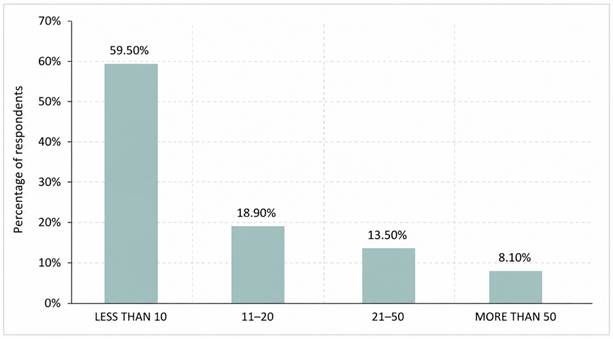
The economic profile shows moderate consumption, with 60% spending less than 10 euros per month (Figure 2), in line with the findings of Kowert & Quandt (2020). This combination of strong participation and low spending reflects structural barriers and a less intense, more practical culture of consumption.
Figure 2. Average Monthly Expenditure by Millennial Female Gamers
Source: Created by the authors. Note: Data based on frequencies and percentages (N = 500).
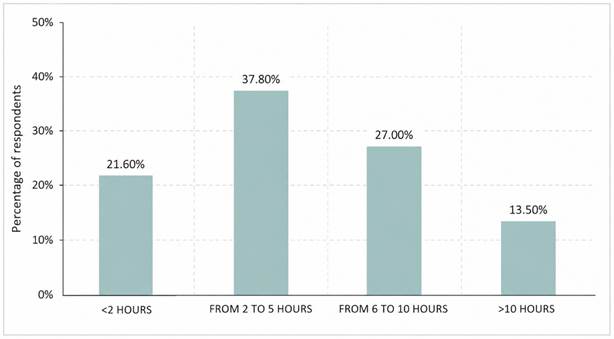
Regarding intensity of use, 65% of the respondents play less than 6 hours per week, suggesting a pattern of play that is more sporadic than compulsive, with short sessions that fit into everyday routines (see Figure 3). This leisurely pace of gaming is consistent with what Vermeulen et al., (2017) describe as «structural casual gaming» a type of consumption defined by time constraints, as well as an ethic of play linked to balance, escapism, and non-competitive diversion.
Figure 3. Number of Hours per Week that Millennial Women Play Video Games
Source: Created by the authors. Note: Data based on frequencies and percentages (N = 500).
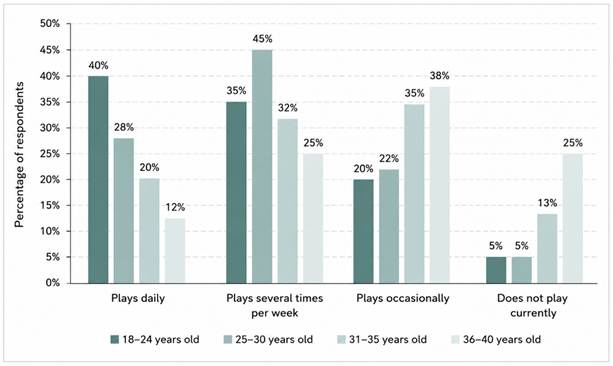
In terms of age, women between 18 and 24 years show a higher frequency of daily play (40%), while a sharp decline is observed in the 36–40 age group (see Figure 4). However, this reduction cannot be explained solely by chronological age, as it must be interpreted within the framework of what Hochschild (1997) called the «second shift»: The accumulation of household and workplace labour that fundamentally reduces women’s free time.
Figure 4. Distribution by Age and Frequency of Play by Millennial Women
Source: Created by the authors. Note: Data based on frequencies and percentages (N = 500).
The mobile phone is the preferred device compared with consoles and computers (Figure 5), not only due to accessibility, but also because of sociocultural conditions that make it an adaptive technology compatible with daily time management. This pattern reflects «portable gender technology» whereas consoles and computers are associated with more intense or specialised use and consumption, which continues to be male-dominated (Consalvo & Paasonen, 2002).
Figure 5. Gaming Platforms Preferred by Millennial Women
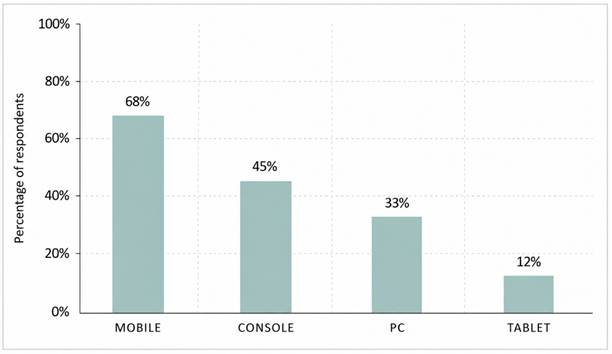
Source: Created by the authors. Note: Data based on frequencies and percentages (N = 500).
Millennial women generally prefer the video game genres of adventure/story and simulation/strategy rather than male-dominated categories such as shooting or sports games (Figure 6). Females tend to prefer introspective, symbolic, and aesthetic engagement (Jansz & Martens, 2005). The success of titles such as The Sims and Animal Crossing suggests the construction of spaces for emotional expression and symbolic agency, which are often overlooked by androcentric models.
Figure 6. Video Games Preferred by Millennial Women
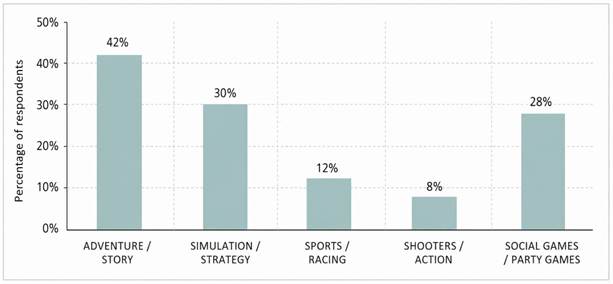
Source: Created by the authors. Note: Data based on frequencies and percentages (N = 500).
Moreover, the reported motivations for gaming are in line with this interpretation: entertainment is the main reason for playing, followed by socialising/escapism (see Figure 7). Far from the logic of performance and conquest, these female gamers see video games as a hybrid space in which leisure, affection, and self-affirmation converge. According to Yee (2017a) and Taylor (2018), contemporary gaming should be viewed as a relational cultural practice, in which the value of play results both in the act of playing and in its social outreach through communities, streaming platforms, and shared narratives.
Figure 7. Reasons why Millennial Women Play Video Games
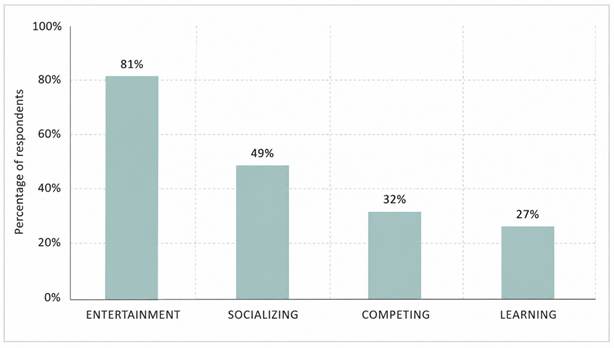
Source: Created by the authors. Note: Data based on frequencies and percentages (N = 500).
Finally, the correlational analyses carried out allow the authors to qualify these observations (see Table 3). The negative relationship between age and frequency of play (r = -.62) confirms a gradual decline of gaming as the life cycle advances. At the same time, the positive relationship between console use and weekly playing time (r = +.55) suggests that the gaming commitment is associated with monetary investment in technology. The correlation between social motivation and Twitch use (r = +.60) reveals that many female players participate not only through gaming, but also through the digital metaculture, thereby expanding the notion of «player» beyond the act of merely playing to include presence, commentaries, and community.
These findings show differentiated patterns in video game consumption among millennial women regarding variables such as age, playing time, monetary expenditure, and motivations. Moreover, the results provide an empirical basis for their interpretation within the theoretical framework developed in the discussion section.
Table 3. Statistical Correlations between Variables
|
Compared Variables |
Correlation (r) |
p-value |
|
Age vs. frequency of play |
-.62 |
p < .001 |
|
Console use vs. weekly playing time |
+.55 |
p < .01 |
|
Monthly expenditure on video games vs. frequency |
+.48 |
p < .01 |
|
Social motivation vs. Twitch use |
+.60 |
p < .001 |
|
Type of competitive game vs. frequency |
+.50 |
p < .01 |
Note: r = Pearson correlation coefficient. Statistical significance levels are indicated by p-values. Source: created by the authors.
4.2. Modelling Gaming Behaviour
In a second phase of the analysis, statistical modelling was conducted to identify the most relevant factors shaping the profile of millennial women who participate more intensely in gaming (see Figure 8). To this end, both quantitative and categorical variables were examined, including monthly expenditure on video games, weekly hours devoted to gaming, preferred device, main motivation for playing, and the perception of gender in gaming. These dimensions not only made it possible to trace consumption patterns, but also to explore the underlying rationale in the adoption and normalisation of video games as a cultural practice.
Based on this empirical evidence, two versions of the TAM were estimated, distinguishing between women with and without a technical background through a structural equation model. The fit indices (RMSEA ≤ .05; NNFI, IFI, CFI ≥ .90) indicated the robustness of the proposed specification. However, beyond statistical robustness, it is important to emphasise the model’s capability of capturing unobservable dimensions of technological adoption by incorporating variables traditionally absent from the classic TAM approach, such as the perception of gender or type of motivation for playing.
The results of the structural model (see Figure 8) enable the authors to identify more precisely the mechanisms that explain technological adoption in video game participation. Specifically, perceived usefulness stands out as a core construct, which is positively influenced by monthly expenditure (β = .163, p < .05), motivation for playing (β = .187, p < 0.05) and, most notably, perceived gender inclusion (β = .228, p < .05). This finding indicates a positive and significant relationship between perceived gender inclusion and perceived usefulness (Yee, 2017b).
In turn, perceived ease of use is significantly determined by variables associated with both material conditions and structural disposition. Specifically, mobile device use has a positive effect (β = .275, p < .05), as does weekly playing time (β = .199, p < .05) and age (β = .344, p < .05). The latter finding introduces an important nuance, as it suggests that the relationship between life cycle and technological adoption is not linearly negative, but may instead be mediated by cumulative familiarisation with digital environments (Consalvo & Paasonen, 2002).
In line with the classic structure of TAM, both perceived usefulness (β = .609, p < .05) and ease of use (β = .519, p < .05) exert a positive and significant effect on the intention to use. In turn, the latter variable shows a strong predictive capability for real video game use (β = .802, p < .05), confirming the internal consistency of the model and its empirical adequacy.
Nevertheless, beyond this structural validation, the results of the present study introduce elements that challenge the traditional assumptions of the TAM. In particular, the significant influence of perceived gender inclusion on shaping perceived usefulness casts doubt on the neutrality of the construct, indicating that its formation is mediated by social conditions of recognition. This finding suggests that perceived gender inclusion is associated with variations in perceived usefulness, as its influence is not manifested directly in the model, but indirectly through variables such as motivation, consumption practices, and perceptions of the gaming environment.
In this regard, the absence of a direct effect on intention to use by variables traditionally associated with cultural capital, such as education and a technical background, indicates that their role in technological adoption is more diffuse and mediated, which challenges structuralist proposals. Far from operating as a linear determinant, cultural capital appears to be rearranged in the digital environment through practical and symbolic dispositions that influence how users interpret, legitimise, and embrace technology.
Furthermore, the findings also allow the authors to qualify the role of gaming motivations from a gender perspective. Although the motivation to play has a significant effect on perceived usefulness (β = .187, p < .05), its influence does not lead directly to intention to use, suggesting that the sought-after rewards function as an initial factor in assessing the system, but not as a direct predictor of final behaviour.
Based on gender performativity theory (Butler, 1990), this finding can be interpreted as indicating that motivations are not merely individual preferences but situated practices through which female players negotiate their identity within the gaming space. In this regard, motivations such as socialisation, narrative exploration, and emotional escapism not only reflect practical needs, but also shape particular forms of participation that either challenge, or evade, the dominant codes of the traditionally male-focused gaming environment.
This pattern reinforces the idea that technology adoption in this context reflects a mediated logic in which affective and symbolic variables are integrated into more complex decision-making structures. Thus, gaming motivations might be seen as performative devices that structure the relationship between subjectivity, technology, and gender norms, which helps explain why their effect is not translated directly into observable behaviour, but rather through intermediaries such as perceived usefulness or the perception of inclusion.
Thus, the model proposed in the present study not only partially validates the structure of the TAM but also demonstrates the need to reformulate its assumptions from a situated perspective. Technological adoption in the case of millennial women cannot be interpreted exclusively as an instrumental response to usefulness or ease of use, but rather as a socially-mediated practice involving dimensions of gender, cultural capital, and symbolic recognition.
Figure 8. Estimated Model Illustrating the Probability that Millennial Woman will Play Video Games for Entertainment (N = 500)
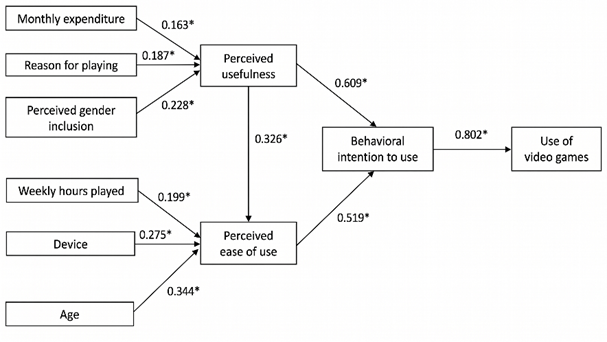
Source: Created by the authors.
5. Discussion
5.1. Theoretical Implications
One theoretical ramification of this study is the potential to help reshape existing interpretive frameworks of digital gaming from a dual perspective: firstly, through the integration of social, symbolic, and life-cycle variables in order to understand millennial women’s behaviour in the video game ecosystem; secondly, through questioning the interpretive adequacy of traditional technology adoption models such as TAM by proposing a critical reformulation of its epistemological foundations. Both of these plausible contributions address the research questions in an integrated way through a rigorous review of the theories underpinning this study.
Regarding the first research question, the findings indicate that video game patterns among millennial women cannot be viewed as simply a female duplication of the prevailing male behaviour, but rather as a differentiated, situated, and structurally-conditioned practice. Current consumption trends reveal strong female participation, yet with fragmented sessions, restrained expenditure, and gaming preferences that involve simulation, narratives, and introspection.
This pattern goes beyond the paradigm of the «hegemonic gamer», which is focused on competition, technical specialisation, and intensity. Moreover, it highlights an alternative and playful approach that reflects material conditions, such as the unequal distribution of free time depending on each gamer’s stage of life (Hochschild, 1997), as well as historically-constructed cultural dispositions.
From this viewpoint, far from being a mere statistical deviation, the female gaming habitus might be considered the result of different types of socialisation that shape specific dispositions toward the use of time, technology, and digital leisure. In Bourdieusian terms, these practices are not isolated individual choices, but expressions of an embodied habitus that guides not only game preferences, but also the ways in which this group participates in the gaming field (Bourdieu, 1984).
In this regard, the enthusiasm for narrative and simulation games and, by contrast, less interest in fierce competition, should not be viewed as a limitation, but rather as a type of situated agency aimed at reshaping hierarchies of legitimacy in the gaming field itself. Thus, millennial women not only participate in the video game ecosystem, but they also contribute to redefining its criteria of symbolic value.
Likewise, the concept of portable technologies of gender (Consalvo & Paasonen, 2002) is empirically confirmed as an explanatory framework that interconnects technology, subjectivity, and the organisation of time, especially regarding the surveyed women’s preferred use of mobile phones as a gaming platform.
As for the second question, the results of the structural equation model reveal that the intensity of video game use among millennial women is not a response to solely practical variables such as perceived usefulness or ease of use, as proposed by the classic TAM model (Davis, 1989), but is mediated by dimensions related to symbolism, affection, and social recognition.
The perception of video games as a gender-inclusive space, together with motivations linked to socialisation and emotional enjoyment, are significant factors in explaining consumption. According to gender performativity theory (Butler, 1990b), this impetus is not only due to individual preferences, but also to repeated practices through which female players negotiate their position within a traditionally male environment.
In this framework, gaming (and the reasons for doing so) is a performative act that either perpetuates or challenges gender norms. The focus on non-competitive, relational, and narrative forms of play might be considered a strategy for reconstructing the play space, where participation does not necessarily entail the acceptance of dominant codes, but rather their redefinition from subaltern or alternative positions.
Moreover, this finding casts doubt on the neutrality of the technological subject presumed by TAM and reinforces the need to incorporate contextual and performative variables into the study of technology adoption. From a Bourdieusian perspective, «perceived usefulness» cannot be considered an intrinsic attribute of technology, but rather a socially-situated construction mediated by cultural capital and the conditions of access and legitimation in a specific field.
As a complement to this idea, gender performativity helps explain how this perception of usefulness is shaped by implicit norms regarding who legitimately belongs inside the gaming space. Thus, technology adoption does not reflect solely instrumental evaluation, but also assessments of recognition, visibility, and symbolic validation, which influence female players’ relationship with technology (Jensen & Aanestad, 2007; Venkatesh & Bala, 2008).
In this regard, the study at hand proposes an epistemological shift: from a rational-instrumental view of the user to a situated concept shaped by cultural disposition, perception of agency, and the logic of belonging.
Therefore, the main theoretical contribution of this research lies in integrating the contributions of cultural capital theory with those of gender performativity in order to reconsider technology adoption models in complex cultural environments. Far from operating as parallel frameworks, both approaches make it possible to understand how practices of digital consumption are configured simultaneously as embedded dispositions, or habitus, and as performative acts that produce and reproduce identities in normatively structured contexts.
This integration transcends the dichotomy between structure and agency, showing that millennial women are not only influenced by a structures of inequality, as they actively intervene in resignifying the gaming space. In this regard, video gaming is a promising field for observing the interaction between cultural capital, gender norms, and technology adoption in contemporary digital societies.
Moreover, as the present study has attempted to do just that, the authors propose an intersectional and structural reading of gaming practices in order to overcome the fragmentation between cultural approaches and behavioural models. This theoretical integration will not only enrich the field of video game studies, which are traditionally focused on design, representation, and player psychology, but it will also provide conceptual tools for rethinking digital consumption as a type of agency that is influenced, but not determined, by structures of gender, class, and generational aspects.
The innovation lies precisely in this crucial interconnection, which not only describes emerging patterns, but challenges them as symptoms of a deeper transformation in the logic of access, use, and signification of cultural technology.
5.2. Practical Implications
The results of this research offer useful and practical implications for multiple actors in the business sector who are directly or indirectly linked to the video game industry, especially in the areas of marketing, product design, sales strategy, corporate communication, and market analysis.
Firstly, the finding that millennial women are an active yet underrepresented audience in the prevailing discourse on gaming provides marketing teams with a solid empirical basis for rethinking their segmentation strategies. This group participates actively in gaming, yet with distinct consumption patterns in terms of time spent on play, expenditure, motivations, and platforms. Thus, they can no longer be treated as a minor subniche or exception within the traditional target audience.
By identifying female gamers as a specific consumption target, companies can reformulate advertising campaigns, adjust the communication tone, and diversify distribution and promotion channels, especially in settings where brands try to expand their user base without resorting to superficial or stereotyped differentiation strategies.
Secondly, product development areas could benefit from this study by reconsidering design from a more inclusive and segmented rationale. Millennial women’s preference for narrative, simulation, and strategy games should not be seen as only an issue of content, but as a demand for different gaming experiences that prioritise emotional immersion, aesthetic personalisation, and symbolic construction over purely fierce competition.
Moreover, this provides an opportunity for game designers who work in independent studios, or those who endeavour in innovation departments of major publishers, as it enables both groups to explore new types of products that cater to commercially-underexplored rationales of use.
In addition, the correlation between social motivation and content consumption on platforms such as Twitch highlights the need to design transversal experiences that integrate gameplay with metaculture, thereby considering the female player not only as a user, but as a viewer, creator, and potential brand ambassador.
Thirdly, regarding business strategy, companies in the sector can use these findings to diversify their business models. Although the average monetary expenditure is low among the female segment, this does not mean there is no financial opportunity; instead, companies have the chance to consolidate freemium models, downloadable content, aesthetic personalisation, and episodic experiences adapted to fragmented gaming routines.
Given the context, teams responsible for monetisation might consider rethinking their profitability logic by prioritising loyalty and symbolic engagement over immediate profitability per unit of consumption.
For data analysis and business intelligence profiles, the prediction model based on symbolic variables such as perceived gender inclusion provides new keys for developing metrics that are more sensitive to the cultural dimension of user behaviour.
Incorporating these types of variables into scoring or predictive segmentation models would make it possible to more effectively anticipate consumption decisions, especially in contexts where the subjective perception of the environment weighs more heavily than the objective evaluation of the product. This could be especially useful for digital distribution platforms, market research firms, and user research agencies that need to interpret data through frameworks that are less functionalist and more closely connected to the cultural imaginaries of audiences.
Finally, corporate social responsibility and brand management departments can draw on this research to promote more effective inclusion policies, not only from an ethical standpoint, but as part of a reputational strategy as well.
By acknowledging that the perception of gender exclusion acts as a structural barrier to consumption, the emphasis is placed on the importance of more diverse environments, both in game design and in spaces of competition, representation, and governance.
Companies that are able to convert these findings into specific actions, such as promoting female role models, reviewing character representations, and softening toxic environments, will not only be responding to a social demand, but also generating real conditions for market expansion and long-term brand consolidation.
5.3. Limitations
Regarding the limitations of this study, one involves the restriction of the sample to women in Spain, which limits generalisation of the findings to other contexts. Given that gender dynamics depend on structural factors that are variable, the study should be duplicated in other settings in order to compare the results.
The cross-sectional design impedes the study from recording the evolution of time spent on gaming, which varies depending on the stage of life of each player, as well as technological or labour-related changes. A longitudinal approach would make it possible to analyse the consolidation or reorganisation of gaming habits. The measurement of symbolic variables through self-reports could introduce desirability bias or difficulties in verbalisation. Qualitative methods such as interviews and projective techniques would allow for a more nuanced understanding.
In addition, although the model offered by this research prioritises consolidated variables, it omits dimensions such as sexual identity, family cultural capital, and early access which, if included in an intersectional way, would make it possible to register inequalities more efficiently.
Although this study casts doubt on the TAM model, the challenge remaining is to build models that question its ontological assumptions and integrate gender, situated practices, and affective dimensions. Nevertheless, this is a pending task in this field of research.
There is also friction between theoretical ambition and methodological tools, since quantitative models limit the ability to capture symbolic processes, which reinforces the need for mixed approaches that integrate structural and interpretive analyses.
The self-reported nature of the data may introduce bias related to memory, interpretation, and desirability, especially regarding symbolic variables. From the standpoint of performativity, identities are not fully accessible through explicit discourse.
In this regard, future studies should complement the quantitative approach with qualitative methodologies that make it possible to capture the performative dimension of digital gaming more directly. Strategies such as in-depth interviews, digital ethnographies, and analyses of practices in online communities can offer a fuller understanding of how female players articulate their identity, negotiate visibility, and experience the gaming space in everyday settings. Such approaches would enable progress toward more comprehensive models capable of connecting structural dispositions with embedded practices of digital environments.
6. Conclusion
The purpose of this study is to analyse video game consumption among millennial women from a sociocultural, gender-based, and technological perspective, addressing both their patterns of play and the role of symbolic variables in consumption intensity.
The results confirm that millennial women actively participate in the gaming culture, yet their consumption patterns differ from the hegemonic model. Their practices are defined by fragmented time-frames, a preference for mobile devices, and a focus on narrative, strategic, and non-competitive experiences. These patterns show that access to video games continues to be mediated by structural conditions linked to available time, stage of life, and gender norms.
Likewise, the study also indicates that variables such as perceived inclusion and relational motivations offer more complete explanations than the traditional instrumental factors of the Technology Acceptance Model (TAM). This finding questions the neutrality of TAM and reveals that technological adoption in this context responds to symbolic, affective, and recognition-based dynamics that go beyond functionalist approaches.
The main contribution of this work lies in demonstrating that recreational consumption in the digital realm cannot be considered solely an individual practice or a rational decision, but rather a situated social activity in which cultural disposition, gender norms, and symbolic legitimation interact. In this regard, the study proposes a reformulation of the analysis of technological adoption from an intersectional perspective, integrating cultural capital, gender performativity, and user behaviour.
In this way, the millennial female gamer emerges not as an anomaly within the gaming ecosystem, but as an active agent in reshaping its cultural logic, helping to transform both the ways in which video games are used and the meanings associated with gaming in contemporary digital societies.
Ethics and Transparency
Acknowledgements
The authors would like to express their sincere gratitude to all the individuals who participated in this study, and for offering their time and willingness to collaborate. We also want to acknowledge our appreciation for the institutional support provided in carrying out this research
Conflict of Interest
The authors declare that there is no conflict of interest regarding the investigative work, authorship, and/or publication of this article.
Funding
This research has not received any specific funding from public sector agencies, private businesses, or nonprofit organisations.
Author Contributions
|
Contribution |
Author 1 |
Author 2 |
Author 3 |
Author 4 |
|
Conceptualisation |
X |
|
|
|
|
Data curation |
X |
|
|
|
|
Formal Analysis |
X |
|
|
|
|
Funding acquisition |
|
|
|
|
|
Investigation |
X |
|
|
|
|
Methodology |
X |
|
|
|
|
Project administration |
X |
|
|
|
|
Resources |
|
|
|
|
|
Software |
|
|
|
|
|
Supervision |
|
X |
|
|
|
Validation |
|
X |
|
|
|
Visualisation |
|
X |
|
|
|
Writing – original draft |
|
X |
|
|
|
Writing – review & editing |
|
X |
|
|
Data Availability Statement
The data that support the findings of this study are available from the corresponding authors upon request, provided that the solicitation is deemed reasonable. Due to the nature of the research, and in order to ensure the confidentiality and anonymity of the participants, the data are not publicly available.
References
Aevi (2024). La industria del videojuego en España: Anuario 2024. Asociación Española de Videojuegos.
Bourdieu, P. (1984). A social critique of the judgement of taste. Harvard University Press.
Butler, J. (1990a). Feminism and the subversion of identity. Gender Trouble, 3(1), 3-17. https://tinyurl.com/yhha8ux5
Butler, J. (1990b). Gender trouble: Feminism and the subversion of identity. Routledge.
Butler, J. (1993). Bodies that matter: On the discursive limits of sex. Routledge.
Consalvo, M. (2009). Cheating: Gaining advantage in videogames. MIT Press.
Consalvo, M. y Paasonen, S. (2002). Women and everyday uses of the Internet: Agency and identity. Peter Lang.
Davis, F. D. (1989). Perceived usefulness, perceived ease of use, and user acceptance of information technology. MIS Quarterly, 13(3), 319-340. https://doi.org/10.2307/249008
Dimov, D., Maula, M. & Roome, A. G. L. (2023). Crafting and assessing design science research for entrepreneurship. Entrepreneurship Theory and Practice, 47(5), 1543-1567. https://doi.org/10.1177/104225872211282
Edgerton, J. D. & Roberts, L. W. (2014). Cultural capital or habitus? Bourdieu and beyond in the explanation of enduring educational inequality. Theory and Research in Education, 12(2), 193-220. https://doi.org/10.1177/1477878514530231
Fundación FAD Juventud (2023). Jóvenes y videojuegos: Usos, riesgos y oportunidades. Fad Juventud.
Gaddis, S. M. (2013). The influence of habitus in the relationship between cultural capital and academic achievement. Social Science Research, 42(1), 1-13. https://doi.org/10.1016/j.ssresearch.2012.08.002
Hochschild, A. R. (1997). The second shift: Working families and the revolution at home. Penguin Books.
Jansz, J. & Martens, L.
(2005). Gaming at a LAN event: the social context of playing video games. New
media & society, 7(3), 333-355.
https://tinyurl.com/28xf6854
Jensen, T. B. & Aanestad, M. (2007). Hospitality and hostility in hospitals: A case study of an
ERP adoption among surgeons. European Journal of Information Systems, 16(6),
672-680.
https://doi.org/10.1057/palgrave.ejis.3000713
Keil, M. (1991). Managing MIS implementation: Identifying and removing barriers to use (Doctoral thesis). Harvard University.
Kowert, R. & Quandt, T. (2020). The video game debate 2: Revisiting the physical, social, and psychological effects of video games. Routledge.
Labrador, F.J., Romero, M.T. & Cobo, L. (2022). Mujeres y videojuegos: ¿A qué juegan las mujeres? Anales de Psicología, 38(3), 508-517. https://doi.org/10.6018/analesps.504281
Li, Z. Z. & Zhao, S. (2025). Cultural capital conversion in national trend consumption and youth identity construction. Frontiers in Humanities and Social Sciences, 5(10), 142-149. https://doi.org/10.54691/fqanjd92
Márquez-Gallardo, S. L. & Rovira-Lorente, A. (2024). In genderqueer closets: Challenging gender binarism through embodied narratives of affect and style. Fashion Theory, 28(4), 437-460. https://doi.org/10.1080/1362704X.2024.2357320
Mcintyre, M. P. (2018). Gender by design: Performativity and consumer packaging. Design and Culture, 10(3), 337-358. https://doi.org/10.1080/17547075.2018.1516437
Moore, G. C. & Benbasat, I. (1991). Development of an instrument to measure the perceptions of adopting an information technology innovation. Information Systems Research, 2(3), 192-222. https://tinyurl.com/49txt3mz
Newman, A., Goulding, A. & Whitehead, C. (2013). How cultural capital, habitus and class influence
the responses of older adults to the field of contemporary visual art. Poetics,
41(5), 456-480.
https://doi.org/10.1016/j.poetic.2013.07.001
Newzoo (2023). Global
games market report 2023. Newzoo.
https://tinyurl.com/5evk9ajh
Nielsen (2019). Conoce a la mujer aficionada a los deportes electrónicos. https://tinyurl.com/y6sj9ymz
Paypal & Newzoo (2020). La audiencia de los eSports, cada vez más femenina: El 36% de los espectadores en España son mujeres, la cifra más alta en Europa. https://tinyurl.com/3vhd8d9m
Shaw, A. (2014). Gaming at the edge: Sexuality and gender at the margins of gamer culture. University of Minnesota Press.
Taylor, T. L. (2012). Raising the stakes: E-sports and the professionalization of computer gaming. MIT Press.
Taylor, T. L. (2018). Watch me play: Twitch and the rise of game live streaming. https://tinyurl.com/yh9kwhtd
Van-der-Wall, J., De-Koster, W., Van-Meurs, T:, Noordzij, K., Groeniger, J. & Schaap, J. (2024). Advancing stratification research by measuring non-declarative cultural capital: A national population-based study combining IAT and survey data. American Sociological Review, 89(4), 735-760. https://doi.org/10.1177/00031224241261603
Venkatesh, V. & Bala, H. (2008). Technology Acceptance Model 3 and a research agenda on interventions. Decision Sciences, 39(2), 273-315. https://doi.org/10.1111/j.1540-5915.2008.00192.x
Venkatesh, V. & Davis, F. (2000). A theoretical extension of the Technology Acceptance Model: Four longitudinal field studies. Management Science, 46(2), 186-204. https://doi.org/10.1287/mnsc.46.2.186.11926
Vermeulen, L., Van-Bauwel, S. & Van-Looy, J. (2017). Tracing female gamer identity. An empirical study into gender and stereotype threat perceptions. Computers in Human Behavior, 71, 90-98. https://doi.org/10.1111/j.1540-5915.2008.00192.x
Wei, Q. (2024). Female gender construction under the effect of consumerist culture. En Proceedings of the 2024 10th International Conference on Humanities and Social Science Research (ICHSSR 2024) (pp. 1582-1588). https://doi.org/10.2991/978-2-38476-277-4_176
Yee, N. (2017a). Beyond 50/50: Breaking down the percentage of female gamers by genre. Gamasutra.
Yee, N. (2017b). The gamer motivation profile: What drives us to play. Quantic Foundry.